


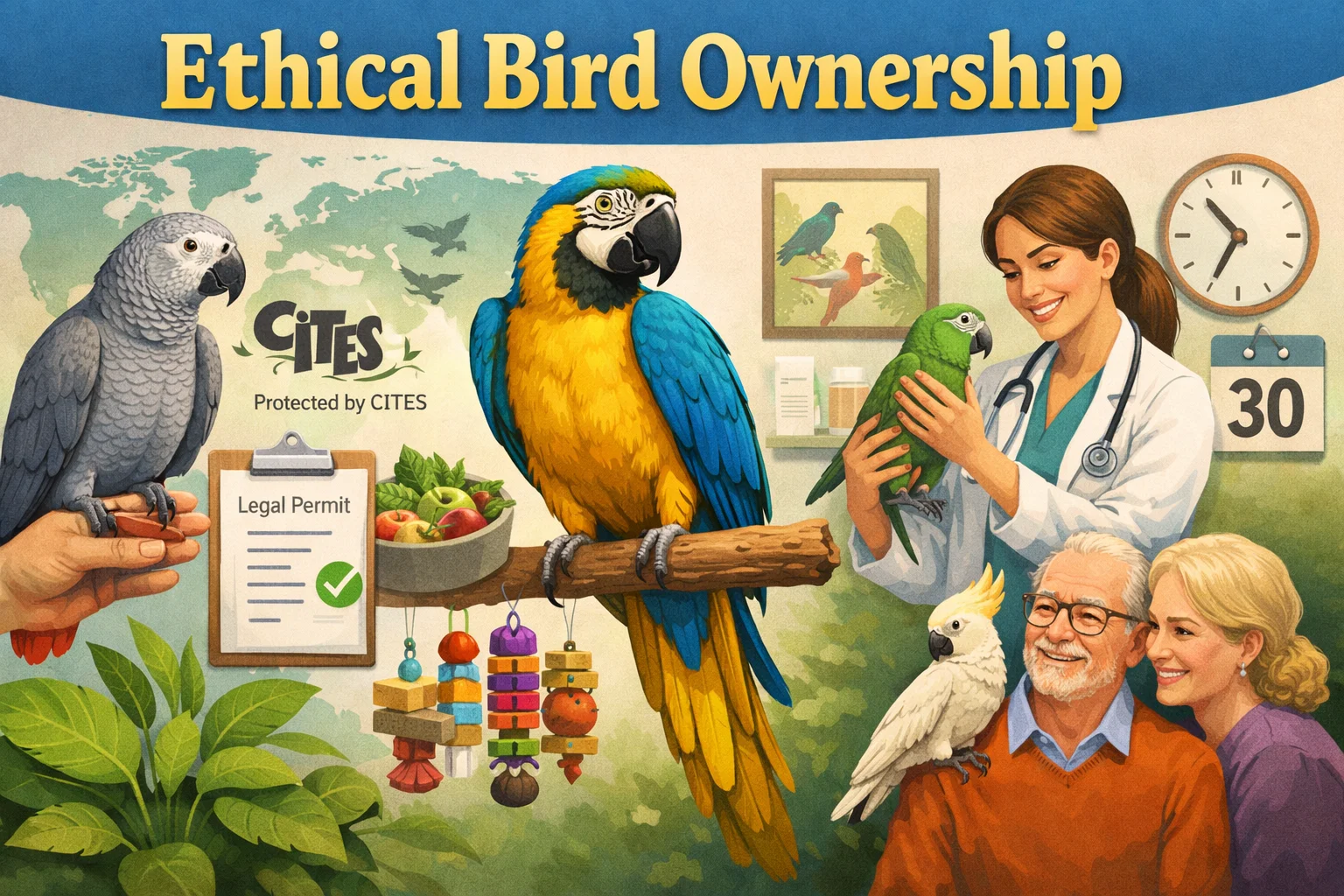
Understanding the Magnitude of the Commitment
Bringing a parrot into your home is not merely acquiring a pet; it is entering into a relationship that may well span the majority of your lifetime. Parrots are among the most intelligent and social animals that humans can welcome into their homes, forming deep bonds with their companions that can last decades . Unlike dogs or cats, which typically live 10 to 15 years, many parrot species have life expectancies ranging from 50 to 80 years, with some larger species potentially reaching a century . This extraordinary longevity means that responsible ownership begins with a sobering realization: you are making a commitment that will outlast careers, homes, and other relationships, and you must plan for who will care for your bird if you predecease it.
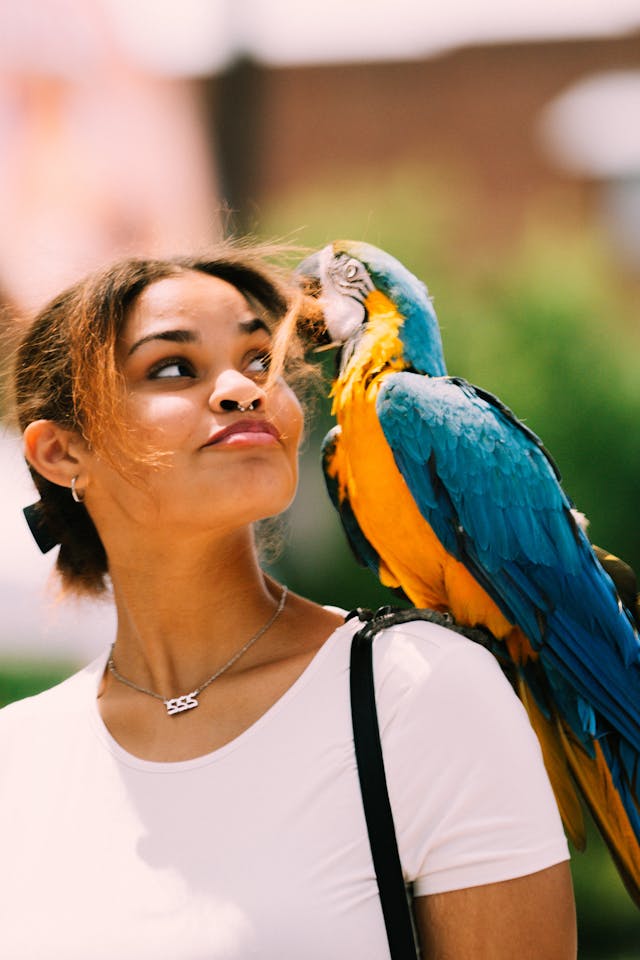
Ethical bird ownership fundamentally rests on the understanding that parrots are not domesticated animals. They are wild creatures with complex psychological and physical needs that have evolved over millions of years in tropical and subtropical environments . Unlike dogs, which have been selectively bred alongside humans for thousands of years, parrots retain their wild instincts, intelligence, and social structures even when hand-raised in captivity. This distinction is crucial because it shapes every aspect of how we must approach their care. A parrot does not adapt to a human lifestyle; rather, the human must create an environment that accommodates the parrot’s innate needs.
The Social and Psychological Imperative
One of the most critical ethical considerations in parrot ownership is the species’ profound social nature. In the wild, parrots live in complex flock structures, engaging in constant communication, play, and social bonding. The German Animal Welfare Act explicitly recognizes this, stipulating that parrots must not be kept as individual pets due to their social requirements . An expert opinion from the Federal Ministry of Food and Agriculture clarifies that pet shops must sell parrots in pairs at minimum, with exceptions only for sick, injured, or human-imprinted birds that cannot integrate with others of their species .
This social need translates into a significant responsibility for owners. A parrot kept in isolation without adequate social interaction will suffer psychologically, potentially developing severe behavioral problems including feather plucking, excessive screaming, and self-mutilation. These behaviors are not merely nuisance issues but are manifestations of distress in an animal unable to fulfill its fundamental social needs. Ethical ownership requires either keeping multiple compatible birds or dedicating extensive daily time to interaction, recognizing that the human owner becomes the parrot’s surrogate flock.
Species-Appropriate Housing and Environment
The physical environment provided to a companion parrot reflects directly on the owner’s ethical standards. Parrots require significantly more space than conventional pet bird cages provide. They need room to stretch their wings fully, hop between perches, and engage in natural movement patterns . The German expert opinion emphasizes “varied furnishings” including fresh branches, toys, and objects that encourage exploration and manipulation . This is not luxury but necessity—a parrot’s beak is designed for constant manipulation and destruction, and without appropriate outlets, birds will redirect these behaviors toward destructive or self-harming activities.
The environment must also consider the parrot’s natural behaviors and sensitivities. Many owners dedicate a specific bird room to manage noise levels, as parrots are naturally loud animals whose vocalizations can carry throughout a home . Temperature, lighting, and humidity all require consideration, with protected areas needed to shield birds from drafts, direct sun, and temperature extremes.
The Economic Reality of Ethical Care
Ethical bird ownership carries substantial financial obligations that extend far beyond the initial purchase price. Quality cages appropriate for medium to large parrots can cost thousands of dollars. A diet consisting of fresh vegetables, fruits, high-quality pellets, and occasional nuts represents an ongoing expense that exceeds that of typical pet food. Veterinary care for parrots requires specialists in avian medicine, who command higher fees than general practitioners, and emergency care can run into thousands of dollars.
Beyond routine expenses, ethical owners must maintain an emergency fund for unexpected medical needs. Parrots instinctively hide signs of illness as a survival mechanism, meaning that by the time symptoms become apparent, the bird may be critically ill, requiring intensive and expensive intervention. Owners who cannot commit to this financial reality should reconsider whether parrot ownership aligns with their circumstances.
The Abandonment Crisis
Perhaps the most compelling argument for approaching parrot ownership with extreme caution is the crisis of abandoned parrots. Shelters and rescue organizations are filled with parrots whose owners underestimated the commitment. The Duxbury Animal Hospital notes that “sadly, many parrots are abandoned” because owners fail to appreciate the long-term implications of caring for an animal that may outlive them . These birds, often highly intelligent and emotionally sensitive, suffer tremendously from rehoming and abandonment, experiencing grief and stress that can manifest in lifelong behavioral issues.
Ethical ownership demands that prospective owners research thoroughly, speak with current parrot owners, volunteer at rescue organizations, and honestly assess their ability to provide for a parrot’s needs over decades. It requires planning for the bird’s care in the event of the owner’s illness, incapacity, or death through provisions in wills and arrangements with trusted individuals or organizations.
The Ethical Imperative
Ultimately, ethical bird ownership is about shifting perspective from viewing a parrot as a pet to recognizing it as a fellow being with intrinsic worth and complex needs. It means accepting that the parrot’s welfare takes precedence over human convenience—that early morning vocalizations, destroyed furniture, and the need for daily interaction are not problems to be solved but realities to be accommodated. For those who can make this commitment, parrots offer unparalleled companionship from one of the most intelligent creatures on earth. For those who cannot, the most ethical decision is to admire these magnificent birds from afar.




Leave a Reply