


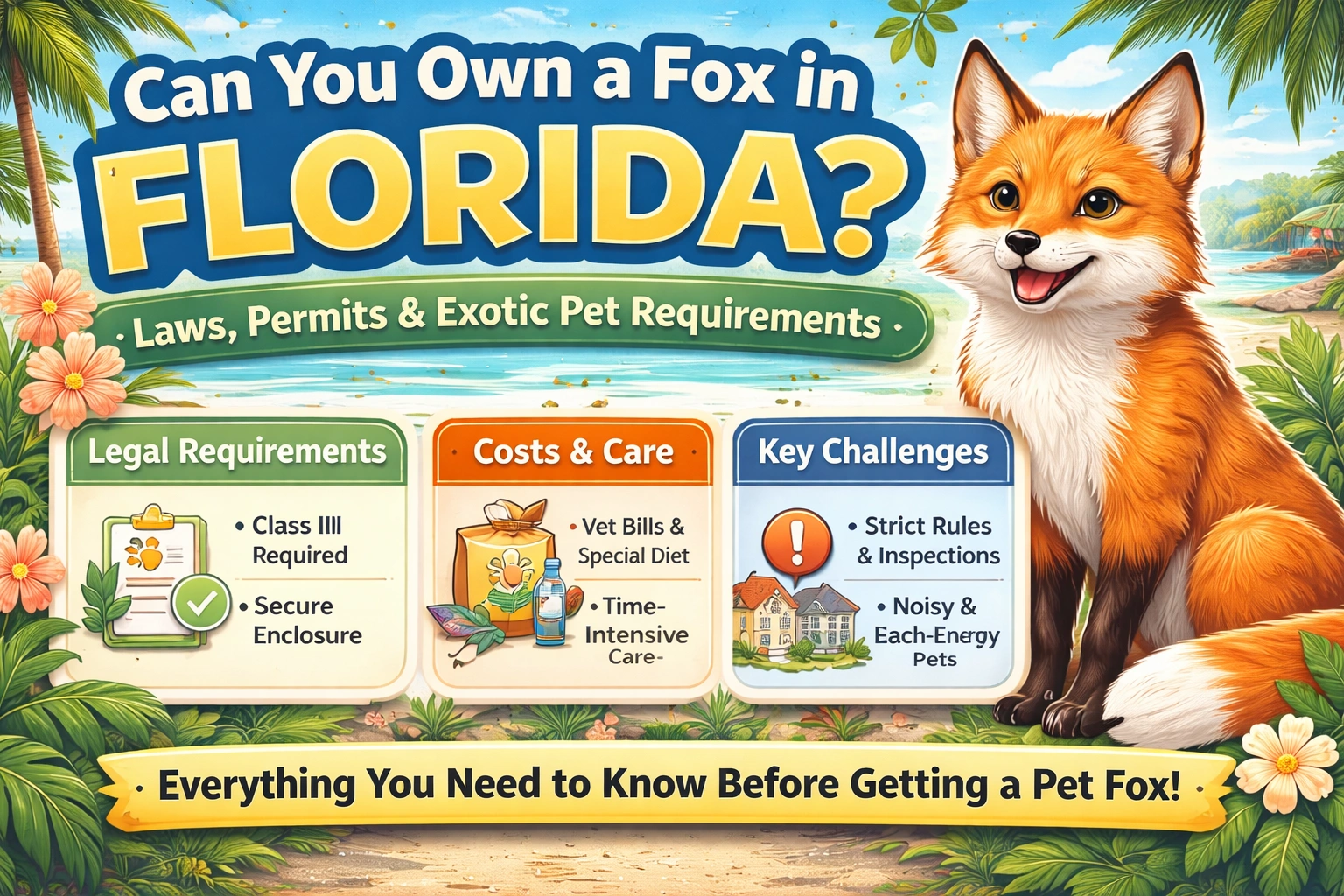
Foxes have become increasingly popular in online videos and exotic pet communities. With their striking appearance and dog-like curiosity, it’s natural to wonder if you could bring one home. If you live in Florida or are planning to move there, the answer is yes, but with significant legal requirements.
Here is everything you need to know about owning a fox in the Sunshine State.
The Short Answer
Yes, you can own a fox as a pet in Florida, provided you obtain a Class III Personal Pet Permit from the Florida Fish and Wildlife Conservation Commission (FWC) and the fox is captive-bred from a permitted source.
However, owning a fox is nothing like owning a dog or cat. It requires experience, proper facilities, and a commitment to navigating state regulations.
Florida’s Wildlife Classification System
Florida law categorizes wild animals into different classes based on the danger they pose to humans. The Florida Fish and Wildlife Conservation Commission (FWC) oversees this system.
Class I (Prohibited)
These animals are considered too dangerous to possess as personal pets. Examples include:
- Bears, big cats (lions, tigers), rhinoceroses, crocodiles, chimpanzees, elephants, and hippopotamuses.
Class II (Permit Required)
These animals pose a moderate risk and require a permit with strict conditions. Examples include:
Class III (Permit Required)
This category includes less dangerous wild animals that still require a permit. Foxes fall into Class III.
Other Class III animals include:
The Class III Personal Pet Permit (PPNC)
Here are the specific requirements for obtaining a permit to own a fox in Florida.
Basic Requirements
The 1,000-Hour Experience Requirement
The most challenging part of the application process is demonstrating 1,000 hours of practical experience with animals in the same biological family as the fox you want to own.
- Duration: The experience must span at least one calendar year.
- Species Family: Foxes belong to the Canidae family (dogs, wolves, coyotes, jackals). Your experience should be with canids.
- Documentation: You must keep detailed logs of your activities, including dates, times, specific tasks performed (feeding, cleaning, health checks), and the species of animals you worked with.
Letters of Reference
You need at least one letter from a Florida permit holder for the wildlife you are applying for (preferably the permit holder who oversaw your experience) or a representative of a professional organization or governmental institution, including veterinarians.
Caging Requirements
Your application must describe your enclosure in detail, and you may be subject to an inspection by an FWC officer. The enclosure must be secure, appropriate for the species, and designed to prevent escape.
What a Class III Permit Does NOT Allow
It is equally important to understand the limitations of a personal pet permit.
- No Public Outings: A personal pet permit does not allow you to take your fox in public. This includes parks, stores, or any place outside of your home or the vet’s office where members of the public could approach the animal.
- No Taking from the Wild: Animals taken from the wild, including native fox species, are never allowed to be kept as personal pets in Florida.
If you want to exhibit your fox publicly (for educational programs, etc.), you would need a separate permit for exhibition instead of a personal pet permit.
Additional Considerations Before Getting a Fox
Even after obtaining the permit, owning a fox comes with unique challenges.
- Foxes are not domesticated. Unlike dogs, which have been bred for thousands of years to live with humans, foxes retain strong wild instincts. They can be destructive, dig extensively, and are difficult to house-train.
- Odor. Foxes have a strong, musky smell, especially during mating season. This is a common reason people rehome them.
- Noise. Foxes can be surprisingly loud, making sounds ranging from high-pitched screams (vixens in heat) to barks and howls.
- Diet. Foxes are omnivores and require a specialized diet, not just dog food.
- Veterinary Care. Finding a veterinarian who treats exotic canids can be difficult and expensive.
- Longevity. Foxes can live 10-15 years in captivity.
Local Ordinances
Even if the State of Florida allows fox ownership, your city or county may have its own restrictions. It is your responsibility to check with your local municipality before acquiring a fox.
Comparison of Pet Types in Florida
| Animal Type | Permit Required | Cost | Experience Needed | Public Outings Allowed? |
|---|---|---|---|---|
| Dog or Cat | No | N/A | No | Yes |
| Fox (Class III) | Yes (PPNC) | Free | 1,000 hours | No (with PPNC) |
| Capuchin Monkey (Class III) | Yes (PPNC) | Free | 1,000 hours | No (with PPNC) |
| Wolf (Class II) | Yes | $140/year | Extensive | Restricted |
| Tiger (Class I) | No (Prohibited) | N/A | N/A | N/A |
How to Apply
To apply for a Class III Personal Pet Permit:
- Go to the FWC’s Go Outdoors Florida online portal.
- Create an account.
- Select the application for a Class III wildlife permit for personal use.
- Fill out the application, providing your personal information, details about the animal you intend to possess, your experience documentation, and information about your facilities.
- The application processing time is approximately 4-6 weeks.
The Bottom Line
| Question | Answer |
|---|---|
| Is it legal to own a fox in Florida? | Yes, with a Class III Personal Pet Permit. |
| Can I catch a wild fox? | No. The fox must be captive-bred from a permitted breeder. |
| Do I need experience? | Yes, 1,000 documented hours with canids. |
| Can I take my fox to the park? | No. Personal pet permits do not allow public outings. |
| Is the permit expensive? | No, the Class III personal pet permit is free. |
For many people, the extensive requirements make owning a fox impractical. However, for dedicated and experienced exotic animal enthusiasts, Florida does provide a legal pathway to fox ownership.
Disclaimer: This article is for informational purposes only and does not constitute legal advice. Laws and regulations are subject to change. Always consult the Florida Fish and Wildlife Conservation Commission (FWC) or a legal professional for the most current requirements before acquiring any exotic animal.










Leave a Reply