


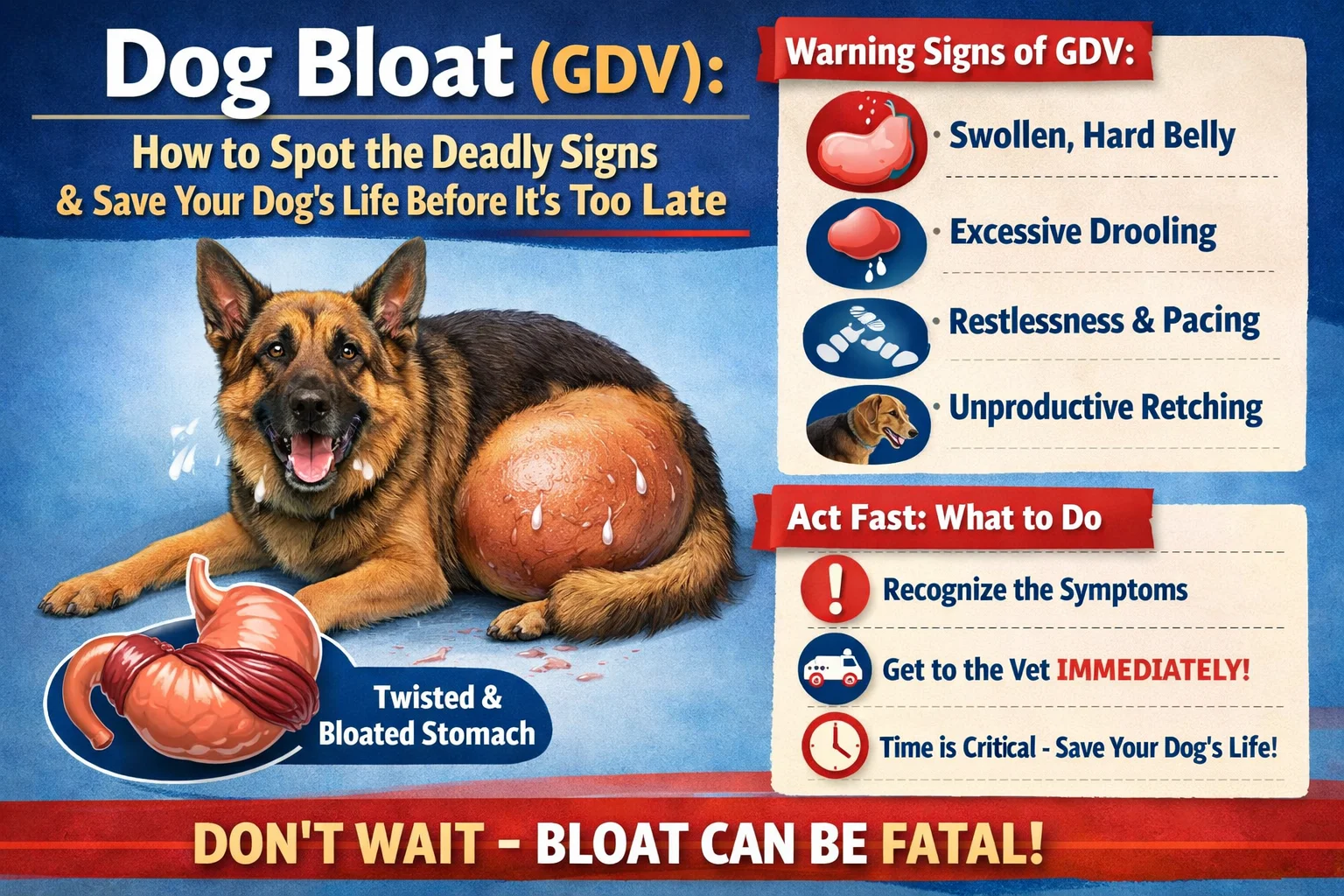
Dog Bloat (GDV): Is Your Dog at Risk of This Silent Killer?Imagine your dog suddenly pacing restlessly, trying desperately to vomit but bringing nothing up, with a swollen belly and signs of panic. Within hours, what starts as simple bloat can turn into Gastric Dilatation-Volvulus (GDV) — a life-threatening emergency where the stomach twists, cutting off blood flow and sending your dog into shock.What Are the First Signs of Bloat in a Dog?
Bloat in dogs (GDV) is one of the most feared conditions among pet parents, especially those with large or deep-chested breeds. It can strike without warning, often at night or after a meal, and progresses rapidly. Even with emergency treatment, survival is not guaranteed if action isn’t taken immediately.
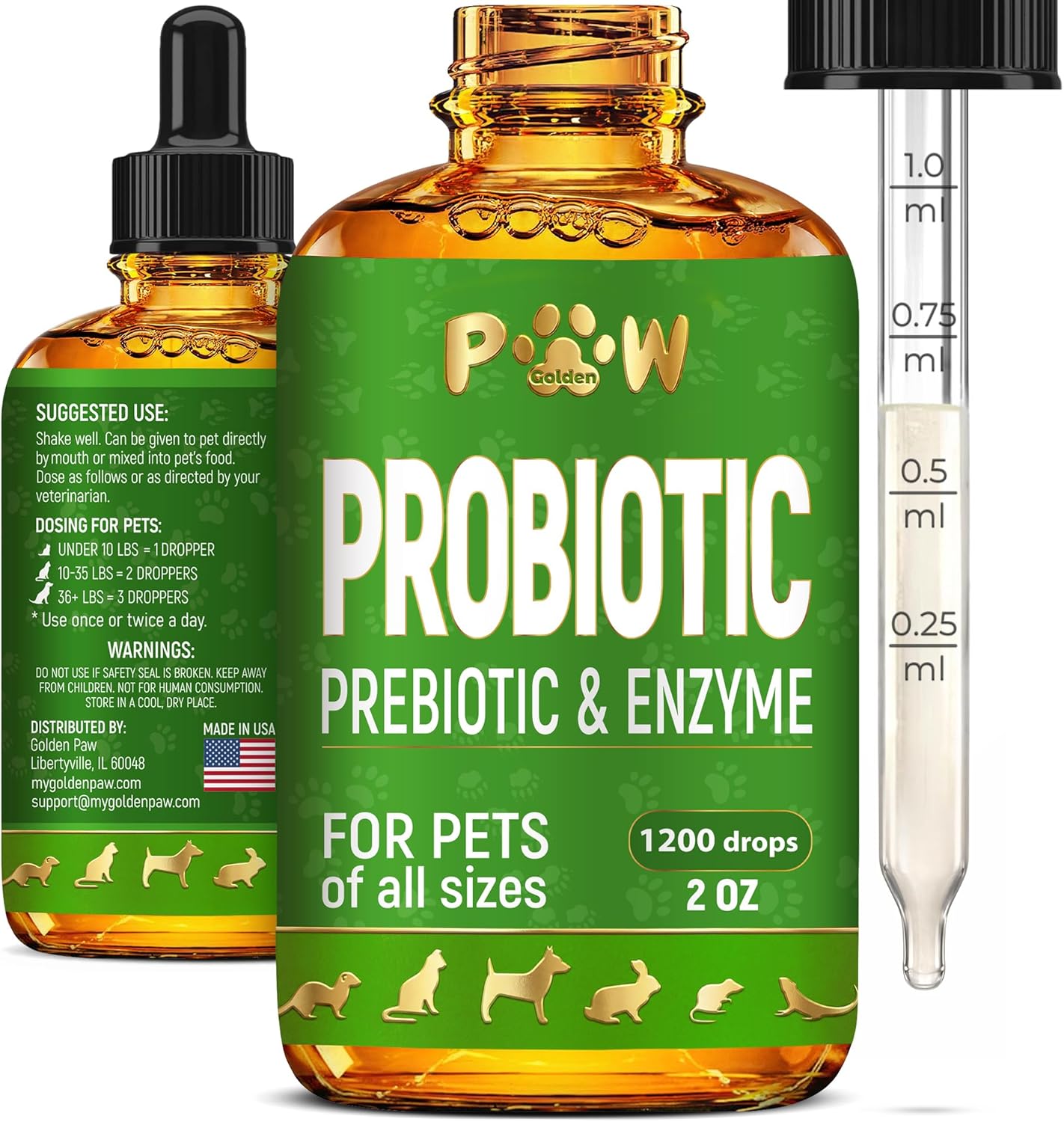
🐾 SUGGESTED USE (per label)
Shake well. Give directly by mouth or mix into pet’s food.
| UNDER 10 LBS | → 1 dropper |
| 10–35 LBS | → 2 droppers |
| 36+ LBS | → 3 droppers |
* Use once or twice a day. 2 oz bottle provides approx. 1200 drops.
🇺🇸 Made in USA | Distributed by Golden Paw, Libertyville, IL
GoldenPaw Probiotic for Pets
Liquid Digestion Balance
🔒 Secure transaction · Authorized retailer
📦 Note: Check seller availability and shipping options. Small business product.
This content is part of a paid promotional campaign. As mandated by applicable advertising guidelines, platform policies, and campaign terms, the following disclosure applies: “This post includes an affiliate or sponsored link to Amazon. As an Amazon Associate / campaign participant, we earn from qualifying purchases.”
Transparency commitment: The relationship with the brand and retailer is clearly stated. No misleading claims are made. This disclosure is an unavoidable, permanent part of this content as required by campaign terms.
Every dog owner needs to know: What are the critical warning signs of bloat? Which dogs are most at risk? And what practical steps can you take right now to prevent this fatal emergency?
In this complete guide, you’ll discover the deadly symptoms you must never ignore, the breeds and factors that increase risk, what happens during a GDV crisis, and proven lifesaving prevention strategies — including when to consider preventive gastropexy surgery.
Time is everything with dog bloat. Read on to learn how to protect your beloved dog before it’s too late.
Bloat in dogs, medically known as Gastric Dilatation-Volvulus (GDV), is one of the most serious and life-threatening emergencies a dog owner can face. It strikes suddenly, often without warning, and can progress rapidly to shock, organ damage, and death if not treated immediately. Even with prompt veterinary care, the mortality rate ranges from 10% to 45% depending on the severity and how quickly intervention occurs.
Every dog owner—especially those with large or deep-chested breeds—needs to understand what GDV is, how to spot the signs, and what steps can reduce the risk. This guide covers the essentials.
What Is Bloat (GDV) in Dogs?
GDV occurs in two stages. First, the stomach fills rapidly with gas, food, or fluid (gastric dilatation, or simple bloat). Then, in many cases, the stomach twists on itself (volvulus), trapping the contents and cutting off blood flow. This twist prevents the dog from vomiting or passing gas, leading to increasing pressure that compresses major blood vessels, restricts breathing, and sends the dog into shock.
Without emergency treatment, a dog can die within hours due to tissue death in the stomach wall, spleen damage, heart arrhythmias, or multi-organ failure. Simple dilatation (bloat without twist) can sometimes be managed medically, but true GDV almost always requires surgery.
Which Dogs Are at Highest Risk?
GDV primarily affects large and giant breeds with deep, narrow chests (barrel-shaped or deep thoracic conformation). The risk is significantly higher in these dogs:
- Great Danes (lifetime risk up to ~39%)
- Standard Poodles
- German Shepherds
- Weimaraners
- Irish and Gordon Setters
- Saint Bernards
- Doberman Pinschers
- Boxers
- Akitas
- Irish Wolfhounds
- Basset Hounds
Other factors that increase risk include:
- Older age (especially over 7 years)
- Male dogs
- Family history (a parent or sibling that had GDV)
- Being underweight or having a low body condition score
- Rapid eating
- Feeding only one large meal per day
- Exercise or stress around mealtimes
- Possibly raised food bowls (though evidence is mixed)
Smaller dogs can occasionally experience simple bloat, but full GDV is rare in them. Purebred dogs overall appear at higher risk than mixed breeds.
Recognizing the Signs of Bloat: Act Fast
The classic early signs often appear suddenly, frequently at night or after a meal:
- Restlessness and anxiety — Pacing, inability to get comfortable, looking at their abdomen
- Unproductive retching or dry heaving — Trying to vomit but nothing (or very little) comes up — this is a hallmark sign
- Distended or swollen abdomen — The belly may look bloated and feel tight or drum-like (though in some deep-chested dogs, this may not be obvious externally)
- Excessive drooling or lip licking
- Rapid or labored breathing, panting, or weakness
- Pale gums, collapse, or signs of shock in later stages
If your dog shows any combination of these—especially unproductive vomiting attempts plus restlessness or a swollen belly—treat it as a true emergency. Do not wait to see if it improves. Every minute counts. Call your vet or head straight to an emergency clinic while on the way.
What Happens at the Vet?
Upon arrival, the veterinary team will:
- Stabilize the dog with IV fluids, pain relief, and oxygen if needed.
- Decompress the stomach (often by passing a tube or using a needle to release gas).
- Perform bloodwork and imaging (X-rays) to confirm the diagnosis and assess damage.
- Proceed to emergency surgery to untwist the stomach, remove any dead tissue, and usually perform a gastropexy (tacking the stomach to the abdominal wall to prevent future twisting).
Surgery is the definitive treatment. Post-operative care involves hospitalization, monitoring for complications like heart arrhythmias, and supportive therapy. Even with successful surgery, some dogs do not survive due to the severity of shock or secondary issues at the time of presentation.
How to Help Prevent Bloat
While the exact cause of GDV remains unknown (it’s likely multifactorial), you can lower the risk with these practical steps:
- Feed two or more smaller meals per day instead of one large meal.
- Use a slow-feeder bowl or puzzle feeder to slow down rapid eaters.
- Avoid raised food bowls unless specifically recommended by your vet.
- Wait 1–2 hours after meals before allowing vigorous exercise or play, and avoid heavy activity right before eating.
- Reduce stress around feeding time; keep mealtimes calm.
- For high-risk breeds, discuss prophylactic (preventive) gastropexy with your veterinarian. This can often be done during spay/neuter surgery in young dogs. It dramatically reduces the chance of the stomach twisting (recurrence drops from ~75% without it to as low as 6% with it), though the stomach could still distend mildly.
Recent studies continue to confirm that body size, breed conformation, and certain management practices are key factors, while some previously suspected links (like anxiety or specific diets) show inconsistent associations.
Final Thoughts: Be Prepared
Bloat (GDV) is scary because it can happen to otherwise healthy dogs with little warning. The best defense is knowledge: know your dog’s risk level, recognize the signs immediately, and have an emergency vet plan in place (including knowing the closest 24-hour clinic and having pet insurance if possible, as treatment can be expensive).
If you own a large or giant breed, talk to your veterinarian about preventive gastropexy—it can be a lifesaver. By staying informed and proactive, you give your dog the best possible chance against this “mother of all emergencies.”
If you suspect bloat in your dog right now, stop reading and get to a vet immediately. Time is critical.
Disclaimer: This article is for educational purposes only and is not a substitute for professional veterinary advice. Always consult your veterinarian for concerns about your dog’s health.




Leave a Reply