


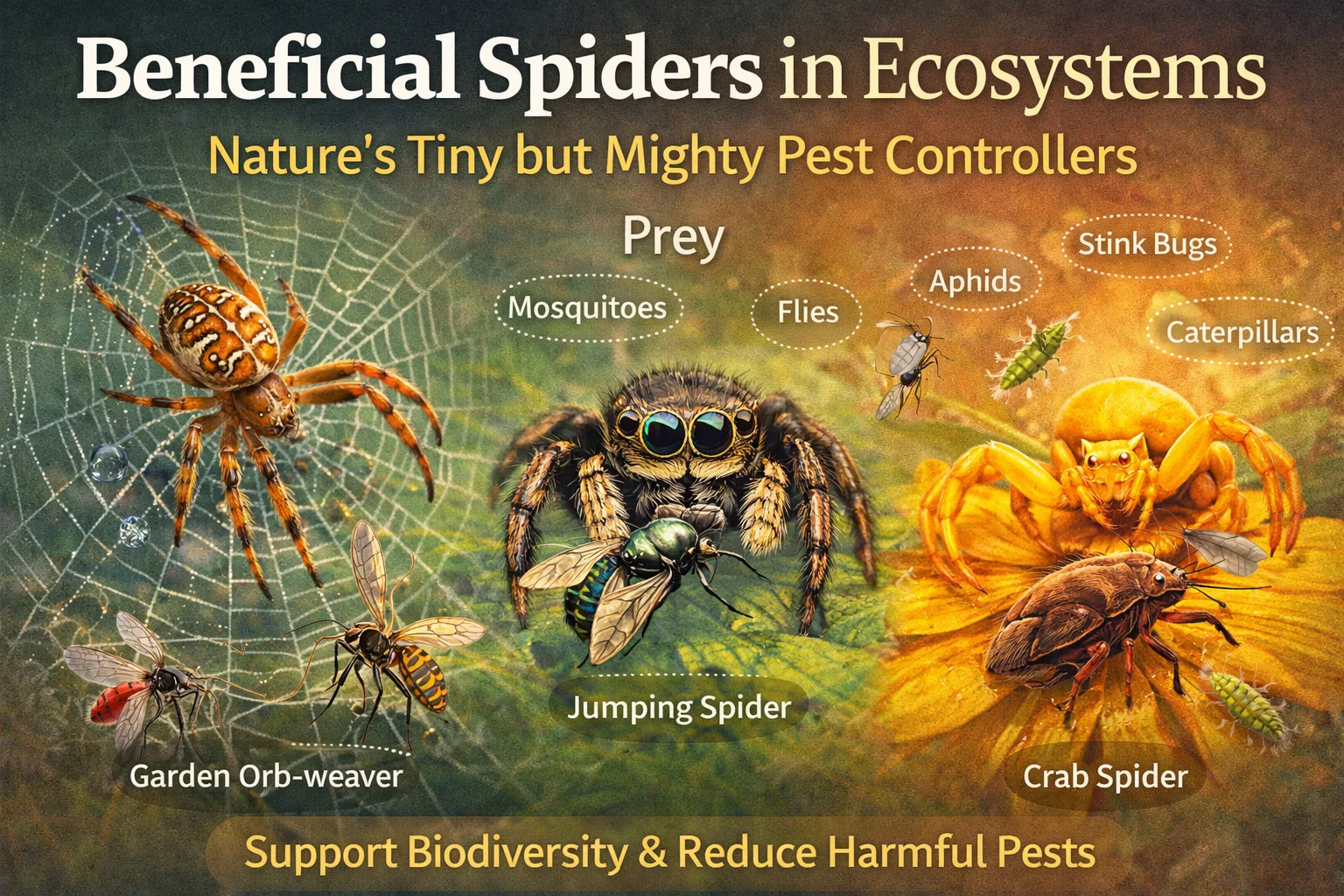
While some spiders have a fearsome reputation, the vast majority are incredibly beneficial spiders in ecosystems. These eight-legged allies play a vital role in maintaining ecological balance, protecting crops, and supporting biodiversity. Far from being pests themselves, spiders are essential predators that help keep insect populations in check naturally.
Why Spiders Are Ecological Heroes
Spiders are among the most successful predators on Earth. A single spider can consume hundreds of insects every year. By hunting pests that damage plants and spread diseases, they act as a free, highly efficient form of biological pest control.
Key Benefits of Spiders in Ecosystems:
1. Natural Pest Control Spiders consume massive numbers of insects, including aphids, mosquitoes, flies, cockroaches, beetles, and caterpillars. In agricultural fields, gardens, and forests, they significantly reduce the need for chemical pesticides. Studies show that farms with healthy spider populations often have lower pest damage and higher crop yields.
2. Balance in Food Webs Spiders occupy a critical middle position in the food chain. They eat insects and, in turn, become food for birds, lizards, frogs, and small mammals. This makes them essential for transferring energy through the ecosystem.
3. Soil Health and Nutrient Cycling Many ground-dwelling spiders help break down organic matter indirectly. Their silk and waste contribute to nutrient recycling, while their presence supports a diverse soil ecosystem.
4. Biodiversity Indicators Healthy spider populations usually signal a healthy, balanced environment. Because they are sensitive to pollution and habitat changes, scientists use them as bioindicators to monitor ecosystem health.
5. Economic Value to Humans In agriculture alone, the pest-control services provided by spiders are worth billions of dollars annually. They protect everything from rice paddies and cotton fields to backyard vegetable gardens.
Notable Beneficial Spiders
- Jumping Spiders (Salticidae): Excellent hunters with sharp vision. They actively stalk and pounce on pests without using webs.
- Wolf Spiders (Lycosidae): Fast ground hunters that patrol fields and gardens, eating large numbers of crop-damaging insects.
- Orb-Weaver Spiders: These web-builders trap flying insects like mosquitoes and moths, helping control populations around homes and farms.
- Daddy Long-Legs (Harvestmen): Often confused with spiders, they also consume aphids, mites, and decaying matter.
- Green Lynx Spiders: Common in gardens, they are voracious predators of caterpillars and other plant-damaging bugs.
Living in Harmony with Spiders
Most spiders are shy and only bite when threatened. They prefer to stay hidden in gardens, under logs, or in corners of buildings where they can hunt undisturbed. By reducing clutter, sealing cracks, and avoiding broad-spectrum insecticides, you can encourage beneficial spiders to stay and work for you.
Simple Ways to Support Beneficial Spiders:
- Leave parts of your garden “wild” with mulch, rocks, and native plants.
- Avoid killing every spider you see — they are doing important work.
- Use targeted pest control only when absolutely necessary.
- Plant diverse vegetation to attract both spiders and their prey.
The Big Picture
Spiders are not our enemies — they are one of nature’s most effective pest management systems. While a few species deserve caution, the overwhelming majority of spiders provide silent, unpaid service that benefits plants, animals, and humans alike.
Understanding the role of beneficial spiders in ecosystems helps replace fear with appreciation. The next time you see a spider in your garden, remember: you’re looking at a tiny guardian working hard to keep the ecosystem healthy and balanced.
Would you like tips on how to attract more beneficial spiders to your garden, or a comparison between dangerous vs beneficial spider species?
Spiders in Agriculture: Benefits as Nature’s Free and Effective Pest Controllers
Spiders in agriculture deliver massive benefits that many farmers overlook. These eight-legged allies serve as powerful natural predators, helping control pests while reducing reliance on expensive and harmful chemical pesticides. By supporting spider populations, farmers can achieve better yields, healthier ecosystems, and more sustainable operations.
Why Spiders Are Valuable in Farming
Spiders rank among the most abundant predators in agricultural fields, orchards, vineyards, and greenhouses. A single spider can consume hundreds of insects per year, and entire populations provide trillions of predation events annually across croplands worldwide.
They target a wide range of common agricultural pests, including:
- Aphids
- Caterpillars
- Moths (such as the destructive tomato leafminer)
- Beetles
- Flies
- Grasshoppers
- Thrips
- Psyllids
Unlike many chemical pesticides that kill both pests and beneficial insects, spiders offer targeted, ongoing biological control without disrupting the broader ecosystem.
Key Benefits of Spiders in Agriculture
1. Reduced Pesticide Use Encouraging spiders can significantly cut insecticide applications. Research shows that web-building spider groups effectively control pests like the tomato leafminer moth in crops such as tomatoes and potatoes. This approach lowers chemical residues in soil, water, and food while combating pesticide-resistant pests.
2. Improved Crop Yields Higher spider densities often translate into better harvests. Studies in apple and pear orchards found that boosting spider numbers through simple habitat enhancements reduced moth and psyllid pests while increasing fruit production. In cereal crops, spider predation on aphids correlates with higher yields.
3. Cost Savings for Farmers Spiders provide free, 24/7 pest control. Farmers who support spider populations spend less on repeated pesticide sprays, equipment, and labor. Over time, this leads to substantial economic advantages, especially in organic and integrated pest management (IPM) systems.
4. Enhanced Biodiversity and Ecosystem Health Diverse spider communities indicate and support a balanced farm ecosystem. They help control invasive species, limit disease-spreading insects, and serve as prey for birds and other wildlife, strengthening the entire food web.
5. Year-Round Protection Many spiders remain active even in cooler months, suppressing pests during winter and early spring when they might otherwise explode in numbers during the growing season.
Practical Ways Farmers Can Boost Beneficial Spiders
- Create habitat refuges: Leave undisturbed areas like field margins, hedgerows, mulch, and cover crops where spiders can hide and overwinter.
- Reduce broad-spectrum pesticides: Switch to targeted sprays or organic alternatives that spare spiders.
- Diversify landscapes: Alley-cropping, agroforestry, and mixed planting systems increase spider abundance and diversity.
- Install artificial shelters: Corrugated cardboard bands around tree trunks have successfully boosted spider numbers in orchards.
- Minimize tillage: Less soil disturbance helps ground-dwelling spiders thrive.
The Bigger Picture
Spiders in agriculture represent one of the most underutilized tools in sustainable farming. They suppress pests in 79% of studied cases and contribute to more environmentally friendly, profitable agriculture.
As concerns over pesticide resistance, environmental pollution, and consumer demand for cleaner food grow, leveraging these natural allies becomes increasingly important. Farmers who actively support spider populations often see stronger crops, lower costs, and more resilient farms.
The next time you spot a spider in your field or garden, remember — it’s not a pest. It’s a hardworking member of your farm’s pest control team.
Would you like specific recommendations for spiders in certain crops (like rice, cotton, or vegetables), a guide to identifying beneficial spiders, or tips tailored to a particular region?














Leave a Reply