


That fishy breath your cat gets after mealtime might seem harmless, but it could be a sign of a hidden health crisis. Just like humans, cats are susceptible to dental disease, a condition that can cause far more than just bad breath. In fact, according to the American Veterinary Dental Society, periodontal disease affects a staggering 70-80% of cats by the age of three.
Without proper care, plaque hardens into tartar, leading to inflamed gums (gingivitis), tooth loss, and pain. Even more concerning, the bacteria from a diseased mouth can enter the bloodstream and potentially damage vital organs like the heart, liver, and kidneys.
While professional veterinary cleanings are essential, the gold standard for at-home maintenance is simple: brushing your cat’s teeth. But you can’t just use any toothpaste. Here is why cat toothpaste is a non-negotiable part of your pet care routine and how to introduce it to your feline friend.
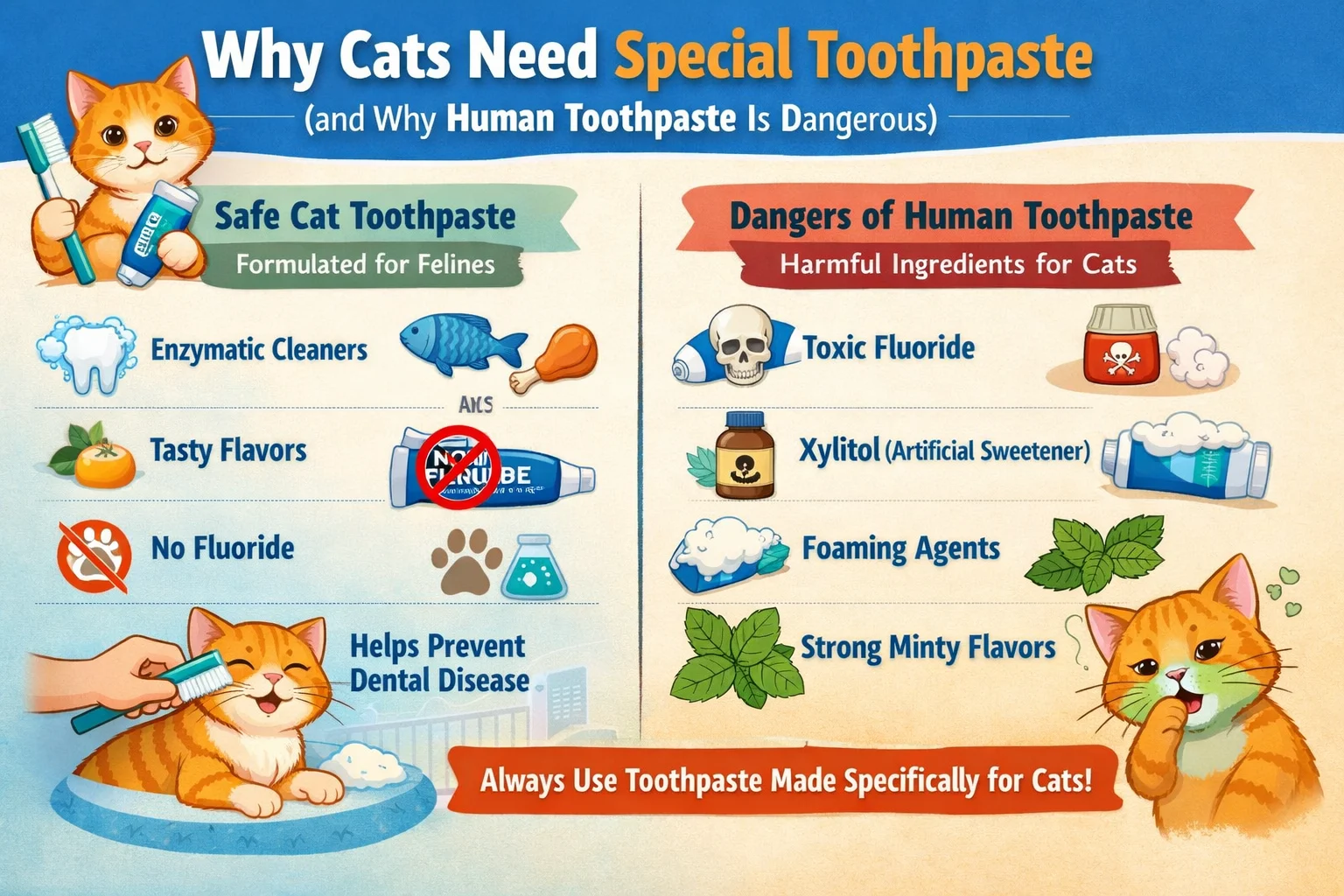
Why Cats Need Special Toothpaste (and Why Human Toothpaste Is Dangerous)
It might be tempting to grab your own tube of minty gel, but this is a critical mistake. Human toothpaste is formulated for people, not pets, and it contains ingredients that are dangerous for cats.
- Xylitol Toxicity: Many “sugar-free” human toothpastes contain Xylitol, an artificial sweetener that is highly toxic to dogs and cats. Even a small amount can cause a rapid, life-threatening drop in blood sugar (hypoglycemia) and potential liver failure in cats.
- Fluoride Overdose: While fluoride helps protect human teeth, it can be toxic to cats if swallowed in large amounts. Because cats cannot spit and will inevitably swallow their toothpaste, fluoride poses a significant risk.
- Detergent Foam: Human toothpaste foams because of sodium lauryl sulfate (SLS). This foaming action can upset a cat’s stomach, leading to nausea or vomiting. Cats are also naturally afraid of things that bubble in their mouths, which can make brushing a terrifying experience.
Cat toothpaste, on the other hand, is specifically designed to be swallowed. It is enzyme-based, meaning the ingredients work to chemically break down plaque and debris without the need for rinsing. Best of all, it comes in feline-friendly flavors like poultry, malt, or seafood—making the experience much more palatable for your finicky eater.
The Benefits of Regular Brushing
Using an enzymatic cat toothpaste with a soft-bristled brush is the most effective way to physically remove plaque before it hardens into tartar. Regular brushing (ideally daily) helps:
- Prevent bad breath (halitosis).
- Reduce the risk of painful gum disease.
- Avoid costly veterinary dental procedures down the line.
- Potentially extend your cat’s life by preventing systemic bacterial infections.
How to Introduce Toothpaste to Your Cat
Cats are creatures of habit and can be suspicious of new things. Never force a brush into your cat’s mouth immediately, as this will create a negative association that is hard to reverse. Follow these steps for a stress-free introduction.
Step 1: Choose the Right Tools
- Toothpaste: Pick an enzymatic cat toothpaste in a flavor your cat might enjoy, such as poultry or malt. Avoid any with artificial additives.
- Toothbrush: Use a cat-specific finger brush or a small, extra-soft toothbrush designed for pets. Finger brushes are often easier for beginners as they offer more control.
Step 2: The Taste Test
Let your cat taste the toothpaste first. Put a small dab on your finger and let them lick it off. Do this for a few days in a row. This builds a positive association—the toothpaste becomes a treat rather than a threat.
Step 3: Introduce the Brush
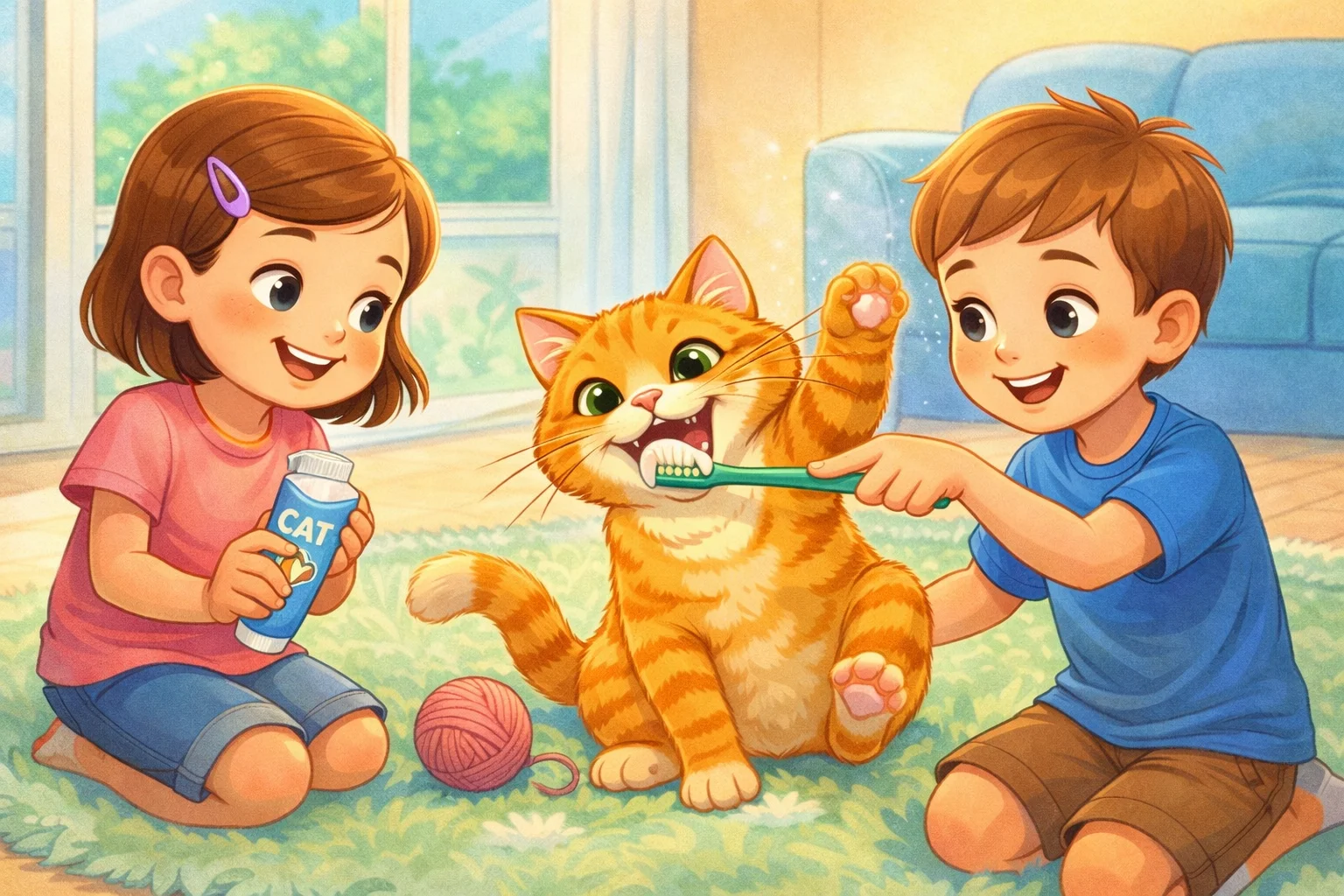
Put a little toothpaste on the brush or your finger and let them lick it off. Next, gently lift their lip and rub your finger or the brush along one tooth and the gumline. Go slowly, and stop immediately if they show signs of stress. Reward them with praise or a small cat-safe treat.
Step 4: The Full Routine
Once they are comfortable, focus on the outside surfaces of the teeth (cats rarely tolerate brushing the inside of their mouths). The goal is to brush the large canine teeth and the back molars at a 45-degree angle to get under the gumline. Aim for just 30 seconds on each side.
Pro-Tip: The best time to brush is when your cat is relaxed, perhaps after a play session or while they are sleepy on the couch.
Never use human toothpaste on your cat. Most human formulas contain fluoride, xylitol, foaming agents (like sodium lauryl sulfate), and other ingredients that are toxic or upsetting when swallowed. Cats swallow whatever you put in their mouth—they don’t spit like we do. Ingesting these can cause vomiting, stomach upset, or more serious poisoning.
Cat toothpaste is specially formulated to be:
- Safe if swallowed
- Enzymatic (often using natural enzymes like glucose oxidase and lactoperoxidase to break down plaque bacteria)
- Flavored to appeal to cats (common options include poultry, seafood, tuna, vanilla-mint, or even unique ones like catnip or coconut chicken)
These flavors turn brushing into something your cat might actually enjoy or at least tolerate, making the process much easier.
Benefits of Using Cat Toothpaste
Regular use (ideally daily, or at least 2–3 times per week) helps:
- Reduce plaque before it mineralizes into tartar
- Fight bad breath (halitosis)
- Prevent or slow gingivitis and periodontitis
- Support overall health by lowering the risk of bacterial spread to organs like the heart, kidneys, and liver
- Potentially reduce the frequency or severity of professional veterinary dental cleanings (which require anesthesia)
What If My Cat Absolutely Refuses Brushing?
If your cat puts up a fight and brushing is simply too stressful for both of you, don’t give up on dental health entirely. Cat toothpaste can still be used in other ways:
- As a Topical Rub: Simply dab some toothpaste onto a textured dental glove or a piece of gauze wrapped around your finger and rub it on their teeth. The enzymes will still work to break down bacteria, even without the mechanical scrubbing of bristles.
- Dental Treats and Additives: While not as effective as toothpaste, these can supplement your routine.
The Bottom Line
Cat toothpaste is a vital tool in protecting your feline companion from pain and disease. By choosing a safe, enzymatic formula designed for them, you are taking a major step toward ensuring your cat lives a longer, healthier, and happier life. Start slow, be patient, and make it a positive experience—those few seconds of brushing each day are a small price to pay for a lifetime of healthy purrs.






Leave a Reply