


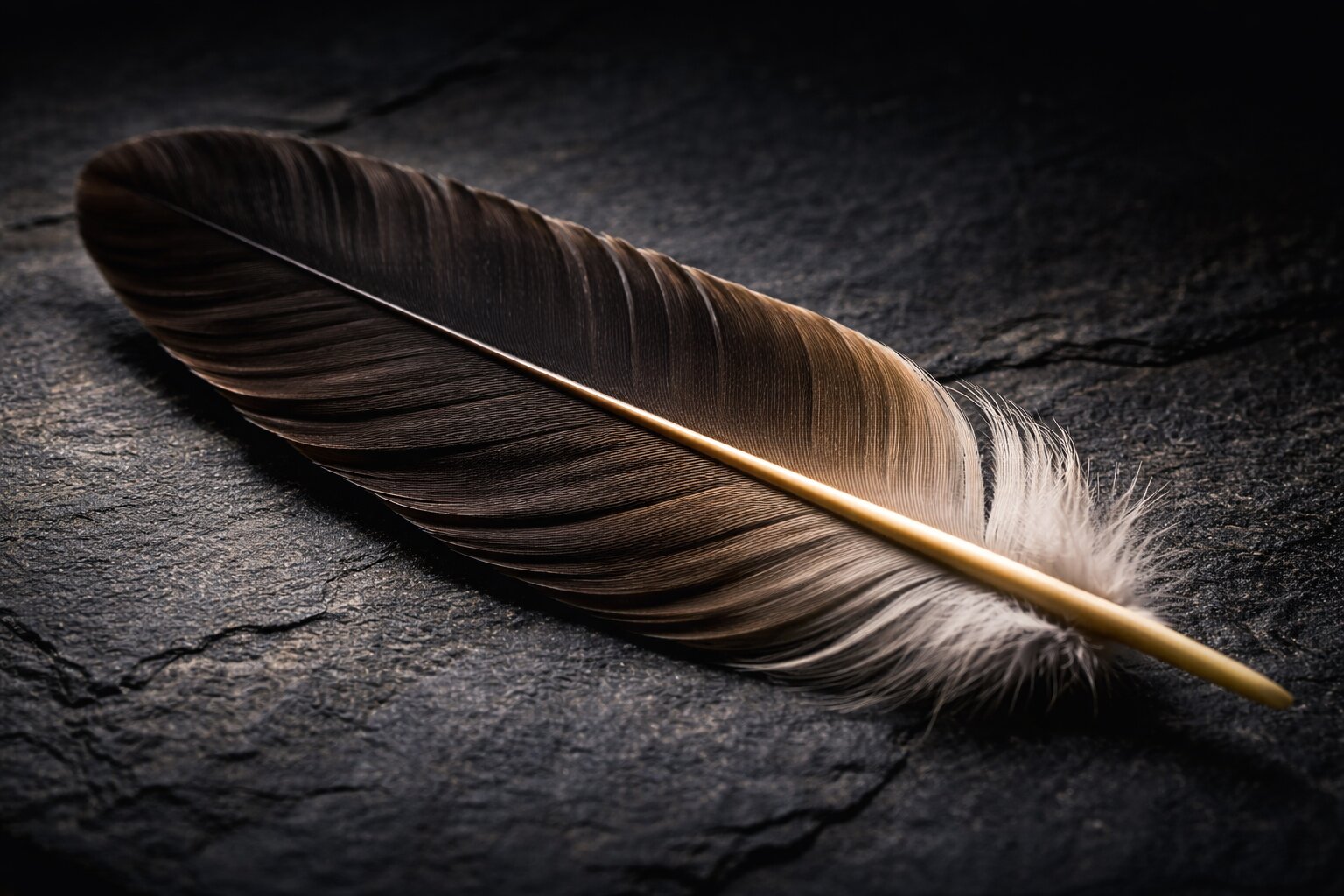
Have you ever found a feather on the ground and wondered about its story? Feathers are like nature’s little miracles. They are light, strong, and come in more colors and shapes than you can imagine. They help birds fly, stay warm, and even find a friend.Wonderful World of Feathers and kids activities can be explored.
 Fun with Feathers: Secrets of Our Feathered Friends
Let’s become feather detectives! We’ll explore fun activities and learn all about the amazing secrets feathers hold.
Activity 1: The Feather Sorting Game
Just like a scientist, you can collect and sort feathers to discover their secrets. The best place to start is your own backyard, a local park, or even a farm (with permission, of course!). Remember, we only ever collect feathers that have been shed naturally. We never want to disturb a bird.
Once you have a small collection, it’s time to sort them! You can sort them by:
- Size: Line them up from the tiniest, fluffiest feather to the longest, strongest one.
- Shape: Are they long and pointy? Short and round? Or soft and fluffy?
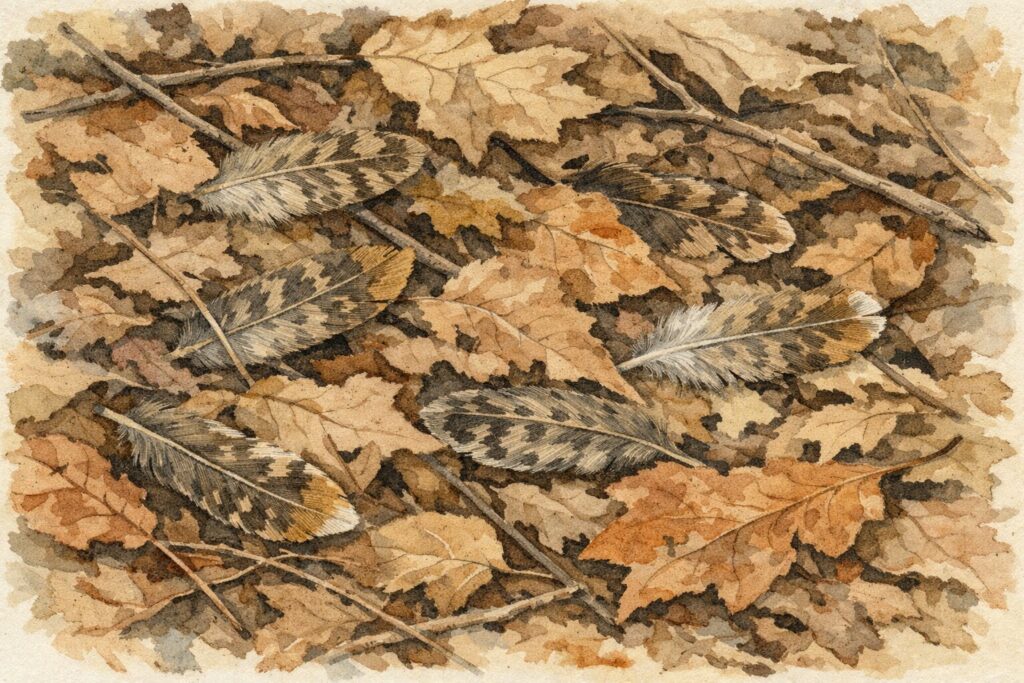
- Color: Make a rainbow of feathers! Which colors are best for hiding (like brown and grey)? Which ones are for showing off (like bright blue or red)?
What Makes a Feather a Feather? Exploring Their Features
As you sort your feathers, you might notice they aren’t all the same. That’s because they have different jobs! Here are the main types of feathers and their special features:
1. Contour Feathers (The Outer Wear)
These are the feathers you see covering a bird’s body. They are like a raincoat and a sunshade all in one!
- Feature: They are usually smooth and have a stiff central shaft. If you look closely, you’ll see tiny little hooks that zip the feather together, keeping its shape.
- Bird Example: The smooth, sleek feathers on a duck’s back that make water roll right off.
 Cluck, Cluck! The Secret Life of Chickens
 Egg-citing Eggs: From Coop to Breakfast
 Feathered Fashion: Why Birds Preen
 Peep, Chirp, Chat! Birds That Communicate
 Moo-tastic Cows: Friends on Four Legs
 Piggy Brains: Smarter Than You Think
 Goats on the Move: The Ultimate Climbers
 Sheep and the Magic of Wool
 Backyard Animal Heroes: Ducks, Rabbits & More
Fun with Feathers: Secrets of Our Feathered Friends
2. Flight Feathers (The Wings for Flying)
These are the big, strong feathers on a bird’s wings and tail. They are the superheroes of the feather world.
- Feature: They are long, asymmetrical (one side is wider than the other), and super strong to push against the air during flight.
- Bird Example: The long, powerful feathers on an eagle’s wing. These are perfectly designed for soaring high in the sky and steering with precision.
3. Down Feathers (The Cozy Pajamas)
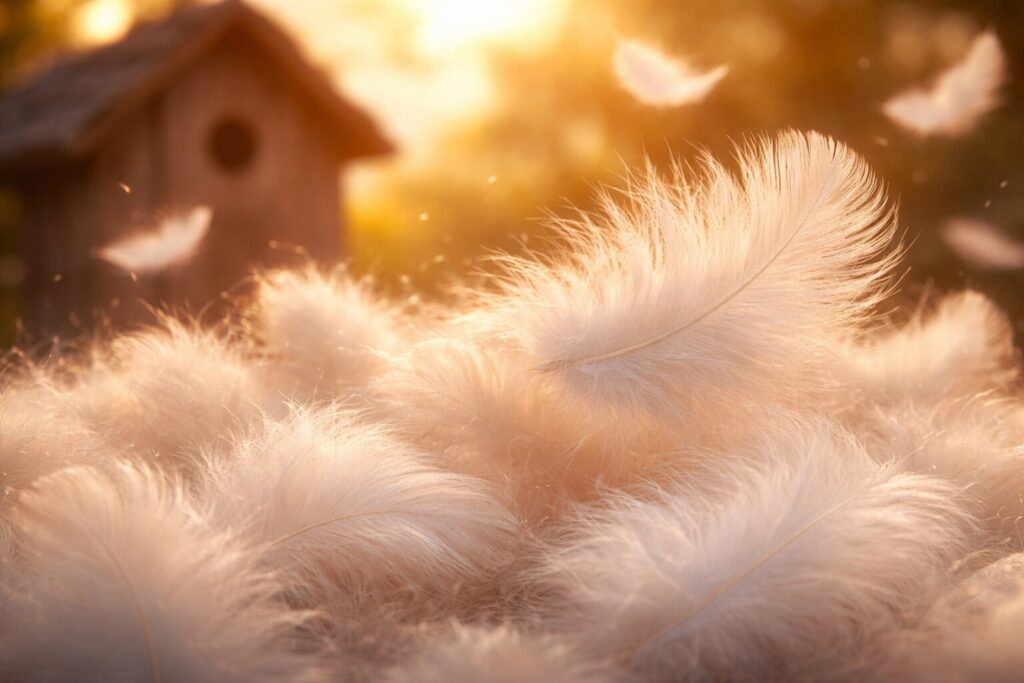
These are the soft, fluffy feathers you find closest to a bird’s skin.
- Feature: They have no stiff shaft or zipping structure. They are just a fluffy bunch of barbs that trap warm air next to the bird’s body.
- Bird Example: The super-soft feathers under the tough outer feathers of a chicken or duck, keeping them warm on cold nights.
4. Specialized Feathers (For Showing Off!)
Some feathers have a very special job: to look amazing!
- Feature: They can be incredibly long, brightly colored, or have unique shapes. Their main purpose is to attract a mate or show dominance.
- Bird Example: The magnificent train of a peacock. Those long, eye-catching feathers are not for flying; they are for dazzling everyone and saying, “Look at me!”
Feathers Have a Purpose: Usefulness for Animals and More
Feathers aren’t just beautiful; they are essential tools for birds and have even been useful for people throughout history.
For Birds:
- Flight: This is the most obvious use. Feathers on wings and tails are like a bird’s personal airplane, propeller, and rudder all in one.
- Insulation: Down feathers trap a layer of air, keeping birds warm in the winter and cool in the summer, just like our coats do for us.
- Waterproofing: Many birds, like ducks, spread oil from a special gland over their contour feathers. This makes them waterproof, so they don’t get soggy and cold when swimming.
- Camouflage & Communication: The colors and patterns on feathers help birds hide from danger (camouflage) or send signals. Bright colors can say “stay away” to a rival or “come closer” to a potential mate.
For Humans (History & Culture):
For thousands of years, people have used feathers, always with respect for the animal.
- Decoration and Ceremony: Many Indigenous cultures, particularly in North America, use eagle feathers in sacred ceremonies. They are given as the highest honor, representing courage, strength, and wisdom. Peacock feathers have been used as symbols of beauty, royalty, and good luck in art and fashion across Asia and Europe for centuries.
- Practical Uses: Before modern inventions, people used large, strong feathers from birds like geese as quills to write with. The hollow shaft was dipped in ink, and the sharpened tip was used to write letters and books. The softest down feathers have also been used to fill warm pillows and comforters for a cozy sleep.
Activity 2: Feather Art
Now that you know all about feathers, use them to create! Glue your collected feathers onto paper to make colorful birds, design beautiful patterns, or even create a feathery crown.
Activity 3: Feather Science Experiment
Time to test your feathers! Get a bowl of water and a fan (with a grown-up’s help). Predict what will happen, then test it:
- Float Test: Which feathers get wet and sink? Which ones stay on top of the water? (The waterproof contour feathers should bead water right off!)
- eagle featherWind Test: Hold different feathers in front of a fan. Which ones blow away easily? Which ones are heavy and steady? (The big flight feathers will feel strong, while the down feathers will float away like a cloud).
Activity 4: Feather Observation
Become a real scientist by keeping a feather notebook. Draw the feathers you find and write down where you found them. What kind of bird do you think it came from? A pigeon in the park? A blue jay in your backyard? A chicken at a farm? Compare the differences!
Feathers are a gateway to understanding the amazing birds we share our world with. So, next time you find one, take a closer look—it has an incredible story to tell.
FAQs
1. What are contour feathers and why are they important?
Contour feathers are the outer feathers that give a bird its shape and color. They play a crucial role in camouflage, insulation, and protection from the elements, helping birds hide in plain sight and maintain body temperature.
2. How do down feathers keep birds warm?
Down feathers are soft and fluffy, without a stiff shaft. Their ultra-fine barbs trap air close to the bird’s body, providing excellent insulation and warmth, especially in cold environments.
3. Why are flight feathers designed asymmetrically?
Flight feathers have a stiff central shaft (rachis) with asymmetrical vanes. This structure provides strength, flexibility, and aerodynamic efficiency, enabling birds to soar, glide, and maneuver with precision.







Leave a Reply