


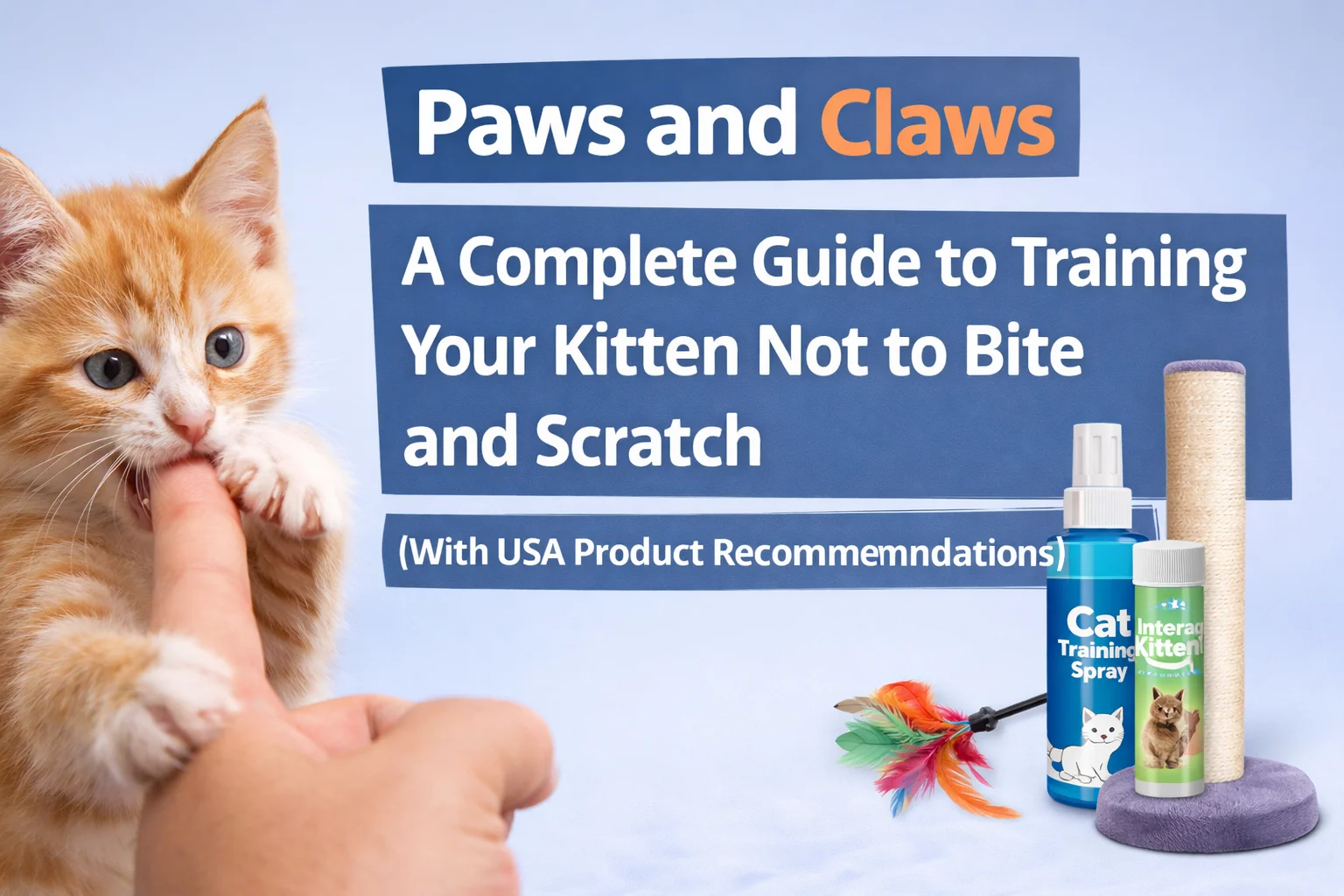
Understanding the “Why”: It’s Not Aggression, It’s Instinct
Before you can stop the behavior, you need to understand why your kitten acts like a tiny lion. For kittens, biting and scratching are primarily forms of play and exploration, not malice . In the wild, they would practice pouncing, grabbing, and biting on their littermates. If a kitten bit too hard, the sibling would yelp and stop playing, teaching the biter about “bite inhibition” .
However, if a kitten is adopted away from its litter too early (before 8-10 weeks), it may never have learned that lesson, and you become the stand-in for the missing sibling .
Common triggers for biting include:
- Overstimulation: Even happy cats have a threshold for petting. Sometimes a purring kitten suddenly bites because they’ve become overstimulated.
- Teething: Just like human babies, kittens lose their baby teeth and grow adult ones, leading to sore gums they want to chew on.
- Fear or Pain: If your kitten suddenly starts biting aggressively (hissing, ears flat), a vet visit is necessary to rule out injury .
The “Do Nots” of Kitten Training
First, a crucial warning. It is vital that you never use physical punishment or yelling. Hitting a cat, tapping their nose, or shouting not only breaks their trust but actually increases aggression and stress. A scared kitten is far more likely to bite hard than a confident one .
Step 1: Redirecting with Interactive Toys
The golden rule of kitten training is: Never use your hands as toys. If you wiggle your fingers in front of a kitten’s face, you are teaching them that fingers are prey. Instead, you need to redirect that hunting energy onto appropriate objects.
The Technique: When the kitten stalks your ankles or hands, freeze. Do not pull away quickly (that triggers chase instinct). Instead, pull out a wand toy and get them to chase that instead .
- The Yelp Method: When those sharp teeth touch your skin, let out a high-pitched “Ouch!” or “Eep!”—imitating a kitten’s cry. Then, immediately stop moving your hand and withdraw your attention for 10-20 seconds .
Commercial Products to Use:
- Teaser Wands: These keep your hands at a safe distance while satisfying the hunt.
- Automatic Toys: For when you are busy or working from home.
Search Links:
Step 2: The “Time Out” Method
Kittens crave attention. If redirection doesn’t work, you need to teach them that biting leads to boredom.
The Technique: The moment a bite occurs that hurts, say a firm “No” (not a yell), stand up, and walk away. Move to a different room or turn your back for 1 to 2 minutes . You can also place them in a quiet, boring bathroom for a very short “time out” to let them decompress if they are overstimulated .
Why it works: You are removing the reward (your attention). Your kitten will quickly learn that gentle play keeps the human around, while biting makes the human disappear.
Step 3: Managing the Environment (Scratching Solutions)
Scratching is non-negotiable for cats; it is how they mark territory, stretch their muscles, and remove claw sheaths. You cannot stop scratching, but you can redirect it from your couch to a post.
To do this, the scratching post must be more appealing than the arm of your sofa. Most cats prefer vertical, sturdy posts made of sisal or cardboard that allow them to fully stretch .
The Technique: Place scratching posts near the furniture they currently attack. Use positive reinforcement: when they use the post, give them a treat or a click from a clicker. If they go for the couch, gently redirect their paw to the post.
Commercial Products to Use:
- Sturdy Scratching Posts: Avoid cheap, short carpeted posts. Look for tall, sisal-wrapped options.
- Catnip Spray: This is a training hack. Spraying catnip on the correct surfaces attracts the kitten to scratch there.
- Sticky Paws (Double-Sided Tape): Cats hate sticky textures. Tape this to the corner of your couch. They will avoid the couch and (hopefully) choose the treated scratching post nearby.
Search Links:
- 🔗 Tall Sisal Scratching Post on Amazon
- 🔗 Catnip Spray for Training on Amazon
- 🔗 Sticky Paws Furniture Protectors on Amazon
Step 4: Nail Maintenance
Even with perfect training, accidents happen. Keeping your kitten’s claws short is the single best way to ensure that when they do knead or jump on you, they don’t draw blood.
The Technique: Get your kitten used to having their paws touched early. Buy cat-specific nail clippers (not human ones, as they crush the nail). Trim just the very sharp tip (the “hook”) once a week.
Search Links:
Step 5: Enrichment and Calming Aids
Sometimes kittens bite because they have too much energy or too much anxiety.
- For Energy: A tired kitten is a good kitten. You need to initiate at least 20-30 minutes of active play per day (broken into short sessions). Puzzle feeders that make them “hunt” for kibble are excellent for tiring out their brains .
- For Anxiety: If your kitten seems stressed, hiding, or hissing, synthetic pheromone diffusers can be a game-changer. These mimic the “happy” pheromones cats produce and help create a sense of calm security, reducing fear-based biting .
Search Links:
Step 6: The “Place” Command (Advanced)
For hyperactive kittens who “ambush” you from under the bed, teaching a “place” or “mat” command gives them a job to do.
The Technique: Use a small, portable mat or cat bed. Toss treats onto it. When the kitten steps on it, say “Yes” and treat. Eventually, you can toss a toy off the mat, they will chase it, but return to the mat. This teaches impulse control .
Commercial Products to Use: Look for durable, non-slip mats.
- 🔗 Blue-9 KLIMB Jr. Training Platform on Amazon Note: While originally for dogs, this platform is perfect for cats as a “home base.”
When to See the Vet
If you have tried redirection, time-outs, and enrichment, and your kitten is still aggressively biting (drawing blood, hissing, puffing up), there may be a medical issue. Pain from teething issues, juvenile gingivitis, or even neurological problems can cause sudden aggression. A vet checkup is the first step to rule out physical pain .
Summary Checklist for USA Kitten Owners
- Stop hand-play immediately.
- Buy a wand toy to redirect the hunt.
- Use the “Ouch” and ignore method consistently.
- Trim nails weekly to reduce damage.
- Spray catnip on scratching posts.
- Diffuse pheromones if the home is stressful.
With consistency and the right tools, your sharp-toothed little monster will mature into a well-mannered companion.
Medical & Veterinary Disclaimer
The information provided on aaibi.com is for general informational and educational purposes only. While we strive to ensure accuracy, the content is not intended to replace professional veterinary advice, diagnosis, or treatment.
Jibraan and aaibi.com do not provide medical or veterinary services. Any reliance you place on the information provided on this website is strictly at your own risk.
Pet owners should always consult a qualified veterinarian or licensed animal healthcare provider regarding any medical condition, symptoms, or treatment options. Never ignore professional advice or delay seeking veterinary care because of something you have read on this website.
aaibi.com shall not be held liable for any loss, injury, or damage resulting from the use of the information provided on this site.








Leave a Reply