

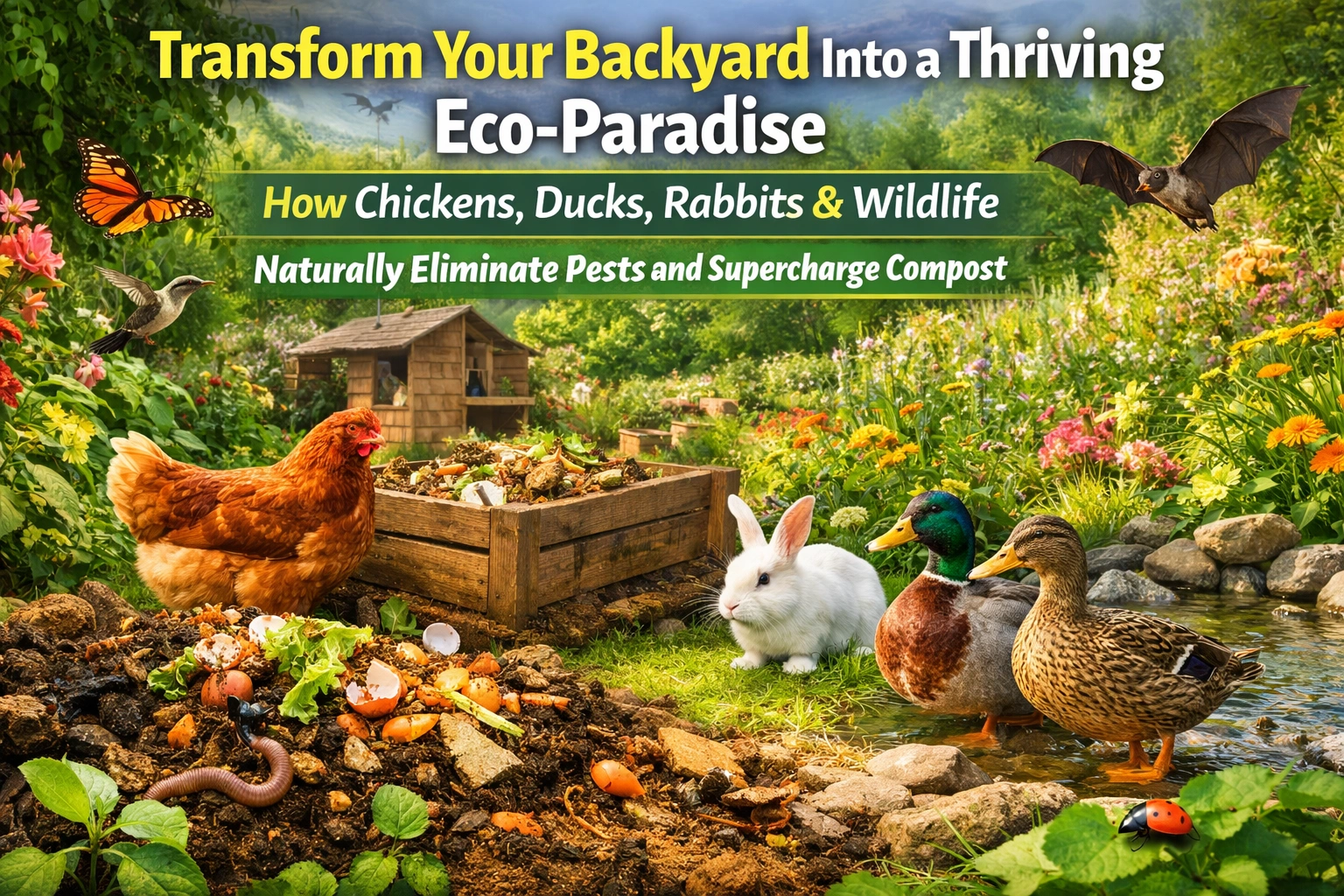
In an era where sustainable living and reducing environmental impact are priorities, many people are turning their backyards into mini ecosystems. Beyond growing vegetables and herbs, integrating certain animals can create a closed-loop system that boosts soil health, cuts down on chemical use, and minimizes waste. Chickens, ducks, and rabbits stand out as particularly eco-friendly “pets” or homestead companions. They provide food (eggs, meat in some cases), companionship, and—most relevant here—valuable services in composting and natural pest control.
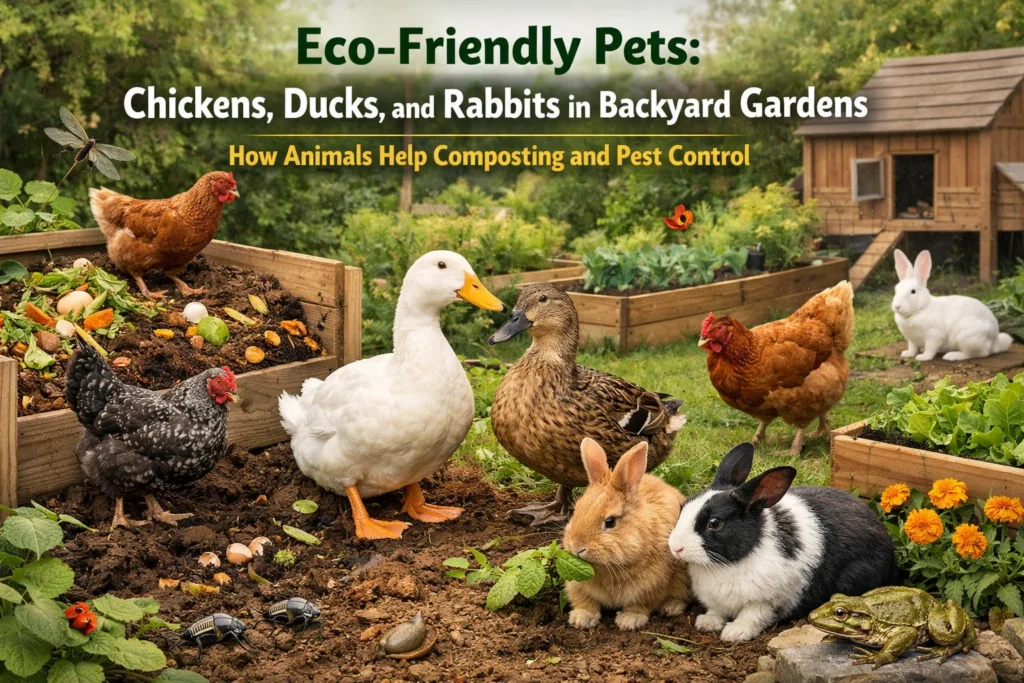
These animals transform garden waste into nutrient-rich resources while tackling common backyard problems like insects and weeds, all without synthetic pesticides or fertilizers. Here’s how each contributes to a more sustainable backyard garden.
Chickens: The All-Round Garden Workers
Chickens are perhaps the most popular backyard animals for good reason. Their scratching and pecking behaviors make them natural multitaskers in the garden.
For pest control, chickens eagerly hunt insects, grubs, beetles, slugs, and other critters. They can cover significant ground, with one chicken potentially debugging up to 120 square feet per week. They target pests like cabbageworms, Japanese beetles, grasshoppers, tomato hornworms, and June bugs. In orchards or vegetable patches, allowing supervised access (especially post-harvest or in spring) lets them clean up fallen fruit, weed seeds, and overwintering pests, breaking pest life cycles naturally.
In composting, chickens excel as accelerators. Their high-nitrogen manure (about 8 pounds per bird per month) is a perfect “green” addition to compost piles. They scratch and turn piles, aerating material and speeding decomposition. Bedding like wood shavings mixes with droppings to create balanced compost. Chickens also eat kitchen scraps, reducing household waste while producing fertilizer that enriches soil structure and feeds beneficial microbes.
With proper rotation or fencing to protect young plants, chickens turn potential problems into assets, closing the loop on waste and pests.
Ducks: Slug Patrol and Gentle Fertilizers
Ducks offer a slightly different profile—less scratching than chickens but exceptional at certain tasks, especially in wetter or slug-prone areas.
Ducks shine in pest control. They voraciously consume slugs, snails, mosquito larvae, grubs, grasshoppers, and various beetles. Unlike chickens, ducks are less likely to devour mature plants (though they may trample seedlings), making them safer for established gardens. Their foraging reduces insect populations effectively, often outperforming chickens in snail and slug elimination. Many gardeners report ducks clearing entire beds of these mollusks in days.
For composting and soil health, duck manure is nutrient-dense, rich in nitrogen, phosphorus, and potassium—often considered one of the best natural fertilizers. It breaks down quickly and supports microbial life. Ducks add directly to soil when roaming, or their bedding and droppings go into compost. They also help break down waste faster through their rooting behavior.
Ducks add entertainment and lower maintenance (more disease-resistant than chickens in some cases), while promoting a balanced, chemical-free garden.
Rabbits: Quiet Compost Kings
Rabbits bring a calmer dynamic—ideal for smaller or urban yards. They’re low-noise, cuddly companions that focus more on fertility than active pest hunting.
Their superpower is composting. Rabbit manure is one of the best organic fertilizers: “cold” manure that can be applied directly without burning plants (unlike chicken or duck manure, which often needs aging). It’s high in nitrogen, phosphorus, and potassium, improving soil structure, moisture retention, and microbial activity. Droppings and urine provide immediate nutrients, and used bedding (straw or hay) adds carbon for perfect compost balance. Rabbits efficiently convert plant-based feed into this “black gold,” supporting earthworms and long-term soil health.
For pest control, rabbits contribute indirectly. Their presence can deter rodents like mice or rats (as prey animals), and some setups use them in integrated systems. However, they’re not primary pest hunters like poultry—wild rabbits are garden pests themselves, but domestic ones focus on fertility.
Rabbits eat a sustainable vegan diet (hay, veggies), produce minimal waste footprint, and align well with eco-conscious households.
Integrating Them for Maximum Eco-Benefits
Combining chickens, ducks, and rabbits creates synergy in a backyard system. Rotate them through zones: chickens till and debug in fallow beds, ducks patrol for slugs in moist areas, and rabbits provide steady manure. All contribute to composting—reducing landfill waste, eliminating chemical needs, and building resilient soil.
This approach lowers your carbon footprint (local food production, less transport), promotes biodiversity, and fosters self-sufficiency. Start small: check local regulations, provide secure housing, and supervise garden access to avoid plant damage.
These animals remind us that sustainability often involves partnership with nature. Chickens, ducks, and rabbits aren’t just pets—they’re hardworking allies turning everyday backyard challenges into opportunities for healthier gardens and a lighter environmental touch. Whether for eggs, fertilizer, or simple joy, they prove small-scale eco-living is accessible and rewarding.

Leave a Reply