

Starting seeds indoors is one of the most rewarding parts of gardening — it gives you a head start on the season, saves money, and lets you grow unique varieties you won’t find at nurseries. For USA gardeners in early March 2026, it’s prime time: many are firing up seed trays for tomatoes, peppers, and brassicas while direct-sowing cool-season crops outdoors where soil is workable.
This guide is beginner-friendly and interactive — grab a notebook or your phone: quiz yourself, pick your crops, and plan your setup by the end!
Step 1: The Quick 60-Second Quiz – Find Your Starting Point! 🧠
Answer these:
- Your USDA Hardiness Zone? (Check almanac.com/frostdates — e.g., Zone 5 northern, Zone 8 southern.)
- Last frost date? (Typically mid-April to mid-May in Zones 4–6; earlier in Zones 7–10.)
- Space & lights? South-facing window, grow lights ready, or just starting small?
Quick tips:
- Zones 3–6 → Start tomatoes/peppers indoors now (6–8 weeks before last frost).
- Zones 7–10 → Many can direct-sow greens; start heat-lovers indoors soon.
- No lights? Stick to easy, low-light tolerant seeds like lettuce or herbs.
Note your zone and 2–3 crops you’re excited about — we’ll match them!
Step 2: Why Start Seeds Indoors? Beginner Benefits
- Extend the season — Get 4–10 extra weeks of growth for long-season crops like tomatoes.
- More variety — Heirlooms and organics from catalogs (Johnny’s, Baker Creek, etc.).
- Stronger plants — Control conditions for healthy roots before transplant.
- Save money — One packet grows dozens of plants vs. buying seedlings.
March 2026 is ideal: Days are lengthening, and many gardeners are prepping for April/May transplants.
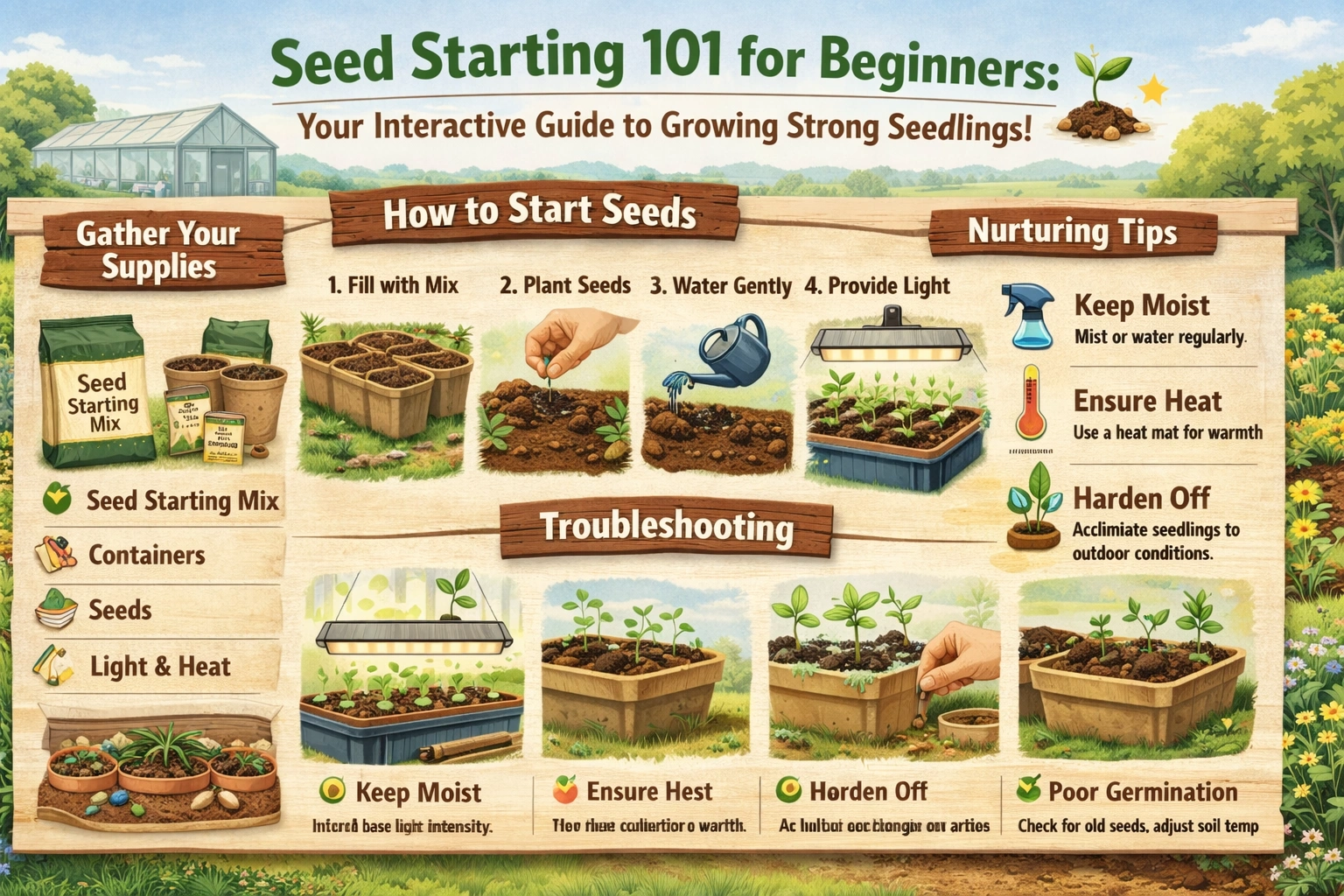
Step 3: Essential Supplies (Keep It Simple & Cheap!)
- Containers: Seed trays with cells, peat pots, recycled yogurt cups (poke drainage holes!).
- Seed starting mix: Sterile, lightweight (not garden soil or potting mix — too heavy/disease-prone). Brands like Espoma or Pro-Mix work great.
- Lights: Fluorescent shop lights or LED grow lights (4–6″ above seedlings, 14–16 hours/day). Windows often aren’t enough — leggy seedlings result!
- Heat mat (optional but helpful): Speeds germination for peppers/tomatoes (70–80°F ideal).
- Other basics: Labels/markers, spray bottle, clear dome/humidity cover, watering tray.
Budget tip: Start with a $20–30 kit (trays + dome) — reusable for years!
Step 4: Step-by-Step: How to Start Seeds Indoors
Follow this foolproof process:
- Moisten the mix — Fill trays/cells, then water from bottom or mist until evenly damp (not soggy).
- Sow seeds — Check packet for depth (rule: 2× seed width; tiny seeds on surface). Plant 1–2 per cell. Gently press in.
- Cover & label — Dome for humidity; label variety + date!
- Warm spot — 65–75°F (heat mat for picky seeds). Germination in 3–14 days.
- Light ASAP — Once sprouted, remove dome, move under lights (keep 2–4″ from tops).
- Water carefully — Bottom-water to avoid damping off; keep moist but not wet.
- Fertilize lightly — After true leaves appear, use diluted organic fertilizer (fish/kelp) every 1–2 weeks.
Interactive challenge: Which step feels easiest? Write down your supplies list now!
Step 5: What to Start in March (Zone-Specific Winners)
Timing: Start 6–8 weeks before your last frost (check Almanac calculator for exact dates).
Indoors Now (Most Zones):
- Tomatoes, peppers, eggplant (long-season stars — 6–10 weeks indoors).
- Broccoli, cabbage, cauliflower, kale (cool-season brassicas — transplant early).
- Onions/leeks (from seed — slow starters).
- Herbs: Basil, parsley.
Direct Sow Outdoors (If Soil Workable, 40°F+):
- Peas, spinach, lettuce, radishes, carrots, beets, arugula (love cool soil).
Zones 8–10 Bonus: Start beans/cucumbers indoors or direct-sow if warm.
Pro tip: Succession sow greens for non-stop harvests!
Step 6: Pick Your Starter Theme (Choose Your Adventure!)
Fun ways to begin:
- Tomato Takeover: Cherry tomatoes + basil + marigolds (companion pest control).
- Brassica Basics: Broccoli + kale + cabbage (nutritious & hardy).
- Quick Wins: Lettuce mix + radishes + spinach (fast harvests).
- Herb Haven: Parsley + cilantro + dill (easy & useful).
Your turn: Pick a theme + list 3–4 seeds. Takes 30 seconds — gets you motivated!
Final Tips to Avoid Common Beginner Mistakes
- Don’t overwater — Damping off fungus kills fast; good airflow helps.
- Harden off seedlings — Gradually expose to outdoors 1–2 weeks before transplant.
- Thin seedlings — Keep strongest one per cell for robust plants.
- Track progress — Journal dates, photos — it’s addictive!
- Use fresh seeds — Test old ones on a wet paper towel.
Seed starting is forgiving — even “failures” teach you fast. In weeks, you’ll have sturdy seedlings ready for your raised beds or garden!
Quick share time: What’s your zone? Or first seeds you’re starting?
Happy sowing — your 2026 garden starts here! 🌿🍅✨





Leave a Reply