


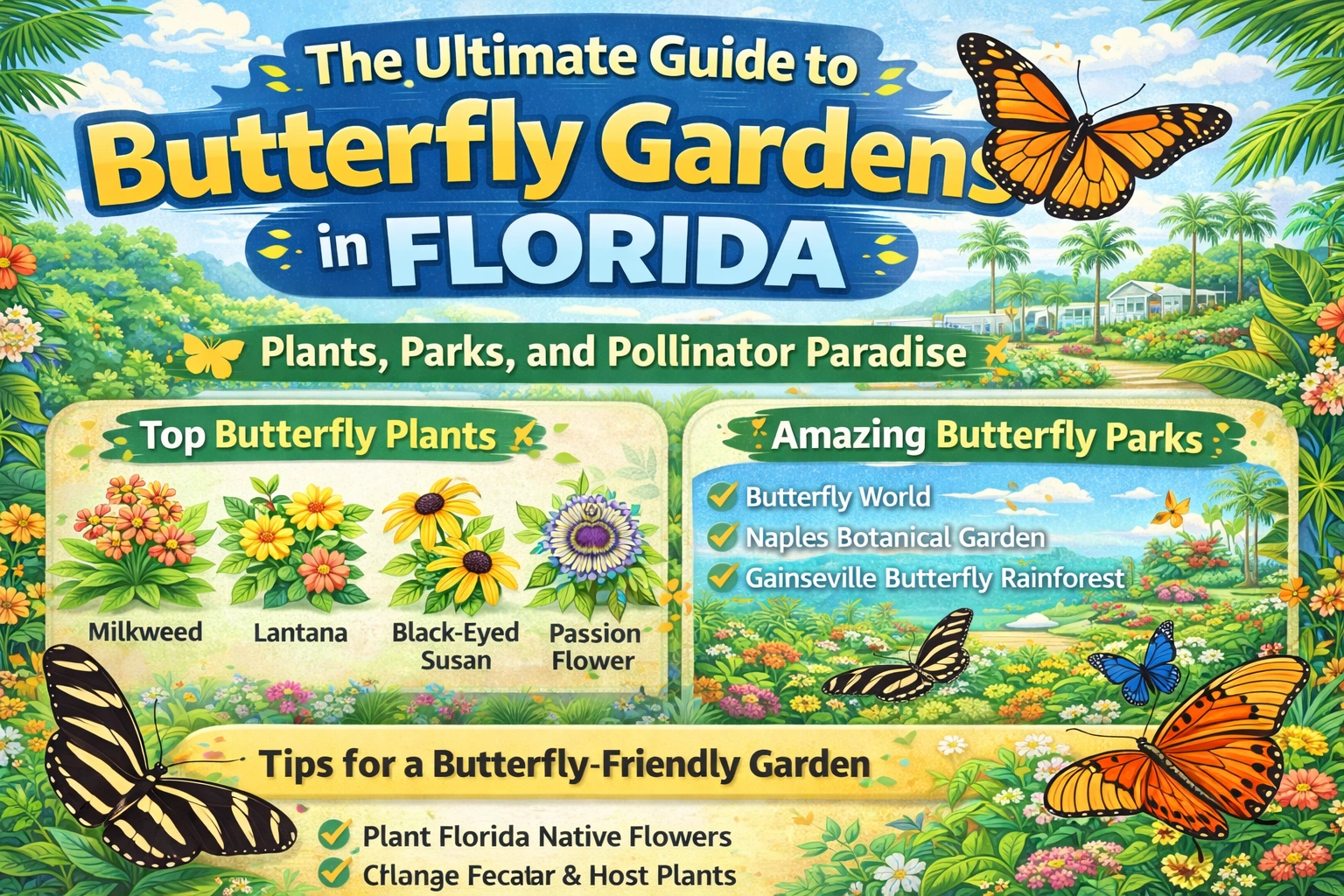
Florida is a butterfly lover’s dream. With its warm climate, long growing seasons, and diverse ecosystems, the Sunshine State hosts over 160 butterfly species that breed here, plus another 200 species that migrate through each year . Whether you’re a seasoned gardener or a curious visitor, creating or exploring a butterfly garden Florida style is one of the most rewarding ways to connect with nature.
This guide covers everything from the best florida butterfly plants to the top butterfly gardens in florida, including a special focus on butterfly garden orlando florida locations.
Part 1: Florida Butterflies – Who Will You Attract?
Before diving into plants and gardens, it helps to know which florida butterfly species you’re likely to encounter. The butterfly florida landscape is incredibly diverse, with different regions hosting different species .
Common Florida Butterflies
Rare and Special Sightings
Some butterflies are harder to spot but worth the search:
- Schaus Swallowtail – A large, colorful butterfly found nowhere else in North America, making a comeback from near extinction
- Miami Blue – Once found as far north as Tampa and Daytona Beach, now detected only on small islands in the Key West National Wildlife Refuge
- Atala Butterfly – An endangered species with black wings, metallic blue spots, and a bright red abdomen
“Many butterflies in Florida are found nowhere else in North America.” – Florida Fish and Wildlife Conservation Commission
Part 2: Florida Plants for Butterflies – Creating Your Garden
The heart of any successful butterfly florida garden is the plants. Unlike adult butterflies, which will sip nectar from many flowers, caterpillars are picky eaters. They require specific florida plants for butterflies to serve as host plants for their eggs and larvae .
Two Types of Butterfly Plants
To create a true butterfly habitat, you need both:
- Nectar Plants – Feed adult butterflies with sugary nectar
- Host Plants – Provide food for caterpillars (yes, they will eat the leaves!)
Best Florida Butterfly Plants
Here are the top florida butterfly plants recommended by experts from Miami-Dade County and UF/IFAS .
Nectar Plants (Feed the Adults)
| Plant Name | Description | Best For |
|---|---|---|
| Pentas | Red, pink, or white flowers that withstand Florida sun | Hummingbirds and all butterflies |
| Salvia | Scarlet, purple, pink, blue, white, or yellow blooms | Hummingbirds and butterflies |
| Spanish Needles (Bidens alba) | Small white flowers, often considered a “weed” | Extremely popular with all pollinators |
| Butterfly Bush | Large purple/pink flower spikes | Adult butterflies of all species |
| Zinnias | Bright, daisy-like annual flowers | Easy-to-grow nectar source |
Host Plants (Feed the Caterpillars)
Spotlight on Milkweed: The Monarch’s Lifeline
Monarch butterfly populations have decreased significantly over the past 20 years, mostly due to habitat loss . By planting native Florida milkweed (not tropical milkweed, which can disrupt migration), you provide essential habitat for this beloved species.
Florida has 20 species of native milkweeds . Look for:
- Butterfly weed (Asclepias tuberosa) – Bright orange flowers
- Swamp milkweed (Asclepias incarnata) – Pink flowers, likes moist soil
- Whorled milkweed (Asclepias verticillata) – White flowers, drought-tolerant
Spotlight on Passionflower: The Longwing Nursery
All of Florida’s longwing butterflies—including the state butterfly, the Zebra Longwing—use passionflower vines exclusively for their caterpillars . There are about a dozen passionflower species in Florida, half of them native. The purple passionflower (Passiflora incarnata) is one of the most common.
“Because the larvae are very host specific, you must offer the correct plant to attract particular butterflies.” – UF/IFAS Extension
Native vs. Non-Native Plants
The Sergeant Joseph Delancy Park Butterfly Garden in Miami is a native butterfly garden, which provides food for butterflies, habitat corridors for migrating animals, shade, and improved aesthetics . Native plants can withstand Florida’s harsh climate and require less water and care than non-native plants.
Benefits of going native:
- Adapted to Florida’s heat, humidity, and occasional freezes
- Require less irrigation and fertilizer
- Support local butterfly populations naturally
- Collection of wild native plants (like coontie) is prohibited by law
Part 3: Butterfly Gardens in Florida – Top Destinations
Whether you’re seeking inspiration for your own garden or planning a day trip, Florida is home to some of the world’s most spectacular butterfly gardens in florida.
1. Butterfly World – Coconut Creek (World’s Largest)
Located in Coconut Creek, Butterfly World is the first butterfly house in the United States and the largest in the world . This is the crown jewel of butterfly garden florida destinations.
Highlights:
- Over 20,000 butterflies and 150+ species visible throughout the year
- Two tropical bird aviaries with lorikeet encounters
- A “secret garden” with one of the world’s most extensive passion flower collections
- Tinalandia Bridge – a swinging suspension bridge replica from Ecuador
- Live Bug Zoo with scorpions, tarantulas, and hissing cockroaches
- Onsite Butterfly Garden Center selling hard-to-find butterfly plants
- Monthly butterfly gardening classes
Visitor Info:
- Location: Coconut Creek, Florida (near Fort Lauderdale)
- Hours: Monday–Saturday 9 AM–5 PM, Sunday 11 AM–5 PM (last arrival recommended by 3 PM)
- Tickets: Purchase in-person upon arrival; annual passes available
Special Note: Butterfly World champions the “Bring Back the Butterflies” campaign, which supplies free butterfly gardening materials to anyone interested. Since the 1980s, this program has created thousands of new butterfly habitats across North America .
2. Key West Butterfly and Nature Conservatory
This glass-enclosed tropical paradise houses 50-60 butterfly species from around the world . The climate-controlled environment features flowering plants, cascading waterfalls, and butterfly-friendly birds.
Highlights:
- Daily butterfly releases
- Educational programs about butterfly lifecycles
- Located in the Florida Keys – perfect for a vacation side trip
3. Florida Museum’s Butterfly Rainforest – Gainesville
Located at the Florida Museum of Natural History, this 6,400-square-foot living rainforest exhibit features over 60 butterfly species that change seasonally .
Highlights:
- Meandering paths past waterfalls and tropical plants
- Butterfly release observations
- Adjacent Butterfly Spotlight Gallery with thousands of preserved specimens
4. Panhandle Butterfly House & Nature Center – Milton
This 1,800-square-foot vivarium showcases native butterfly species in their natural Florida Panhandle habitat . What makes this garden special is its focus on education—volunteers share knowledge about butterfly lifecycles, host caterpillar nurseries, and demonstrate how to create butterfly-friendly gardens.
5. Marie Selby Botanical Gardens – Sarasota
Unlike gardens that import exotic species, Selby focuses exclusively on Florida’s native butterflies and the plants that support them . The Historic Spanish Point campus features a dedicated butterfly house where visitors witness complete metamorphosis cycles.
6. Port St. Lucie Botanical Gardens
This 21-acre subtropical paradise on Florida’s Treasure Coast features a dedicated butterfly garden with a kaleidoscope of ever-changing blooms . Monthly butterfly releases create magical moments for visitors.
7. Deerfield Beach Arboretum
Known as the “Tree Zoo” by locals, this 9-acre hidden gem in Broward County has a butterfly garden featuring Florida-friendly plants that attract zebra longwings, monarchs, and gulf fritillaries year-round .
Best part: Open dawn to dusk with no admission fee and free guided tours.
8. Tibet-Butler Preserve – Near Orlando
This 440-acre natural preserve is just minutes from Orlando’s tourist attractions but feels worlds away . Unlike manicured gardens, Tibet-Butler emphasizes the natural ecosystem that supports butterflies in the wild, with 3.6 miles of hiking trails through pine flatwoods and cypress swamps.
Part 4: Butterfly Garden Orlando Florida – Local Gems
If you’re in Central Florida, you have excellent options for butterfly garden orlando florida experiences.
Grandmothers Legacy of Love Butterfly Sculpture Garden – Lake Eola Park
In September 2025, Orlando celebrated the opening of a beautiful new addition to Lake Eola Park: the Grandmothers Legacy of Love Butterfly Sculpture Garden .
What to know:
- Features plants that butterflies can eat and lay eggs on
- Part of a $60 million renovation of Lake Eola Park
- Includes butterfly sculptures by artist Barbara Sorensen
- The opening celebration included the release of dozens of live butterflies
“I am so honored and thrilled to have my work chosen for such a prominent, important spot in the city.” – Barbara Sorensen, artist
Other Lake Eola improvements:
- Expanded seating areas
- New canopy over the amphitheater
- New restrooms with outdoor concession stands
- Relocated swan marina
- Wider stairway and new pavers around the Sperry Fountain
Additional Orlando-Area Options
| Location | Type | Distance from Orlando |
|---|---|---|
| Tibet-Butler Preserve | Natural preserve with butterfly garden | ~20 minutes |
| Harry P. Leu Gardens | Botanical gardens with butterfly-attracting plants | In Orlando |
| Disney’s Animal Kingdom | Theme park with butterfly gardens | ~30 minutes |
| Bok Tower Gardens | Historic gardens with pollinator habitats | ~1 hour |
Part 5: How to Start Your Own Florida Butterfly Garden
Ready to bring butterfly florida magic to your own backyard? Here’s a step-by-step guide.
Step 1: Choose Your Location
Select a sunny spot. Most butterfly-attracting plants need at least 6 hours of direct sunlight daily. Butterflies are cold-blooded and need sun to warm their wings for flight.
Step 2: Select Native Plants
Use the plant tables above to choose florida plants for butterflies that are native to your region of Florida. The Florida Museum of Natural History and IFAS Extension offices can provide region-specific recommendations.
Step 3: Plant in Clusters
Butterflies are attracted to large groups of flowers, not scattered singles. Plant clusters of the same species for maximum visual impact.
Step 4: Include Both Nectar and Host Plants
This is the most common mistake. Without host plants, butterflies will visit but won’t stay to breed. Remember: “If you would like to attract butterfly breeding to your yard, you must sacrifice some foliage to support the caterpillars” .
Step 5: Add Water and Shelter
Butterflies need:
- Puddling areas – Shallow dishes with moist sand or mud (males drink minerals from damp soil)
- Flat stones – For basking in the sun
- Wind protection – Shrubs or trees that block strong winds
Step 6: Avoid Pesticides
This cannot be overstated. Pesticides kill caterpillars directly and poison adult butterflies. They also eliminate the small insects that some butterflies eat. Go completely pesticide-free in your butterfly garden.
Step 7: Be Patient
It may take a season or two for butterflies to discover your garden. Once they do, and once they find the right host plants, they will return year after year.
Quick Reference: Butterfly Garden Design
| Garden Element | Purpose | Examples |
|---|---|---|
| Nectar plants | Feed adults | Pentas, salvia, zinnias, butterfly bush |
| Host plants | Feed caterpillars | Milkweed, passionflower, cassia, coontie, dill |
| Sunny open area | Basking and warming | Rock or bare soil |
| Puddling station | Mineral intake | Shallow dish with wet sand |
| Windbreak | Shelter from storms | Shrubs, trees, fence |
| Pesticide-free zone | Safety | Whole garden! |
Part 6: Butterfly Conservation in Florida
Butterfly populations face serious threats, including habitat loss, pesticide use, hurricanes, and invasive species . The good news? You can help.
The “Bring Back the Butterflies” Campaign
Butterfly World’s “Bring Back the Butterflies” campaign has resulted in thousands of new butterfly habitats across North America . The program supplies free butterfly gardening materials to anyone interested.
How You Can Contribute
- Create a butterfly garden – Even a small balcony with potted host plants helps
- Join community science projects – Report butterfly sightings to organizations like the North American Butterfly Association
- Support conservation areas – Visit and donate to the butterfly gardens listed above
- Buy native plants – Never collect wild plants; purchase from reputable native nurseries
- Educate others – Share what you’ve learned about florida plants for butterflies
Protected Butterfly Species in Florida
| Species | Status | Where Found |
|---|---|---|
| Schaus Swallowtail | Federal/State endangered | Biscayne National Park, Florida Keys |
| Miami Blue | State endangered | Key West National Wildlife Refuge islands |
| Atala Butterfly | State endangered | South Florida (recovering) |
| Bartram’s Scrub-Hairstreak | State threatened | Florida scrub habitats |
Part 7: Bringing It All Together
Whether you’re visiting Butterfly World in Coconut Creek, exploring the new butterfly garden orlando florida at Lake Eola Park, or planting milkweed in your own backyard, you’re part of something meaningful. Florida’s butterflies need habitat, and every garden counts.
Quick Checklist for Your Butterfly Journey
✅ Visit a butterfly garden – Start at Butterfly World or a local garden near you
✅ Identify your local butterflies – Use the FWC’s butterfly profiles to learn what flies in your area
✅ Plant native – Choose florida butterfly plants like milkweed, passionflower, and cassia
✅ Go pesticide-free – Embrace a few chewed leaves as signs of successful butterfly breeding
✅ Create a puddling station – A shallow dish with wet sand attracts male butterflies
✅ Be patient – It takes time for butterflies to find your garden
✅ Share your success – Post photos, inspire neighbors, and help grow the network of butterfly habitats across Florida
Fun Florida Butterfly Facts
- The Zebra Longwing is the Florida state butterfly
- Gulf Fritillaries can fly 40 mph
- The Atala butterfly’s bright colors warn predators that it is toxic (stored from the coontie plant)
- Some female Eastern Tiger Swallowtails are melanic (dark-colored) – a rare trait in butterflies
- The Great Southern White butterfly has been flying later than usual this year—likely due to recent freezes affecting its normal schedule
Final Thoughts
A butterfly garden florida style is more than just a beautiful addition to your landscape. It’s a living, breathing ecosystem that supports endangered species, educates future generations, and brings a little magic into everyday life.
As the Florida Fish and Wildlife Conservation Commission notes, “People can help by creating butterfly gardens in their backyards or community common areas and using native plants that feed the caterpillars and provide nectar for adults” .
So plant those florida plants for butterflies. Visit those butterfly gardens in florida. And watch in wonder as the florida butterfly population thrives, one garden at a time.
Disclaimer: Garden hours, admission fees, and plant availability are subject to change. Always call ahead or check official websites before visiting. This article is for informational purposes and does not constitute professional gardening advice.









Leave a Reply