


When you crawl into bed after a long day, feeling the pull of much-needed rest, it’s hard to imagine any living creature surviving without sleep. Yet across the animal kingdom, nature has crafted remarkable exceptions—creatures that defy the universal need for shut-eye. Some never sleep at all, while others have evolved astonishing ways to rest without ever fully losing consciousness.
Let’s meet five of these extraordinary animals and uncover the secrets behind their sleepless lives.
1. Bullfrog: The Vigilant Amphibian
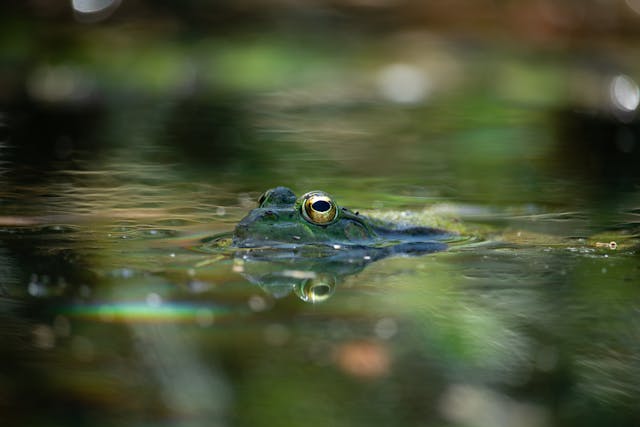
If you’ve ever heard the deep, resonant call of a bullfrog echoing across a pond at night, you might wonder when—or if—these amphibians ever rest. The answer is surprising: bullfrogs don’t sleep in any conventional sense.
What Science Discovered
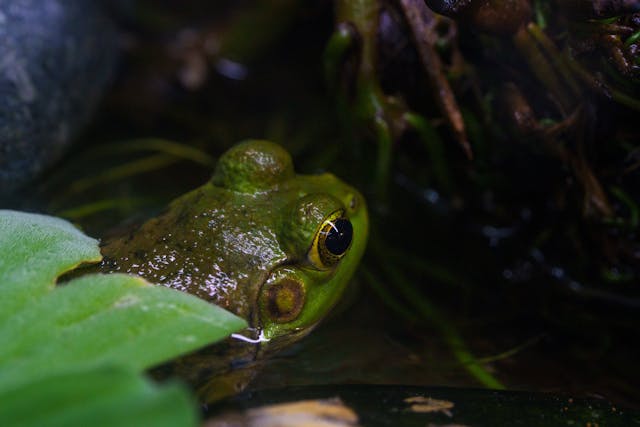
In laboratory studies, researchers observed bullfrogs (Rana catesbeiana) for extended periods and found something remarkable. These frogs remain perpetually alert. Unlike most animals that enter distinct sleep cycles with reduced responsiveness, bullfrogs alternate between periods of reduced activity and full wakefulness without ever experiencing true sleep .
The Evolutionary Advantage
The bullfrog’s sleeplessness is likely a survival adaptation. As creatures highly vulnerable to predators—from herons to snakes—they simply cannot afford to let their guard down. During periods of inactivity, their brains never fully shut off. They may close their eyes and slow their metabolism, but they remain instantly responsive to any threat or opportunity .
Interestingly, scientists haven’t been able to definitively test bullfrog brain activity during these rest states. Some researchers suggest they may experience a form of rest so different from mammalian sleep that our usual definitions simply don’t apply .
2. Jellyfish: Sleep Without a Brain
The jellyfish presents perhaps the most fascinating case in the animal kingdom—a creature that cannot sleep because it lacks the very organ required for slumber: a brain.
No Brain, No Sleep
Sleep, as we understand it, is a neurological process. It requires a central nervous system to cycle through stages of rest and recovery. Jellyfish have neither. Instead, they possess a primitive network of nerves and sensors that help them navigate the ocean, find food, and avoid danger .
But They Do… Something
Recent research has complicated this picture. Scientists studying the upside-down jellyfish (Cassiopea) discovered that these simple creatures do show signs of a rest-like state. At night, they reduce their pulsation rate and become less responsive to stimuli—suggesting even brainless organisms benefit from periodic inactivity .
This discovery has profound implications. If jellyfish—one of the simplest multicellular organisms—show evidence of sleep-like states, it suggests that the need for rest may be even more fundamental to life than previously thought .
Some jellyfish species, like Turritopsis dohrnii, are also considered biologically immortal, capable of reverting to earlier life stages when injured or stressed .
3. Dolphin: The Hemisphere Sleeper
Dolphins present one of nature’s most elegant solutions to the problem of needing rest while never being able to fully disconnect. These intelligent marine mammals have perfected the art of sleeping with half a brain.
Unihemispheric Slow-Wave Sleep
Dolphins are masters of what scientists call “unihemispheric sleep.” One hemisphere of the dolphin’s brain enters a sleep state while the other hemisphere remains awake and alert. After a period of time—typically about two hours—the hemispheres switch roles .
This adaptation allows dolphins to:
- Continue breathing – Unlike humans, dolphins must consciously surface to breathe. If both brain hemispheres slept simultaneously, they would drown.
- Stay vigilant – With one eye always open, they can watch for predators like sharks.
- Maintain social bonds – Dolphin pods swim together continuously, and unihemispheric sleep allows them to stay with the group.
- Navigate – Even while resting, they can track their position and avoid obstacles .
The Newborn Exception
Perhaps most astonishingly, baby dolphins don’t sleep at all during their first month of life. Newborn dolphins and their mothers stay constantly awake, remaining alert for predators until the calves are strong enough to survive . Remarkably, researchers found that these sleep-deprived dolphins showed no signs of stress—their cortisol levels remained normal, unlike in humans who quickly deteriorate without rest .
4. Alpine Swift: The Flying Insomniac
Imagine staying airborne for six months without ever touching the ground. For the Alpine swift, this isn’t imagination—it’s reality.
Months Without Landing
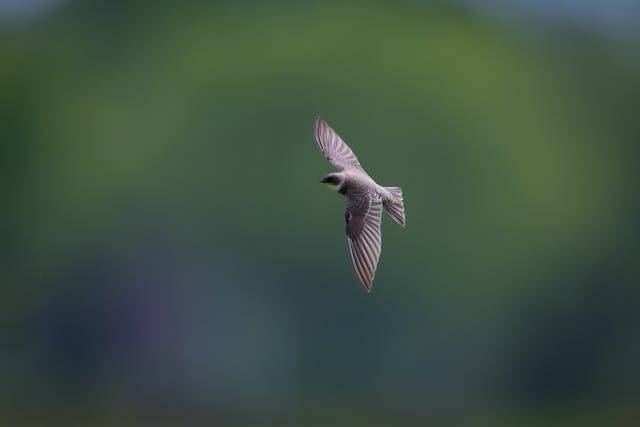
These remarkable birds take migration to an extreme. Alpine swifts (Tachymarptis melba) can remain in continuous flight for up to 200 days—nearly seven months—without landing. They eat, drink, mate, and even sleep while soaring through the skies .
Sleeping on the Wing
Like dolphins, swifts have developed unihemispheric sleep capabilities. They can rest one hemisphere of their brain while the other remains active enough to control flight, maintain altitude, and avoid obstacles. This allows them to take short “naps” while gliding, accumulating enough rest to sustain their marathon journeys .
Their ability to sleep while flying solves a fundamental challenge: how to migrate thousands of miles without stopping in dangerous territory. For the swift, the sky itself becomes a bedroom.
5. Tilapia: The Pineal Gland Mystery
The tilapia, a common freshwater fish found in aquariums and on dinner plates, harbors a secret that sets it apart from most vertebrates: it lacks a pineal gland.
What the Pineal Gland Does
In most animals, the pineal gland produces melatonin—the hormone that regulates sleep-wake cycles. Melatonin levels rise in darkness, signaling the body to prepare for sleep, and fall in light, promoting wakefulness .
Life Without Melatonin
Tilapia simply don’t have this mechanism. Without a pineal gland, they don’t produce the melatonin that drives sleep cycles in other animals. As a result, they show no evidence of regular sleep patterns .
This doesn’t mean tilapia are constantly active—they do have periods of reduced movement—but these rest states don’t fit the definition of true sleep. They represent a different kind of biological rhythm, one that operates without the hormonal cues most vertebrates rely on.
The Truth About “Never Sleeping”
Before we conclude, a note on nuance. When scientists say an animal “never sleeps,” they’re often speaking in careful terms. The definition of sleep itself is complex. Sleep generally requires:
- Reversibility – The animal can be awakened
- Immobility – Reduced movement
- Reduced responsiveness – Higher threshold for sensory stimulation
- Homeostatic regulation – A “rebound” effect when deprived
Many animals that appear sleepless may experience states so different from human sleep that our definitions don’t capture them. Bullfrogs might enter something closer to “quiet waking.” Jellyfish may experience primitive rest states. Even dolphins, with their hemispheric sleep, still get rest—just not the way we do .
Beyond the Top 5: Other Remarkable Resters
The animal kingdom offers even more sleep-defying wonders:
What These Animals Teach Us
The existence of animals that never sleep—or sleep in ways radically different from our own—challenges our assumptions about rest. For decades, scientists assumed sleep was universal among animals with nervous systems. The evidence now suggests otherwise .
These sleepless creatures reveal:
- Sleep is not biologically mandatory for all complex life
- Evolution finds multiple solutions to the challenges of rest and vigilance
- Our definition of sleep may be too narrowly focused on mammalian patterns
- Rest takes many forms across the tree of life
As sleep researcher Dr. Jerome Siegel notes, fewer than 50 of the nearly 60,000 vertebrate species have been thoroughly tested for all criteria that define sleep. Many more discoveries likely await .
Final Thoughts
The next time you’re lying awake at 3 AM, struggling to drift off, take comfort in knowing you’re in unusual company. Bullfrogs, jellyfish, and dolphins are out there, living their sleepless—or half-sleepless—lives, proving that nature’s creativity extends even to the fundamental need for rest.
Whether through brainlessness, hemispheric rest, or perpetual vigilance, these animals have found ways to thrive without ever truly closing their eyes. And perhaps, in their unique biology, they hold clues to one of science’s most enduring mysteries: why we sleep at all.
Did you find this article fascinating? Share it with someone who needs to appreciate how lucky they are to have a cozy bed—and the ability to actually use it!












Leave a Reply