


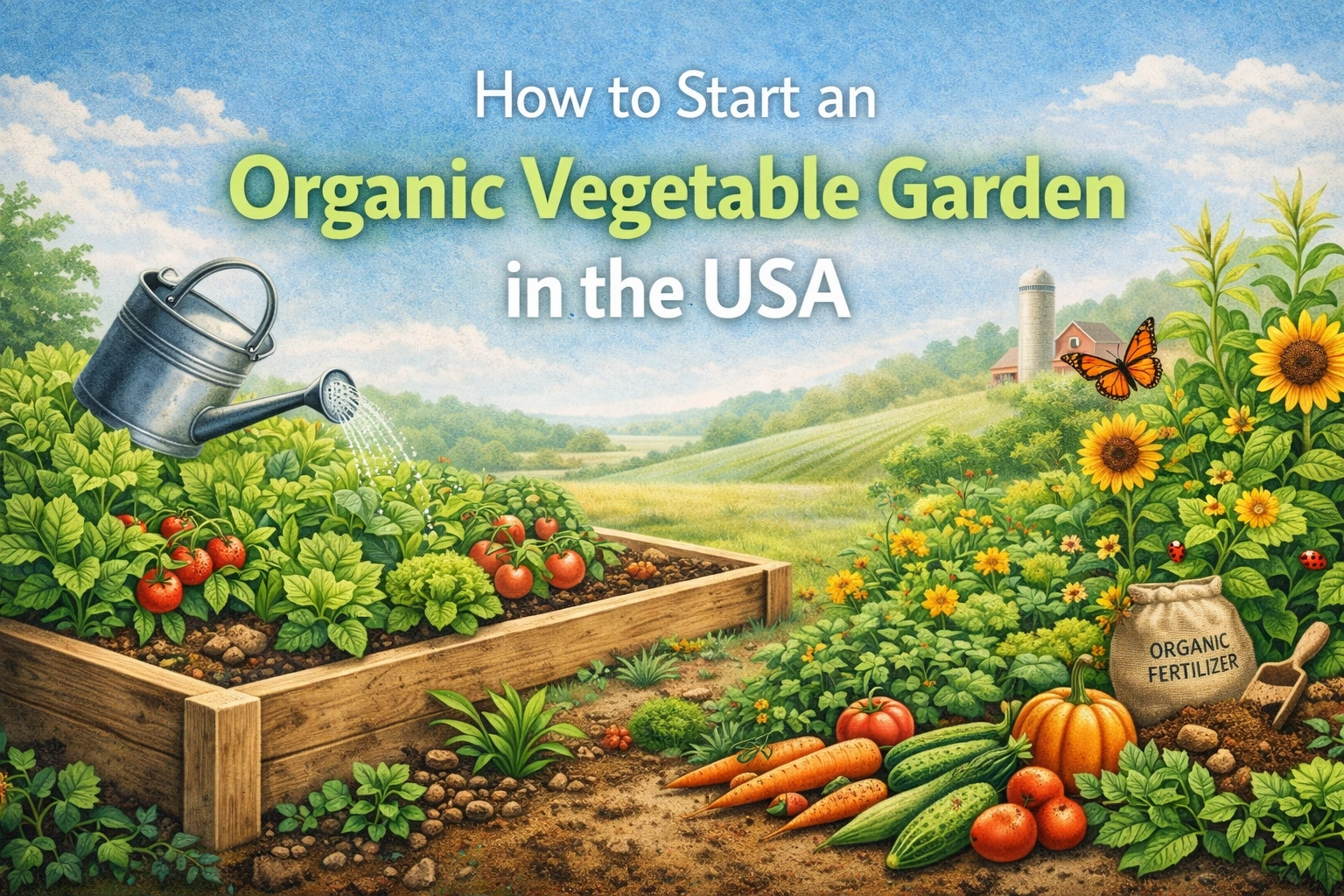
🌱 Getting Started with Organic Vegetable Gardening
How to start a vegetable garden for beginners?
Starting your first vegetable garden is exciting and rewarding. The key is to begin with a clear plan and not overwhelm yourself . Here are the essential steps:
- Start Small: It’s tempting to plant a huge garden, but a smaller, well-maintained space is better for beginners. An 8×8 foot plot is a perfect, manageable size to learn the ropes .
- Find the Right Spot: Most vegetables need at least six hours of direct sunlight each day to thrive . Observe your yard and choose the sunniest spot. Also, make sure it’s close to a water source .
- Decide on a Garden Type:
- In-Ground: The traditional method, good for larger spaces.
- Raised Beds: These are excellent for beginners. They provide better drainage, warm up faster in spring, and are easier to weed and harvest . Keep the bed width under 4 feet so you can easily reach the center from both sides .
- Containers: Perfect for patios, balconies, or small yards. You can grow a surprising amount of food in pots .
- Prepare Your Soil: Healthy soil is the foundation of a successful garden. For raised beds, fill them with a mixture of garden soil and compost (a 50/50 mix is a great start) . This provides nutrients and good drainage.
- Choose What to Grow: Plant vegetables you and your family actually enjoy eating . For your first garden, focus on easy-to-grow options (see the list below) .
- Plant at the Right Time: Some vegetables, like peas and lettuce, prefer the cool weather of early spring. Others, like tomatoes and peppers, are warm-season crops and must be planted after the last frost .
- Water and Maintain: Vegetable gardens need about 1 inch of water per week, and more during hot, dry spells . Check your garden regularly, pull weeds, and harvest your veggies when they’re ready to encourage more production .
Grow a Garden vegetables / fruits
This is a great, simple goal. The garden plans above will help you grow both. For beginners, focusing on a few easy vegetables and fruits is the path to success .
🧑🌾 Core Gardening Rules
What is the 3-hour gardening rule?
There isn’t one single, universally accepted “3-hour gardening rule.” However, the term appears in two related contexts that are both highly relevant to a beginner:
- The “Three-Hour Work” Rule: This is an approach to garden design suggesting that for a garden to stay healthy and beautiful, you should be able to complete the majority of its maintenance tasks in about three hours a week. If your garden takes longer, it might be too big or complex. This perfectly aligns with the beginner advice to “start small” so gardening feels like a joy, not a chore .
- The “Three Hours of Sun” Rule: This is a stricter, but useful, guideline for plant health. While the general rule is 6+ hours of sun for vegetables, this “rule” is used to identify problem areas. It means that any spot in your garden receiving less than three hours of direct sun is unsuitable for most fruiting vegetables (tomatoes, peppers, squash) and should be reserved for leafy greens like lettuce and spinach, which can tolerate more shade.
What is the 70 30 rule in gardening?
As discussed in our previous conversation, the “70/30 rule” has two distinct meanings, and it’s important to know which one applies to your situation [citation:previous discussion].
- For Ornamental Garden Design: This principle, proposed by designer Piet Oudolf, suggests that 70% of your garden plants should be structural, long-lived plants (like ornamental grasses and perennials) that provide year-round interest. The remaining 30% should be seasonal “filler” plants that provide bursts of color. This is more for flower gardens than vegetable plots.
- For Soil Mix (Occasional Use): A different application of the 70/30 rule is sometimes mentioned for creating a simple topsoil and compost blend. However, for vegetable gardens, a more precise and widely recommended soil mix exists (like the 50/50 mix of garden soil and compost mentioned earlier) . For container growing, using a quality, sterile, peat-free potting mix is always the safest bet .
🍅 Beginner-Friendly Plants
What are the best vegetables for beginner gardeners?
These vegetables are known for being forgiving, fast-growing, and productive, making them perfect for building your gardening confidence .
How to grow organic vegetables in pots / at home in pots
Container gardening (or “patio gardening”) is a fantastic way to grow your own food, even if you have no yard at all . Here’s how to succeed:
- Choose the Right Container: Size matters. Aim for containers with a depth and width of at least 18 inches (45cm). This gives roots enough room and means you won’t have to water as often . You can use pots, troughs, grow-bags, or even repurpose large buckets (just drill drainage holes in the bottom).
- Use the Best Potting Mix: Never use garden soil in a container; it’s too heavy and will compact, suffocating the roots. Instead, use a sterile, peat-free potting compost . The RHS recommends a peat-free “John Innes No. 3” or a high-quality multi-purpose compost . A great homemade mix is topsoil blended with multi-purpose compost .
- Select Container-Friendly Veggies: Many vegetables thrive in pots. Here are some top choices :
- Tomatoes: Especially cherry or bush (determinate) varieties.
- Peppers & Chillies: Perfect for pots.
- Salad Leaves: Lettuce, rocket, and spinach grow quickly in shallow containers.
- Beans: Dwarf French beans or climbing beans on a wigwam support.
- Carrots: Choose short, round varieties like ‘Paris Market’ or ‘Romeo’.
- Potatoes: Grow bags are perfect for potatoes.
- Herbs: Parsley, basil, chives, and mint (plant mint in its own pot to contain it!).
- Strawberries: They thrive in pots, planters, and hanging baskets .
- Plant and Care for Your Pots:
- Planting: Fill your pot with compost, plant your seeds or transplants, and water well.
- Watering: Containers dry out much faster than the ground. You may need to water daily during hot weather . The goal is to keep the compost moist but not waterlogged.
- Feeding: Regular watering washes nutrients out of the compost. Feed your plants every couple of weeks with a liquid organic tomato fertilizer, especially once they start flowering and fruiting, as it’s high in potassium .
📚 Learning Resources
Organic vegetable gardening for beginners book / Best organic vegetable gardening for beginners
For a comprehensive, authoritative guide, look for the “American Horticultural Society Essential Guide to Organic Vegetable Gardening.” Published in early 2025, it’s a 272-page handbook covering everything from planning and soil prep to plant care and harvesting . It’s designed to be beginner-friendly while providing in-depth knowledge.
Organic gardening for beginners / Organic vegetable gardening for beginners youtube
YouTube is an incredible resource for visual learners. Here are some search terms to find high-quality, beginner-focused content:
- “Absolute beginner’s guide to vegetable gardening”
- “How to start a vegetable garden from scratch”
- “Organic container gardening for beginners”
- “No-dig gardening for beginners” (a popular organic method)
- “Seed starting 101 for beginners”
- Search for videos from trusted sources like Gardener’s Supply Company, RHS – Royal Horticultural Society, or the University Extension channels (e.g., UMN Extension, OSU Extension).
Is there a specific vegetable or technique you’d like to dive into deeper? I’m happy to help you find more detailed information.












Leave a Reply