


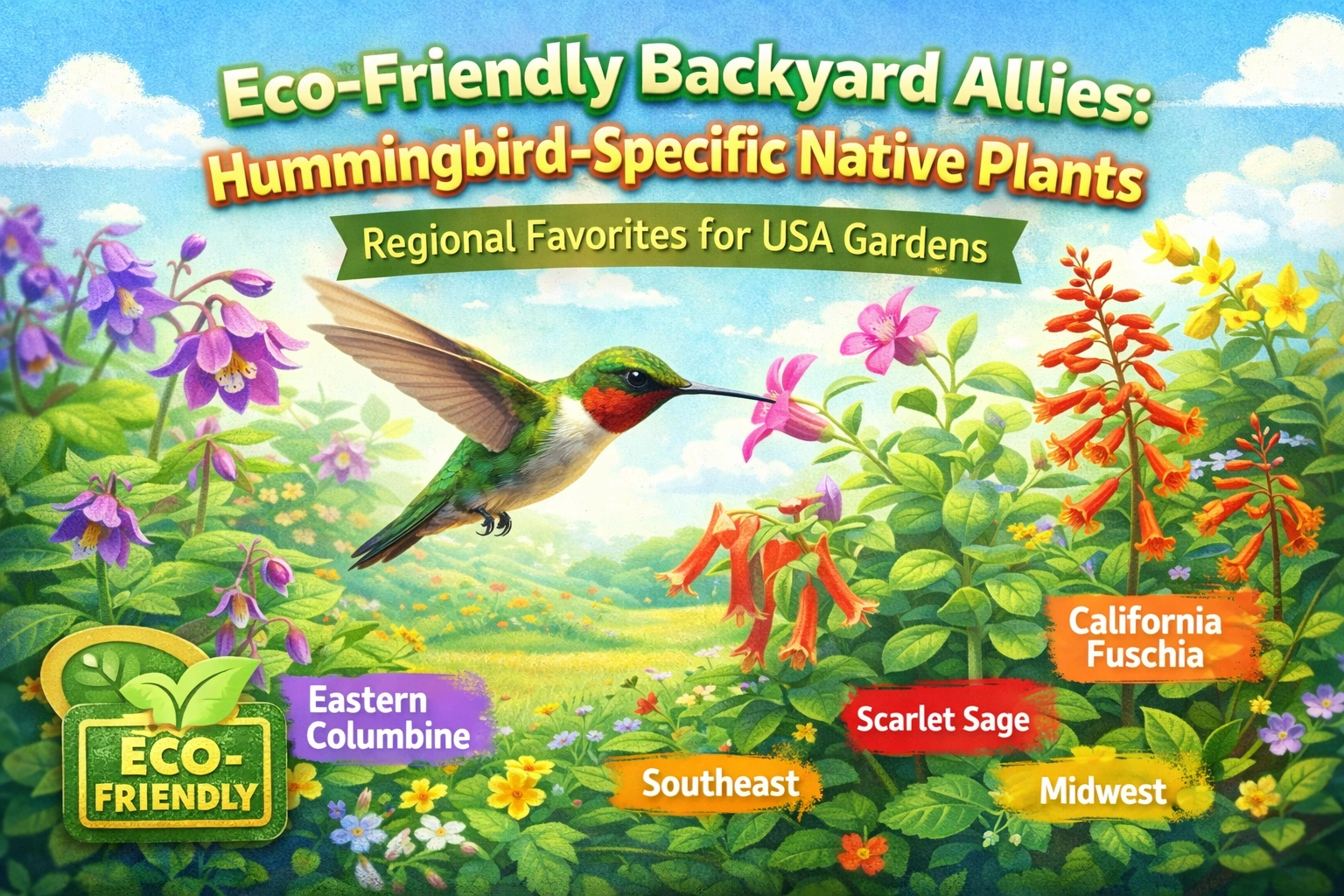
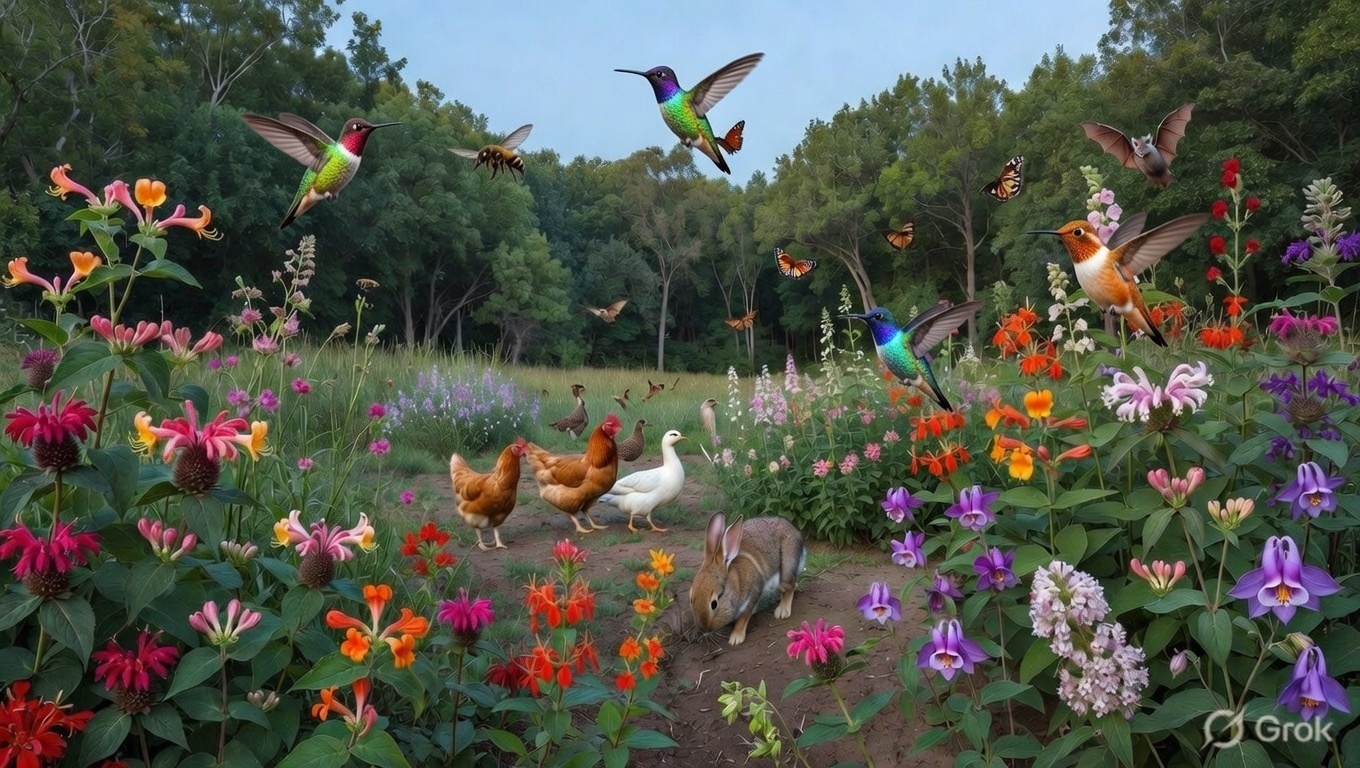
Your backyard wildlife sanctuary is in full swing: chickens and ducks control pests, rabbits enrich the soil, native bees and mason bees pollinate, butterflies and moths add diversity, hummingbirds bring precision to tubular blooms, birds feast on insects, and bats patrol at night.
To supercharge your hummingbird garden, focus on hummingbird-specific native plants—those with long, tubular flowers (often red, orange, pink, or purple) packed with nectar that match hummingbird beaks and preferences. These plants provide superior, adapted nectar compared to hybrids or exotics, support migration, and integrate seamlessly with your layered design.
Your Backyard Sanctuary Is Already Buzzing—Now Make It Soar
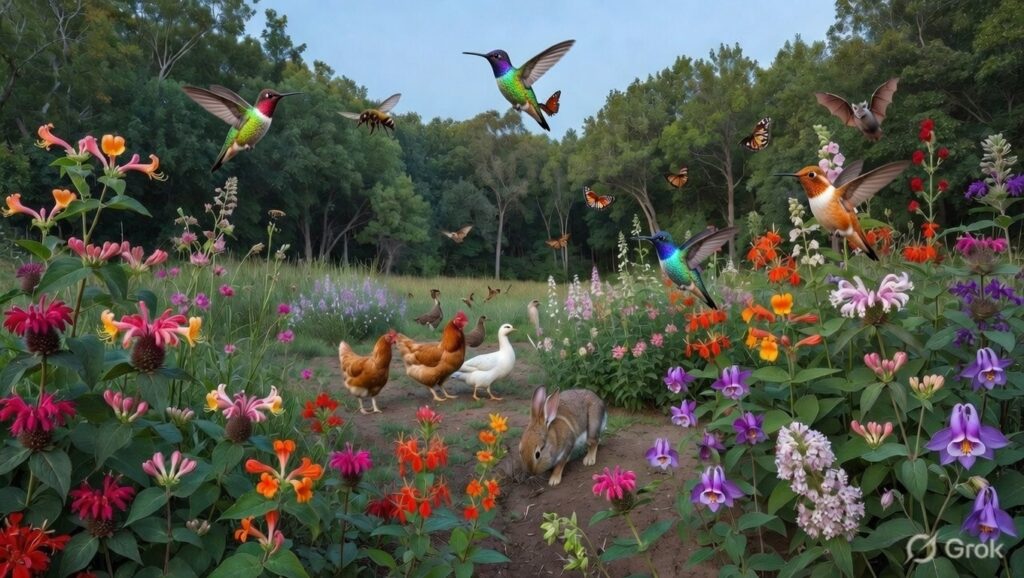
ecosystemPicture this: Your backyard wildlife sanctuary is thriving. Chickens and ducks scratch and peck, keeping pests in check while providing fresh eggs. Rabbits enrich your soil with their nutrient-rich droppings. Native bees and gentle mason bees buzz from flower to flower, ensuring your vegetable garden produces abundantly. Butterflies and moths add flashes of color and movement, while songbirds feast on insects, keeping nature’s balance in check. As dusk falls, bats emerge to patrol the night sky, consuming thousands of mosquitoes.
It’s a self-sustaining paradise—a living tapestry of interdependent life.
But something’s missing. A flash of iridescent green. A whir of wings too fast to follow. A tiny hovercraft of feathers sipping nectar mid-air.
Your sanctuary is ready for hummingbirds. And they’re ready for you.
These aerial jewels aren’t just beautiful additions to your garden—they’re precision pollinators that have co-evolved with North American native plants for millions of years. Their long, needle-like beaks and specialized tongues are perfectly adapted to reach deep into tubular flowers that other pollinators can’t access. By inviting them in, you’re completing your ecosystem’s pollination puzzle.
Here’s the secret: Not all flowers are created equal in the eyes of a hummingbird. To truly supercharge your hummingbird garden, you need to think like a hummingbird—and plant like a conservationist.
Why Native Plants Matter: The Hummingbird-Host Plant Connection
When we talk about creating a hummingbird paradise, the conversation must start and end with native plants. Here’s why:
1. Co-Evolutionary Perfection
Hummingbirds and native plants have spent millennia adapting to one another. Native flowers developed the exact shape, depth, and nectar composition that hummingbirds need. In return, hummingbirds developed the specialized beaks, tongues, and hovering abilities to reach that nectar while transferring pollen.
Non-native hybrids and exotic ornamentals? They’re often evolutionary dead ends for hummingbirds. Many lack sufficient nectar, have the wrong flower shape, or bloom at the wrong time.
2. Superior Nectar Quality
Native plants produce nectar with the ideal sugar concentration and amino acid profile that hummingbirds require for their hyperactive metabolisms. A hummingbird’s heart beats up to 1,260 times per minute, and its wings flap 50-200 times per second. That kind of energy demands premium fuel—and native plants deliver it.
3. Migration Support
During spring and fall migration, hummingbirds travel hundreds or thousands of miles. They rely on predictable, abundant nectar sources along their routes. By planting native species, you’re creating critical rest stops that can mean the difference between life and death for migrating birds.
4. Ecosystem Integration
Native plants don’t exist in isolation. They support the insects that birds feed to their young, provide nesting materials, and thrive without chemical fertilizers or excessive water. They’re the backbone of your wildlife sanctuary.
The Hummingbird’s Favorite Flower Features: What to Look For
Before we dive into specific plants, understand what hummingbirds are scanning for when they survey your garden:
Color Signals
Hummingbirds are drawn to red, orange, pink, and purple—colors that signal high nectar rewards. While they’ll visit other colors, these hues act like neon “Open for Business” signs.
Shape Matters
Look for long, tubular flowers—they’re nature’s drinking straws. The tubular shape excludes many insects and short-tongued pollinators, reserving nectar for hummingbirds.
Abundant Nectar Production
Native hummingbird plants produce copious nectar to fuel these energy-demanding visitors. You’ll often see flowers dripping with sweetness.
Successive Bloom Times
The best hummingbird gardens provide continuous blooms from early spring through late fall. This ensures food is available during breeding season, migration, and pre-migration fattening.
Hummingbirds favor natives that bloom successively from spring through fall. Prioritize regional species using tools like Audubon’s Native Plants Database, Xerces Society guides, or the USDA Forest Service’s pollinator resources (enter your zip code for exact matches). Avoid invasives like Japanese honeysuckle—stick to true natives.
Nationwide Standout Native Plants for Hummingbirds
These work across broad areas and pair well with your existing bee balm, cardinal flower, columbine, penstemon, salvia, and trumpet honeysuckle:
- Trumpet Honeysuckle (Lonicera sempervirens) — Non-invasive vine with red-orange tubular blooms; blooms spring–fall.
- Bee Balm (Monarda fistulosa or didyma) — Tubular red/pink/purple spikes; widespread and deer-resistant.
- Cardinal Flower (Lobelia cardinalis) — Brilliant red spikes; loves moist spots.
- Eastern/Wild Columbine (Aquilegia canadensis) — Red/yellow dangling bells; shade-tolerant.
- Penstemon (Beardtongue species) — Tubular flowers; sunny, dry-tolerant.
- Milkweed (Asclepias spp., e.g., swamp or butterfly weed) — Tubular blooms plus monarch bonus.
Regional Highlights (Tailored to Common U.S. Hummingbird Ranges)
- Eastern/Midwest/Northeast (Ruby-throated dominant):
- Trumpet Honeysuckle, Cardinal Flower, Eastern Columbine, Scarlet Sage (Salvia coccinea), Great Blue Lobelia (Lobelia siphilitica), Crossvine (Bignonia capreolata).
- Early bloomers like Redbud (Cercis canadensis) tree for spring arrival.
- Rockies/Mountain West (Broad-tailed, Rufous, Calliope, Black-chinned):
- Rocky Mountain Penstemon (Penstemon strictus), Bee Balm (Monarda fistulosa), Showy Milkweed (Asclepias speciosa), Scarlet Gilia (Ipomopsis aggregata), Golden Currant (Ribes aureum) shrub for early season, Wax Currant (Ribes cereum).
- Pacific Northwest/West Coast (Anna’s, Rufous, Allen’s, Calliope):
- Western Trumpet Honeysuckle (Lonicera ciliosa), Sitka Columbine (Aquilegia formosa), California Fuchsia (Epilobium canum), native Penstemon spp., Manzanita (Arctostaphylos spp.) for early blooms.
- Southwest (Black-chinned, Broad-billed, Blue-throated, Lucifer, etc.):
- Ocotillo (Fouquieria splendens), Desert Willow (Chilopsis linearis), native Salvia spp. (e.g., Gregg’s or azure), Hummingbird Mint (Agastache spp.), Scarlet Hedgenettle or other desert-adapted tubulars.
- General Southwest/Desert Influences: Firebush (Hamelia patens), Coral Honeysuckle varieties.
Designing Your Hummingbird Habitat: Beyond Just Plants
To truly supercharge your hummingbird garden, integrate these elements into your existing wildlife sanctuary:
Create Layers
- Canopy: Small native trees like red buckeye or desert willow provide perches and nesting sites
- Shrubs: Mid-level plantings of native honeysuckles and sages offer shelter and food
- Ground Layer: Low-growing natives like California fuchsia create continuous coverage
Provide Water
Hummingbirds love moving water. A misting fountain, dripping hose, or small recirculating fountain with shallow edges attracts them. They’ll bathe in the spray and drink from droplets on leaves.
Offer Perches
Despite their hovering ability, hummingbirds spend much of their time perched. Leave dead branches on trees or install small bare twigs near flowers—they’ll use them as lookout posts between feeding sessions.
Go Chemical-Free
Your wildlife sanctuary is pesticide-free, right? Good. Hummingbirds are incredibly sensitive to chemicals, and spraying eliminates the tiny insects they need for protein (they eat small bugs and spiders, not just nectar).
Include Host Plants for Insects
Remember: hummingbirds feed insects to their young. By planting native plants that support caterpillars and other insects, you’re providing essential protein for nesting hummingbird mothers.
The Seasonal Hummingbird Garden: Bloom Succession Matters
A truly supercharged garden provides food from the moment the first migrants arrive until the last stragglers depart. Here’s how to achieve continuous blooms:
Early Spring (Arrival & Breeding)
- Wild columbine
- Red buckeye
- Early penstemons
- Crossvine
Mid-Summer (Peak Breeding)
- Bee balm
- Coral honeysuckle
- Sage species
- Firebush (South)
Late Summer/Fall (Migration Fuel)
- Cardinal flower
- California fuchsia
- Spotted jewelweed
- Late salvias
Integrating Hummingbirds Into Your Existing Sanctuary
Your backyard already supports an incredible diversity of wildlife. Adding hummingbird-specific natives enhances rather than disrupts this balance:
- Chickens and ducks will appreciate the insect life that native plants attract
- Rabbits benefit from the biodiversity native plants support
- Native bees share hummingbird plants—they’re complementary pollinators
- Butterflies and moths flock to the same nectar sources
- Insectivorous birds find more prey among native vegetation
- Bats continue their night patrols, now over a more diverse habitat
Your hummingbird garden isn’t a separate project—it’s the final piece of a complete, functioning ecosystem.
Common Questions About Hummingbird Gardening
Should I use feeders?
Feeders can supplement natural nectar, especially during migration. However, native plants should be the foundation. Feeders require frequent cleaning (every 2-3 days in warm weather) to prevent harmful mold. Use 1:4 white sugar water—never honey, artificial sweeteners, or red dye.
Will hummingbirds become dependent on my garden?
No. Hummingbirds are hardwired to follow natural nectar flows. Your garden becomes one stop on their circuit—a critical one, but not their sole source.
How much space do I need?
Even a small balcony with a few native plants in containers can attract hummingbirds. Every flower matters.
What about pesticides on plants I buy?
Even “organic” labeled plants from big box stores may have been treated with systemic pesticides harmful to pollinators. Whenever possible, buy from local native plant nurseries that guarantee chemical-free growing.Regional Native Plants That Hummingbirds Can’t Resist
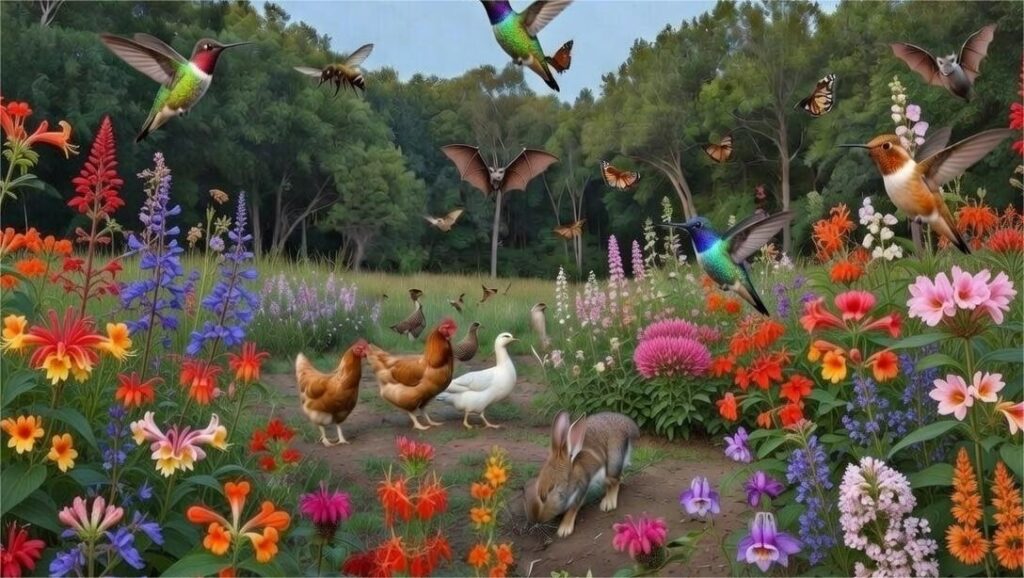
Hummingbird gardening isn’t one-size-fits-all. The plants that captivate hummingbirds in New England differ from those in the Southwest. Here’s a region-by-region breakdown using recommendations from the Audubon Native Plants Database, Xerces Society, and USDA Forest Service.
Northeast & Midwest
- Bee Balm (Monarda didyma) – Brilliant red blooms that hummingbirds adore; also attracts butterflies
- Cardinal Flower (Lobelia cardinalis) – Intense red spikes that bloom late summer when migrants need fuel
- Wild Columbine (Aquilegia canadensis) – Early spring bloomer with unique red and yellow bells
- Trumpet Honeysuckle (Lonicera sempervirens) – A native vine (not to be confused with invasive Japanese honeysuckle) with clusters of red tubes
- Great Blue Lobelia (Lobelia siphilitica) – Late-season blue blooms that extend nectar availability
Southeast
- Coral Honeysuckle (Lonicera sempervirens) – Evergreen in mild climates, blooms spring through fall
- Crossvine (Bignonia capreolata) – Early bloomer with orange-red trumpets
- Red Buckeye (Aesculus pavia) – A small tree with stunning red flower clusters in early spring
- Firebush (Hamelia patens) – Tropical-looking native with orange-red tubular flowers
- Spotted Jewelweed (Impatiens capensis) – Shade-tolerant native that blooms late summer
Southwest & Desert Southwest
- Ocotillo (Fouquieria splendens) – Dramatic spiny stems topped with red blooms in spring
- Chuparosa (Justicia californica) – Spanish for “hummingbird,” this shrub blooms nearly year-round in mild climates
- Desert Willow (Chilopsis linearis) – Small tree with orchid-like flowers in pink and purple
- Penstemon species – Dozens of native species with tubular flowers in every hummingbird color
- Autumn Sage (Salvia greggii) – Blooms from spring through frost in red, pink, purple, and orange
West Coast & Pacific Northwest
- California Fuchsia (Epilobium canum) – Late-summer red blooms when little else is flowering
- Hummingbird Sage (Salvia spathacea) – Fragrant groundcover with magenta blooms in spring
- Scarlet Monkeyflower (Mimulus cardinalis) – Moisture-loving perennial with brilliant red flowers
- Western Columbine (Aquilegia formosa) – Red and yellow nodding bells for spring
- Coast Silk Tassel (Garrya elliptica) – Early spring catkins provide nectar when little else blooms
Rocky Mountains & High Plains
- Firecracker Penstemon (Penstemon eatonii) – Brilliant red spikes in early summer
- Scarlet Gilia (Ipomopsis aggregata) – Also called skyrocket, with clustered red tubes
- Rocky Mountain Bee Plant (Cleome serrulata) – Pink-purple blooms mid to late summer
- Harebells (Campanula rotundifolia) – Delicate purple bells that bloom all season
The Critical Warning: Avoid These Invasive Imposters
One of the biggest mistakes well-meaning gardeners make is planting aggressive non-natives that harm ecosystems while offering minimal benefit. The most notorious example?
Japanese Honeysuckle (Lonicera japonica)
This aggressive vine smothers native vegetation, escapes cultivation, and provides inferior nectar compared to native honeysuckles. While hummingbirds may visit it, planting it is ecological sabotage.
Instead, Plant:
- Native Trumpet Honeysuckle (Lonicera sempervirens) – Similar appearance, superior nectar, non-invasive behavior
Other Plants to Avoid:
Non-native butterfly bush (Buddleia davidii) – Invasive in many regions; choose sterile cultivars or native alternatives
Exotic bush honeysuckles (multiple invasive species)
Purple loosestrife (Lythrum salicaria) – Destroys wetlands
Your Action Plan: Starting Today
Ready to transform your backyard into a hummingbird superhighway? Here’s your step-by-step plan:
- Visit Audubon’s Native Plants Database and enter your zip code
- Select 3-5 native hummingbird plants that bloom at different times
- Remove any invasive species like Japanese honeysuckle
- Plant in sunny locations with shelter from wind
- Add a water feature with moving water
- Leave perching spots near flowers
- Document your visitors and share with community science projects
Conclusion: The Hummingbird Promise
There’s a moment every hummingbird gardener waits for. It’s when the first scout appears—hovering, investigating, testing the flowers you’ve planted just for them. Then comes the flash of green, the shimmer of red, the whir of wings that sounds like summer itself.
That moment is the culmination of intention, effort, and love for the natural world. It’s the reward for choosing native plants over exotic ornamentals, for thinking like an ecosystem rather than a decorator.
Your backyard wildlife sanctuary already supports life in all its forms—from the soil microbes enriched by rabbit manure to the bats patrolling the night sky. Adding hummingbird-specific native plants doesn’t just add beauty. It completes the circle.
So go ahead. Plant that cardinal flower. Add that trumpet honeysuckle. Create the blooms that will fuel a journey you’ll never fully see—migrations that span continents, lives that depend on the flowers you grow.
The hummingbirds are coming. Make sure your sanctuary is ready.
How to Find Your Perfect Hummingbird Plants (By Zip Code)
Ready to customize your hummingbird garden for your exact location? Use these trusted resources:
1. Audubon Native Plants Database
Visit Audubon.org/native-plants and enter your zip code. You’ll receive a customized list of native plants for your area, filtered by the birds they attract (including hummingbirds).
2. Xerces Society Pollinator Conservation Resources
The Xerces Society offers regional plant lists tailored to native bees, butterflies, and hummingbirds. Their guides include blooming periods and growing requirements.
3. USDA Forest Service Pollinator Resources
The Forest Service maintains databases of native plants by region, with detailed information on which pollinators they support.
4. Lady Bird Johnson Wildflower Center
This comprehensive database allows you to search for native plants by state, bloom time, light requirements, and pollinator value.
Tips for Maximum Attraction
- Plant in clusters (5+ of each) for visibility; mix bloom times for continuous nectar.
- Add your dripper/mister water feature—hummingbirds love bathing in fine spray.
- Position near perches (thin branches) and your bat house for synergy.
- Amend with rabbit/chicken compost; full sun to part shade depending on plant.
- Supplement with a clean feeder only if natural sources are low (1:4 sugar-water ratio).
These hummingbird-specific natives create a targeted nectar corridor: Ruby-throated in the East zoom to cardinal flowers, while Western Anna’s sip from penstemon. Your garden yields rise with better pollination, biodiversity soars, and the aerial shows become daily highlights. Source from local native nurseries, plant this season, and watch your backyard become a hummingbird hotspot—your entire eco-team thrives together!







Leave a Reply