

🐾 The Storage Mistake That Destroys Kibble (And How to Fix It)
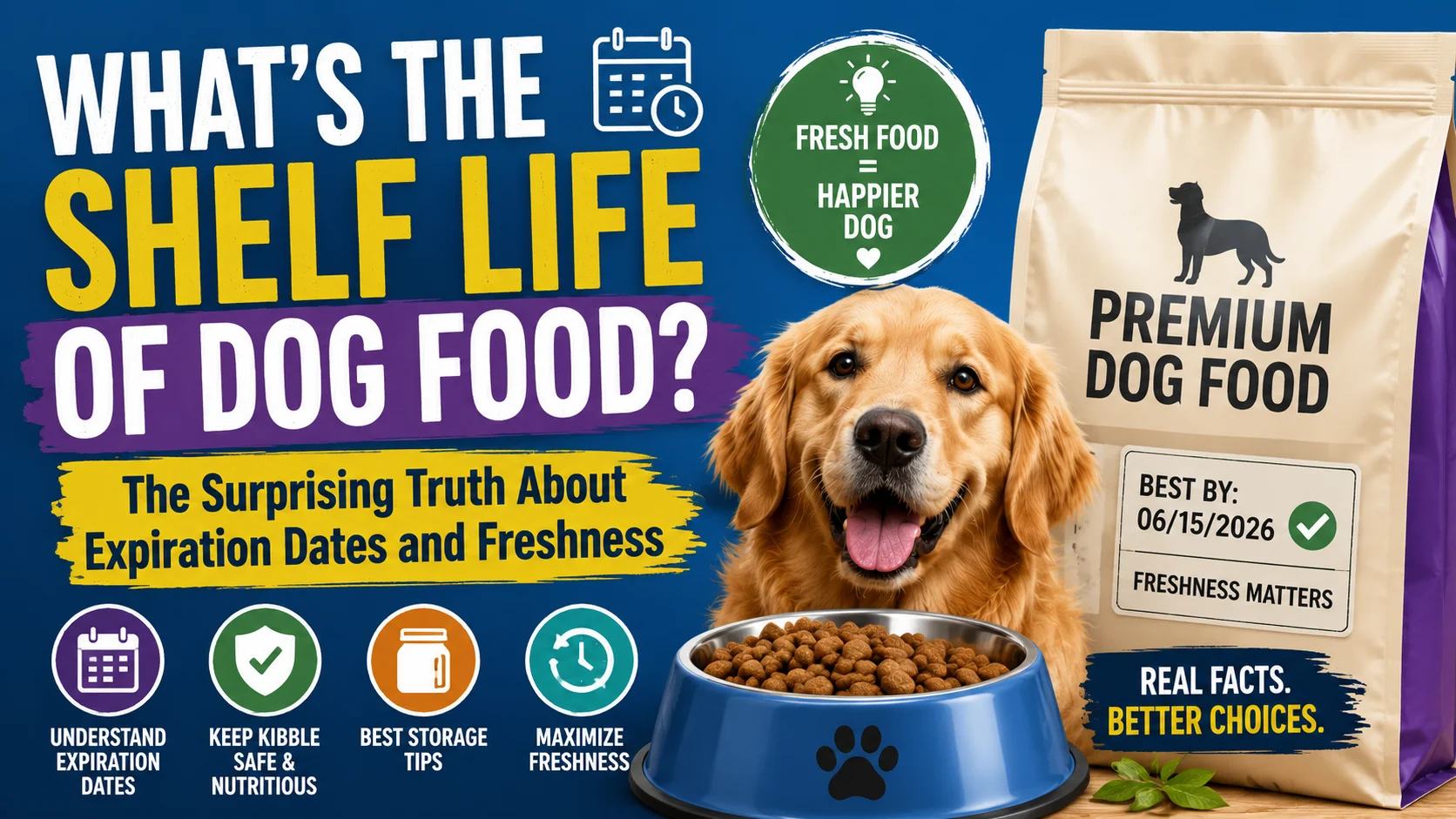
Most pet owners misunderstand dog food expiration dates — and that mistake could harm your pup’s health. Let’s uncover the real story behind kibble longevity, stale food dangers, and how to keep every bowl safe & nutritious.
📑 Table of Contents
- 1. What’s the Shelf Life of Dog Food? (Key Facts)
- 2. Most Pet Owners Misunderstand Dog Food Expiration Dates
- 3. Can Dog Food Go Bad? Why Stale Kibble Should NOT Be Fed
- 4. What Can Stale Kibble Effect on the Stomach?
- 5. Comparative Study: Why Does Dog Food Go Stale?
- 6. After Opening the Cover: How Long & Should It Be Kept in Original Cover?
- 7. Q&A: CHF Diet, 25% Rule, 20-Year Foods & More
- 8. 🛒 Vet-Recommended Dog Food (Limited Time Offers)
📅 What’s the Shelf Life of Dog Food? The Real Timeline
What’s the Shelf Life of Dog Food? Typically, unopened dry kibble stays fresh for 6 to 18 months from the manufacturing date. Canned (wet) food lasts 2 to 5 years unopened. But once that bag is opened, the clock ticks faster! Expiration dates printed on packages are peak quality indicators — not magic safety deadlines. Factors like fat oxidation, humidity, and storage conditions drastically alter true shelf life.
Many dog parents assume “best by” means “safe until then” — but rancid fats, mold, and nutrient degradation can occur even before the printed date if bags are stored improperly.
⚠️ Most Pet Owners Misunderstand Dog Food Expiration Dates
Surveys show nearly 68% of pet owners believe the expiration date is a strict cutoff for safety. In reality, manufacturers stamp “Guaranteed fresh” dates based on ideal storage. Once you open the bag, oxygen and light degrade vitamins (A, E, B-complex) and cause fats to turn rancid. A bag might still be “in date” yet smell like old oil — that’s your cue to toss it. Never rely solely on a date stamp; use your senses: smell, texture, and appearance.
❌ Can Dog Food Go Bad? Why Stale Kibble Should Not Be Fed
Yes, dog food absolutely goes bad. Stale kibble isn’t just less appetizing — it’s a health hazard. Oxidation leads to rancidity, which destroys essential fatty acids (omega-3 and -6) and creates harmful compounds like malondialdehyde. Feeding stale kibble can cause nutritional deficiencies, oxidative stress, and even long-term inflammation. Additionally, bacteria (Salmonella, E. coli) or mold (aflatoxins) can proliferate in expired or moist kibble. Aflatoxins are potent liver toxins. That’s why veterinarians warn: when in doubt, throw it out.
🤢 What Can a Stale Kibble Effect on the Stomach? (Unpleasant Reality)
Stale or rancid kibble directly attacks your dog’s gastrointestinal tract. Common stomach issues include:
- Vomiting & diarrhea: Rancid fats irritate stomach lining.
- Bloating and gas: Fermented carbohydrates from age or moisture lead to bacterial overgrowth.
- Loss of appetite: Dogs have a sharp sense of smell — they’ll reject oxidized kibble, but if forced, it triggers indigestion.
- Chronic gastritis: Long-term feeding of stale food can weaken gut immunity and cause recurrent loose stools.
Even mild staleness (slightly off smell) can upset sensitive stomachs. Breeds prone to pancreatitis are especially vulnerable.
🔬 Comparative Study: Why Does Dog Food Go Stale? (Science vs. Storage)
Let’s compare factors that accelerate versus slow down spoilage:
| Factor | Why It Makes Kibble Stale Faster | Best Practice to Avoid Stale |
|---|---|---|
| Oxygen exposure | Triggers lipid oxidation → rancidity, nutrient loss | Use airtight containers, squeeze out air from original bag |
| Heat (>25°C /77°F) | Accelerates chemical reactions, melts fats into kibble surface | Store in cool pantry below 23°C (73°F) |
| Humidity / moisture | Mold growth, bacterial bloom, clumping | Keep away from sinks; add silica gel packs (dog-safe) in container |
| Light (UV) | Degrades vitamins (riboflavin, vit A) and fats | Opaque bins or keep bag inside dark cupboard |
| Natural preservatives (mixed tocopherols) | Less effective after bag opening, last 4–6 months | Buy smaller bags if dog eats slowly |
Conclusion: Even premium kibble can go stale within 4–6 weeks after opening if stored poorly. The “best by” date applies strictly to unopened bags kept in ideal climates.
📦 After Opening the Cover: How Long and Should It Be Kept in Original Cover?
How long does opened dog food last?
- Dry kibble: 4–6 weeks after opening when stored correctly. After 8 weeks, even in an airtight container, nutrient degradation and staleness risks increase significantly.
- Canned food (opened): Max 2–3 days in fridge, covered. Never leave in the can; transfer to a glass container.
- Semi-moist food: 7–10 days after opening, refrigerated.
Should it be kept in the original cover? Veterinarians recommend keeping kibble inside its original bag, then placing that bag inside an airtight container. Why? The original bag has a special lining that prevents fat migration and provides lot number / expiry info. Dumping loose kibble into a bin removes that barrier, and old residue in the container can cause cross-contamination. If you use a bin, keep the whole bag inside and wash the bin monthly.
❓ Q&A: Vital Questions Answered for Every Dog Parent
Dogs with CHF need a low-sodium diet, often supplemented with taurine, L-carnitine, and CoQ10. Veterinary cardiologists recommend Hill’s Prescription Diet h/d (Heart Care), Royal Canin Cardiac, or Purina Pro Plan Veterinary Diets. These formulas reduce fluid retention and improve cardiac function. Always consult your vet before switching. For high-quality, heart-friendly nutrition, Hill’s Science Diet (especially adult 7+ formulas with balanced minerals) is an excellent non-prescription option for early support. 👉 See Hill’s deals below
The “25% rule” refers to AAFCO’s naming regulation: when a product name includes a descriptive term like “Dinner,” “Formula,” “Entrée,” or “Platter,” the named ingredient (e.g., “Chicken Dinner”) must make up at least 25% of the total product weight (excluding water). Additionally, the ingredient must be at least 3% of total weight if a “with” claim is used (“with chicken”). This helps pet parents understand ingredient prominence. Always read the ingredient list — the 25% rule ensures the featured protein is substantial.
No standard dog food lasts 20 years. However, certain human emergency survival foods like freeze-dried #10 cans (Augason Farms, Mountain House) claim 25–30 years. For dogs, freeze-dried raw food stored in airtight Mylar with oxygen absorbers can last up to 5-10 years, but not 20. Always check manufacturer guidelines. If you need long-term storage for pets, rotate kibble every year — never rely on two-decade-old dog food.
Absolutely. If the bag is punctured, stored in a garage in summer, or exposed to moisture, oxidation and mold can ruin it weeks after purchase — even if the “best by” date is 8 months away. Always inspect kibble for unusual odor, stickiness, or white specks (mold).
Stale kibble loses palatability and essential nutrients, while rancid fats produce free radicals that trigger cellular damage. Feeding rancid food repeatedly can cause chronic inflammation, poor coat, and even immune suppression. Not worth the risk — when freshness is questionable, replace the bag.
🛍️ Give Your Dog the Gold Standard of Freshness & Heart Health
Protect your furry family member with premium nutrition that’s sealed for safety, crafted for vitality. Hill’s Pet Nutrition delivers science-backed formulas with optimal freshness and shelf life management. Every purchase supports shelter pets 🐾
✅ Freshness guarantee: Hill’s uses premium packaging + antioxidants to keep kibble stable longer. Rotate stock and store properly for maximum shelf life.
📌 Have you checked our guide on how long opened dog food lasts? Or revisit the comparative study on staleness factors to perfect your storage routine.
📢 PS: The UTM parameters in our links help track which content drives healthy dog food choices — your support truly matters. Remember: fresh, properly stored food = happy, energetic pup! Don’t let stale kibble steal your dog’s wellness. 🐕🦺✨



Leave a Reply