

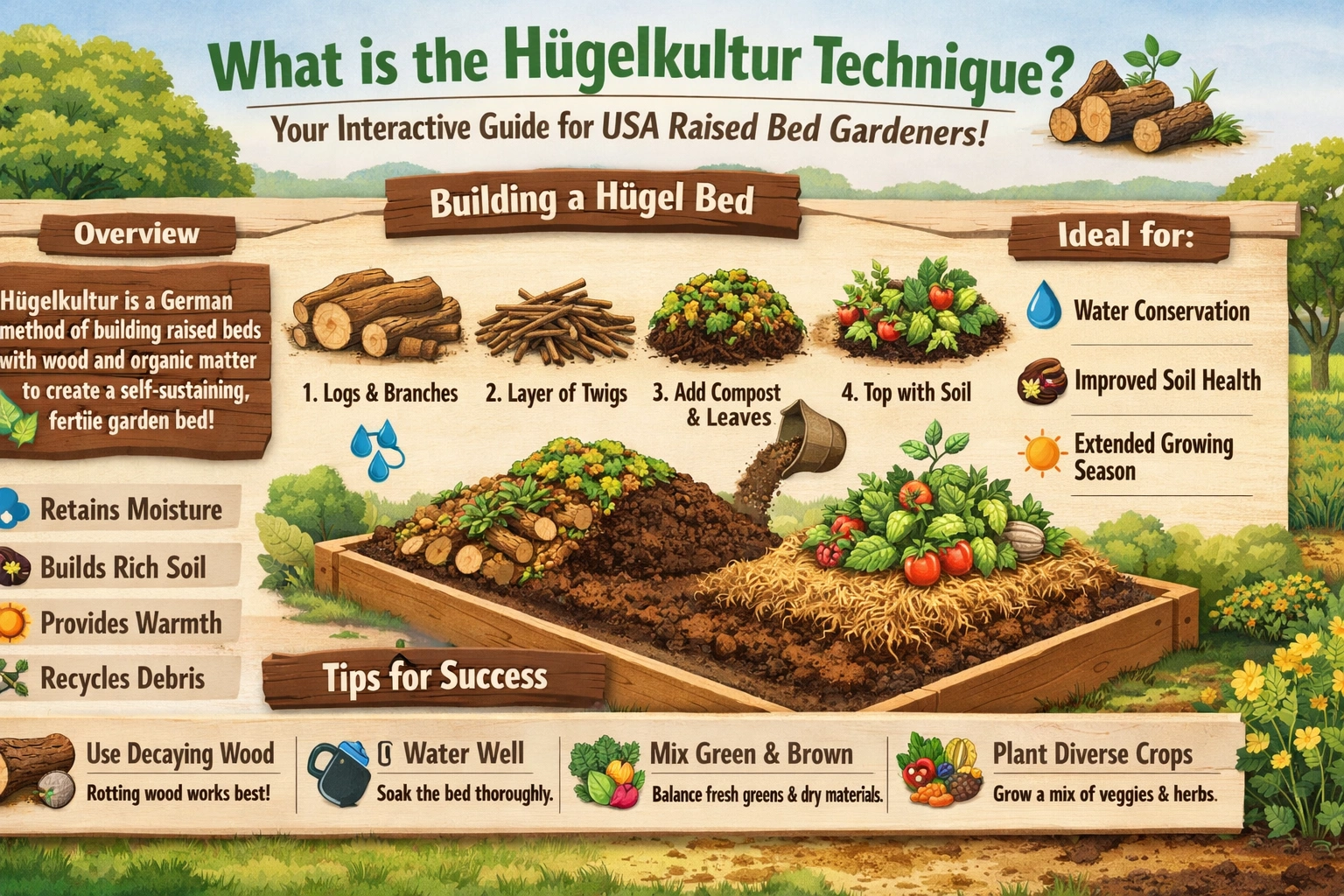
Hügelkultur (pronounced “hoo-gul-kul-ture” — German for “hill culture”) is a genius permaculture method that turns woody debris (logs, branches, twigs) into the foundation of a raised bed or mound. Instead of buying tons of expensive soil to fill your new raised bed, you bury wood at the bottom, layer organic matter on top, and let nature do the work. As the wood slowly decomposes over years, it acts like a built-in sponge and slow-release fertilizer.
This technique is perfect for USA gardeners — especially in areas with variable rainfall, droughts (like parts of the West), or high soil costs. It’s been used for centuries in Europe and is gaining popularity here for sustainable, low-maintenance veggie growing.
Why Hügelkultur Rocks: Key Benefits
- Epic water retention — Decomposing wood holds massive amounts of moisture (like a natural reservoir), reducing watering by 50–90% after the first year or two. Great for dry summers or water restrictions!
- Nutrient powerhouse — Wood breaks down into rich humus, feeding plants long-term with no extra fertilizer needed. It builds super-fertile soil over time.
- Cost savings — Fill deep raised beds with free/cheap wood waste — save 50–70% on soil volume!
- Better soil structure — Creates air pockets for roots, improves drainage (no waterlogging), and encourages beneficial fungi and microbes.
- Longer growing season — Early decomposition generates slight warmth (like a mild hot bed) for earlier starts in cooler zones.
- Eco-win — Recycles yard waste (branches from pruning, storm cleanup) instead of sending it to landfills. Attracts pollinators and wildlife too.
- Self-tilling over time — As wood shrinks, it aerates soil naturally.
Downsides to know:
- First 1–2 years: May tie up nitrogen temporarily (add extra compost/manure to offset).
- Can settle/sink a bit as wood decomposes.
- Avoid certain woods: Walnut (juglone toxin), black locust/cedar (rot-resistant/slow to break down).
Interactive quick check: Do you have access to branches/logs from yard work, neighbors, or tree services? If yes → Hügelkultur is a slam dunk for your raised bed!
How to Build a Hügelkultur Raised Bed (Step-by-Step)
There are three main styles: traditional mound (no frame), in-ground trench, or hybrid in a raised bed frame (most popular for USA backyards — keeps it neat and contained).
For your new raised bed (e.g., 4×8 ft, 18–24″ deep):
- Prep the site Place your raised bed frame in full sun. Lay cardboard/newspaper at the bottom to suppress weeds (optional if on bare soil).
- Add the wood base (biggest layer — 40–60% of bed height) Start with largest logs/branches at the bottom (hardwoods like oak/maple best; softwoods like pine OK in moderation). Stack crisscross to fill gaps. Fill voids with smaller twigs, branches, wood chips. Tip: Bury deeper in hotter/drier areas for max moisture hold.
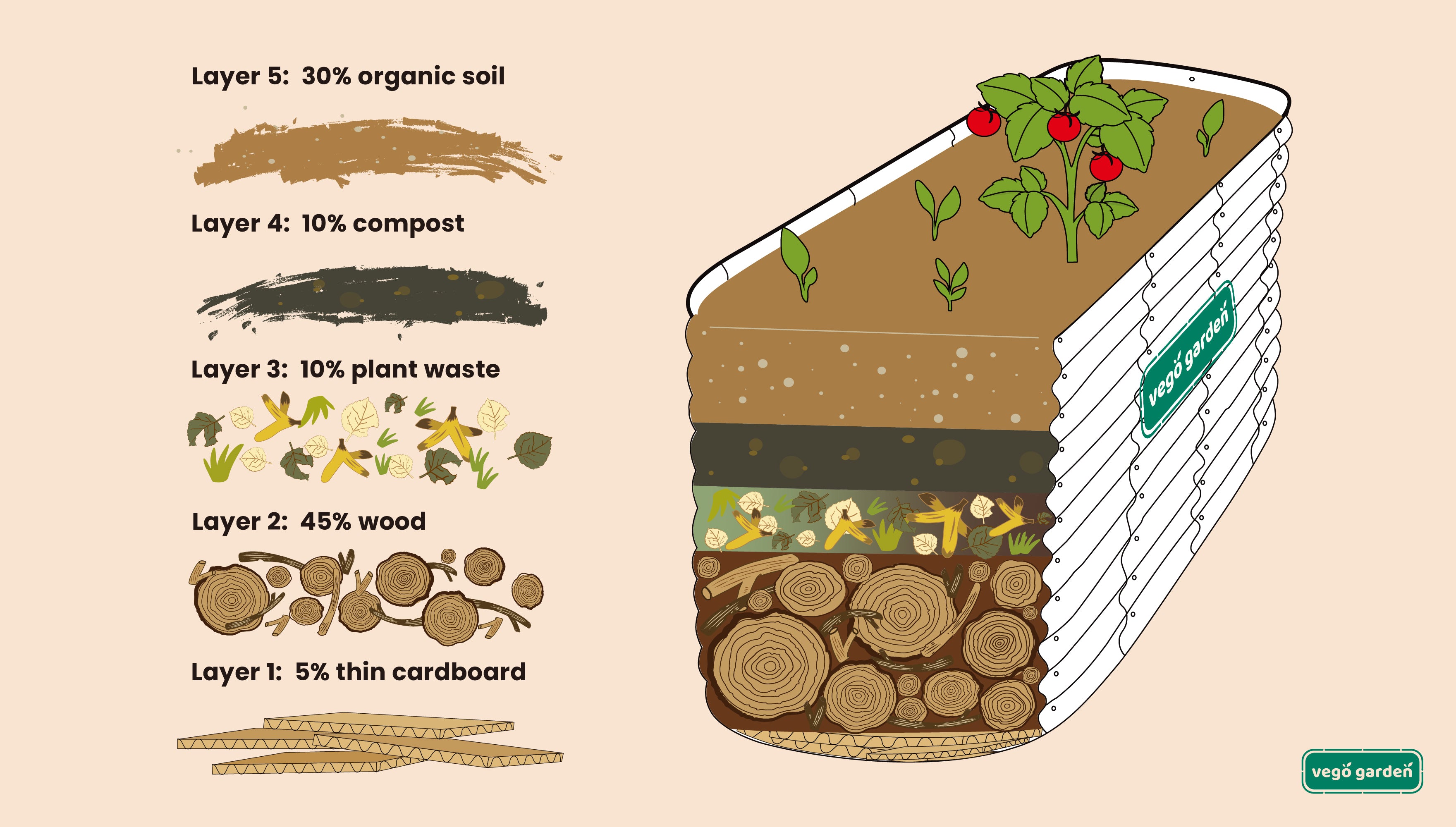
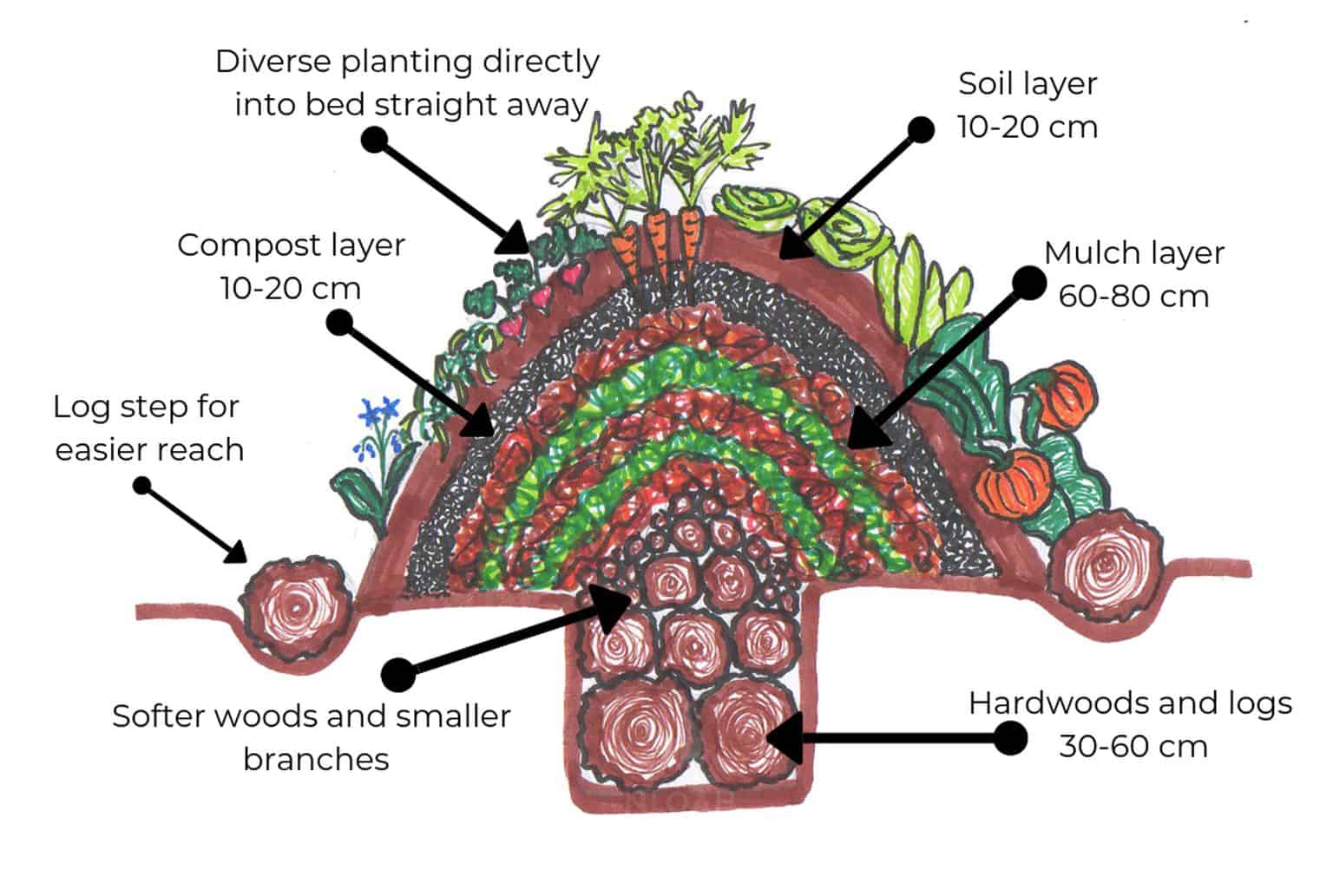
- Layer organic matter (greens + browns) Add nitrogen-rich stuff: grass clippings, kitchen scraps, manure, leaves, sod (green side down), unfinished compost. This speeds decomposition and prevents nitrogen drawdown.
- Top with soil & compost (last 12–18″ of depth) Mix good topsoil/compost (like Joe’s Perfect Mix from earlier). Aim for 10–12″ minimum planting depth. Shape slightly concave/flat top to catch rainwater.
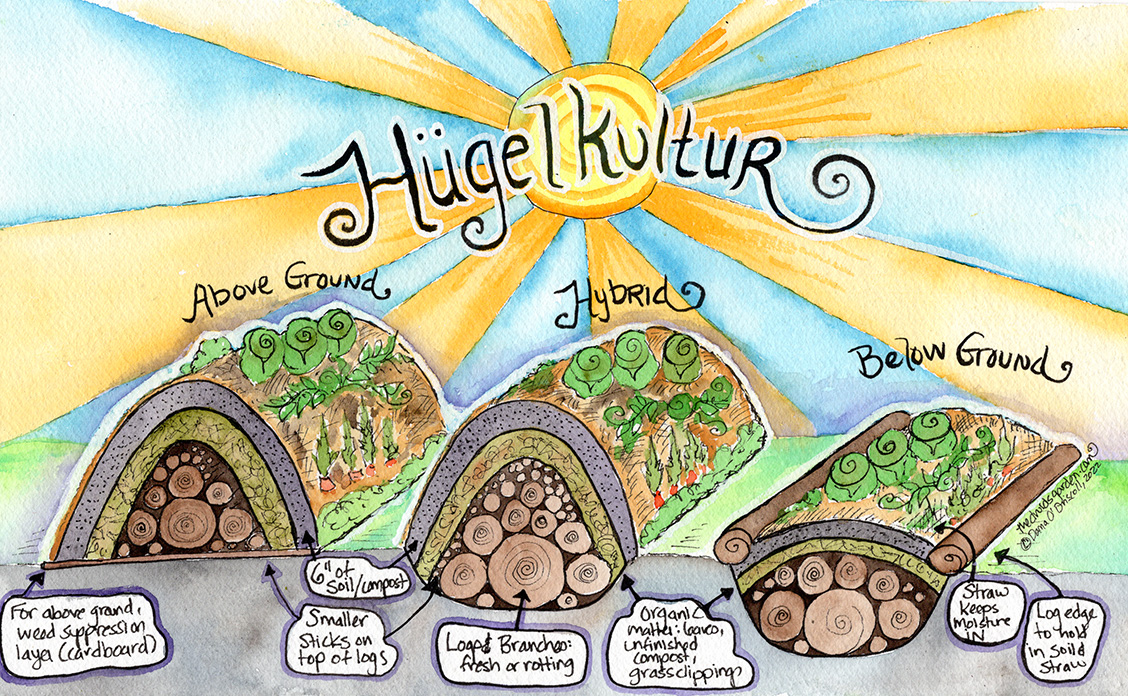
Ultimate Guide to Hugelkultur Garden Beds: Creating, Maintaining, and Benefits – The Druids Garden
- Water deeply & mulch Soak thoroughly (wood acts like a sponge — it’ll drink a lot at first!). Top with 2–4″ mulch (straw, leaves) to lock in moisture.
- Plant right away First year: Heavy feeders like squash, tomatoes, cucumbers, greens love it. Add nitrogen boost if needed.
Pro USA tweaks:
- In colder zones (4–6): Build higher for warmth.
- In wetter areas: Ensure good drainage (raised frame helps).
- Source wood: Ask arborists for free chips/logs — many deliver!
Your Turn: Hügelkultur Challenge!
Calculate for your bed: How deep is it? Estimate wood volume needed (e.g., for 4x8x18″ bed → ~20–30 cu ft wood base). Which style appeals most — full mound, hybrid in frame, or in-ground?
Hügelkultur turns “waste” wood into garden gold — low effort now, huge rewards for years. It’s the ultimate frugal, sustainable hack for your raised bed!
Quick share: Got branches ready? Planning to try this in your new bed? Drop your thoughts! Happy building — your garden’s about to level up! 🌿✨











Leave a Reply