


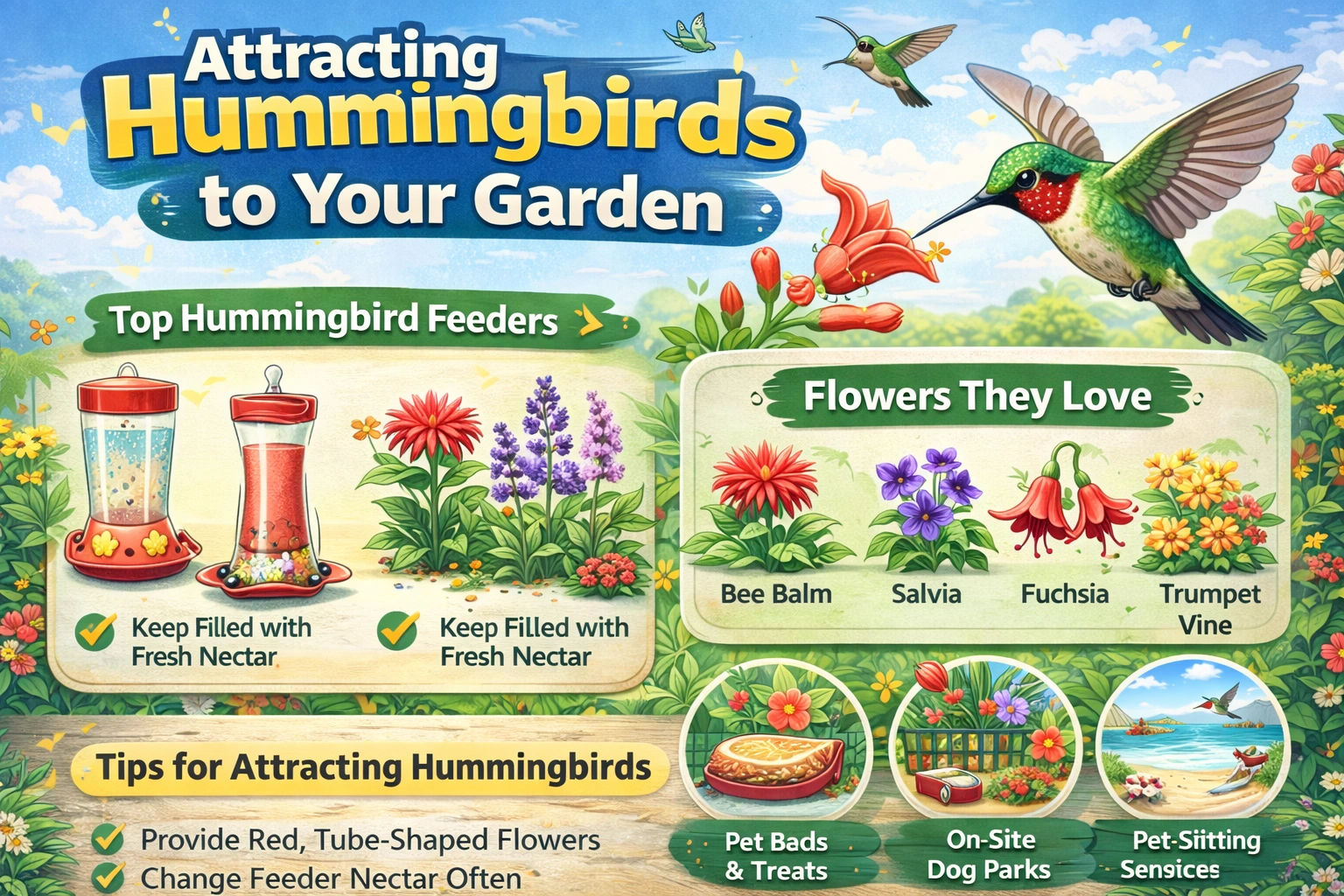
There’s something magical about watching a hummingbird hover in mid-air, its wings beating up to 80 times per second, as it dips its long beak into a bright red flower or feeder. These tiny aerial acrobats bring joy to millions of backyards across America.
Whether you’re looking to attract them to your garden, find the best hummingbird feeder, or plant flowers that attract hummingbirds, this guide covers everything you need to know.
Part 1: Hummingbird Feeders – Choosing the Best One
A hummingbird feeder (or multiple hummingbird feeders) is the quickest way to bring these birds into your yard. But not all feeders are created equal.
What Makes the Best Hummingbird Feeder?
When searching for the best hummingbird feeder, experts agree on three key qualities: ease of cleaning, lack of dripping, and effective insect protection. Here’s what to look for:
| Feature | Why It Matters |
|---|---|
| Glass construction | Glass is more durable than plastic, doesn’t warp, and is easier to clean thoroughly |
| Wide-mouth opening | Allows you to reach inside with a brush for proper cleaning |
| Built-in ant moat | Prevents ants from marching down the hanger and contaminating the nectar |
| Bee guards | Soft rubber tips over feeding ports that allow hummingbirds to feed but keep bees and wasps out |
| Perches | Integrated perches let hummingbirds rest while they feed, encouraging longer visits |
| Disassembles easily | Parts that come apart make thorough cleaning much simpler |
Top-Rated Feeder: More Birds Bird Health+ Ruby
One highly recommended option is the More Birds Bird Health+ Ruby Hummingbird Feeder. This feeder features:
- 10 oz. nectar capacity – plenty to keep hummingbirds coming back
- Glass nectar bottle with wide opening for easy filling
- 4 bee guard ports – hummingbirds feed easily, but bees and wasps cannot
- Built-in ant moat that stops ants in their tracks
- Soft ports with integrated perch design that optimizes the feeding angle and comfort for all hummingbird species
- BPA-free and recyclable materials
Available at Petco for $14.99, this feeder offers excellent value for bird enthusiasts.
The Pagoda High Perch Feeder
Another fan favorite is the Pagoda High Perch™ Hummingbird Feeder from Wild Birds Unlimited. Customer reviews praise it as the “best hummingbird feeder I’ve owned,” noting that the design is “perfect for keeping bees, wasps, and other insects out.”
However, some users report that filling it to full capacity can be sloppy, suggesting filling only halfway to 4 oz to avoid spills.
Feeder Placement Tips
- Space feeders about 10 feet apart – Hummingbirds are territorial and will fight over feeders. Multiple feeders reduce squabbling
- Hang in visible locations – Near windows where you can watch, but not so close that birds might hit the glass
- Provide shade – Nectar spoils faster in direct sun
How to Make Hummingbird Nectar
Making your own nectar is simple and cost-effective. The recipe is easy enough that “even a husband can do it,” as one expert joked.
The Recipe:
- Mix 1 part white granulated sugar with 4 parts water
- Example: 1/4 cup sugar to 1 cup hot water
- Bring to a boil to dissolve sugar and slow fermentation
- Let cool completely to room temperature before filling feeders
Critical Warnings:
- DO NOT use red food coloring – The red on the feeder is enough to attract them, and dyes may harm the birds
- DO NOT use honey – Honey can promote fungal growth on hummingbirds’ tongues, which can be fatal
- DO NOT use artificial sweeteners or molasses
Cleaning Your Hummingbird Feeder
Cleanliness is crucial. Feeders can grow black mold “in a twinkling” in warm weather.
Cleaning routine:
- Rinse with a dilute bleach solution (1 part bleach to 9 parts water)
- Rinse thoroughly – all bleach must be removed before refilling
- Use a small bottle brush for hard-to-reach areas
- Change nectar every 3-5 days (more often in hot weather)
A Note on Ants
Ants love sugar water as much as hummingbirds do. They march down the hanger and crawl into the feeder, where they can “drown by the hundreds, contaminating the feeder.” Solutions include:
- Using feeders with built-in ant moats
- Applying a thin layer of Vaseline on a short section of the hanger
- Using ant guards designed specifically for hummingbird feeders
Part 2: Hummingbird Flowers and Plants
While feeders provide essential energy, hummingbird flowers and hummingbird plants offer natural nutrition. In fact, hummingbirds need more than just sugar water—they also eat small insects like aphids, gnats, and leafhoppers for protein.
What Makes a Flower Attractive to Hummingbirds?
According to experts at Mississippi State University Extension, two characteristics are shared by most hummingbird-attracting plants: tubular flowers and the color red.
- Tubular flowers hold significant amounts of nectar, acting as nature’s “energy drink” for hummingbirds
- Red flowers signal that “the kitchen is open” – most hummingbird feeders have red around the feeding ports for this reason
- Hummingbirds feed primarily by sight, not smell, so flower fragrance is unimportant
The Best Flowers That Attract Hummingbirds
Here is a comprehensive list of flowers that attract hummingbirds, organized by plant type.
Perennial Flowers (Come back year after year)
| Plant Name | Key Features |
|---|---|
| Bee Balm (Monarda) | Bright red/pink tubular flowers; also attracts butterflies |
| Cardinal Flower (Lobelia cardinalis) | Intense red blooms; prefers moist soil |
| Columbine (Aquilegia) | Early spring bloomer; red and yellow varieties best |
| Coralbells (Heuchera) | Airy red or pink flowers on tall stems |
| Hummingbird Mint (Agastache) | Tall spikes of tubular flowers; deer resistant |
| Penstemon | Tubular flowers in red, pink, purple |
| Salvia | Spikes of blue, red, or purple; long blooming |
| Butterfly Weed (Asclepias tuberosa) | Orange flowers; also host plant for monarchs |
| Foxglove (Digitalis) | Tall spikes of tubular bells |
| Phlox | Clusters of fragrant flowers in various colors |
| Bleeding Heart | Unique heart-shaped pink/white flowers |
Annual Flowers (Plant each year)
- Fuchsia – Hanging, downward-facing flowers perfect for hummingbird feeding
- Petunia – Especially red and purple varieties
- Zinnia – Bright, daisy-like flowers in hot colors
- Lantana – Clusters of small flowers that change color
- Impatiens – Great for shady areas
- Snapdragon – Tubular flowers that “snap” open
- Verbena – Low-growing with small clusters of flowers
- Canna Lily – Large tropical leaves with bold red/yellow flowers
Vines
- Trumpet Vine (Campsis radicans) – Extremely attractive to hummingbirds; can be aggressive
- Trumpet Honeysuckle (Lonicera sempervirens) – Native vine with red tubular flowers
- Cypress Vine – Delicate foliage with small red star-shaped flowers
- Scarlet Runner Bean – Red flowers followed by edible beans
Shrubs and Trees
- Red Buckeye – Small tree with brilliant red spring flowers
- Weigela – Shrub with pink or red trumpet-shaped flowers
- Flowering Quince – Early spring blooms
- Butterfly Bush (Buddleja) – Long spikes of purple/pink flowers
Hummingbird Mint (Agastache)
One standout plant deserves special attention: hummingbird mint (genus Agastache). This perennial in the mint family is “essential for a pollinator-friendly garden” and has “excellent resistance to browsing deer and rabbits.”
Key features of hummingbird mint:
- Tubular, two-lipped flowers in spikes of red, pink, purple, blue, or white
- Blooms throughout summer
- Heat and drought tolerant
- Fragrant foliage (smells like licorice or mint)
- Grows 2-5 feet tall depending on variety
- Prefers full sun and well-drained soil
Top varieties for southeastern gardens include ‘Blue Fortune’, ‘Blue Boa’, and the Acapulco® group.
Tips for Creating a Hummingbird Garden
- Plant in clusters – Hummingbirds are attracted to large groups of flowers, not scattered singles
- Choose red and orange flowers – These colors catch their attention first
- Provide continuous bloom – Stagger bloom times so something is always flowering from April through September
- Plant low to high – Create a “stadium” effect that allows hummingbirds to access all flowers while you watch from your “front row seat”
- Go native when possible – Native plants are adapted to local conditions and support local hummingbird populations
- Don’t use pesticides – Hummingbirds eat insects; pesticides remove their protein source and can poison them directly
Part 3: Bringing It All Together
Whether you’re hanging a hummingbird feeder on your porch, planting hummingbird mint in your garden, or simply enjoying hummingbird flowers from your window, these tiny birds bring beauty, joy, and a touch of magic into our lives.
Quick Start Checklist for Backyard Hummingbirds
✅ Buy a best hummingbird feeder with red accents, bee guards, and easy-clean features
✅ Mix your own nectar (1:4 sugar to water) – no red dye, no honey
✅ Clean feeders every 3-5 days with diluted bleach and rinse thoroughly
✅ Plant flowers that attract hummingbirds – start with bee balm, salvia, and trumpet vine
✅ Include hummingbird mint (Agastache) for summer-long blooms
✅ Group flowers in clusters and use red as your primary color
✅ Hang multiple feeders spaced 10 feet apart to reduce territorial fighting
✅ Apply Vaseline on feeder hangers or use ant moats to stop ants
✅ Skip pesticides – hummingbirds need insects for protein
✅ Be patient – it may take a few weeks for hummingbirds to discover your yard
Fun Hummingbird Facts
- Hummingbirds can fly 50-60 mph and stop instantly, hover, fly straight up, down, or backward
- A typical hummingbird visits 1,000 flowers per day
- They consume up to 12 times their body weight in nectar daily
- Ruby-throated hummingbirds weigh only 3-4 grams – less than a nickel
- They migrate annually between Central America and North America
Final Thoughts
The hummingbird’s ability to hover in place, fly backward, and beat its wings faster than the eye can see is a marvel of nature. Whether you’re attracting them to your yard with the best hummingbird feeder and hummingbird flowers, you’re connecting with something timeless.
So fill those feeders, plant those flowers, and enjoy the show. Your backyard will thank you.
Disclaimer: Prices and product availability subject to change. This article contains general information only and does not constitute professional advice. Always follow manufacturer instructions for feeder cleaning and nectar preparation.




Leave a Reply