


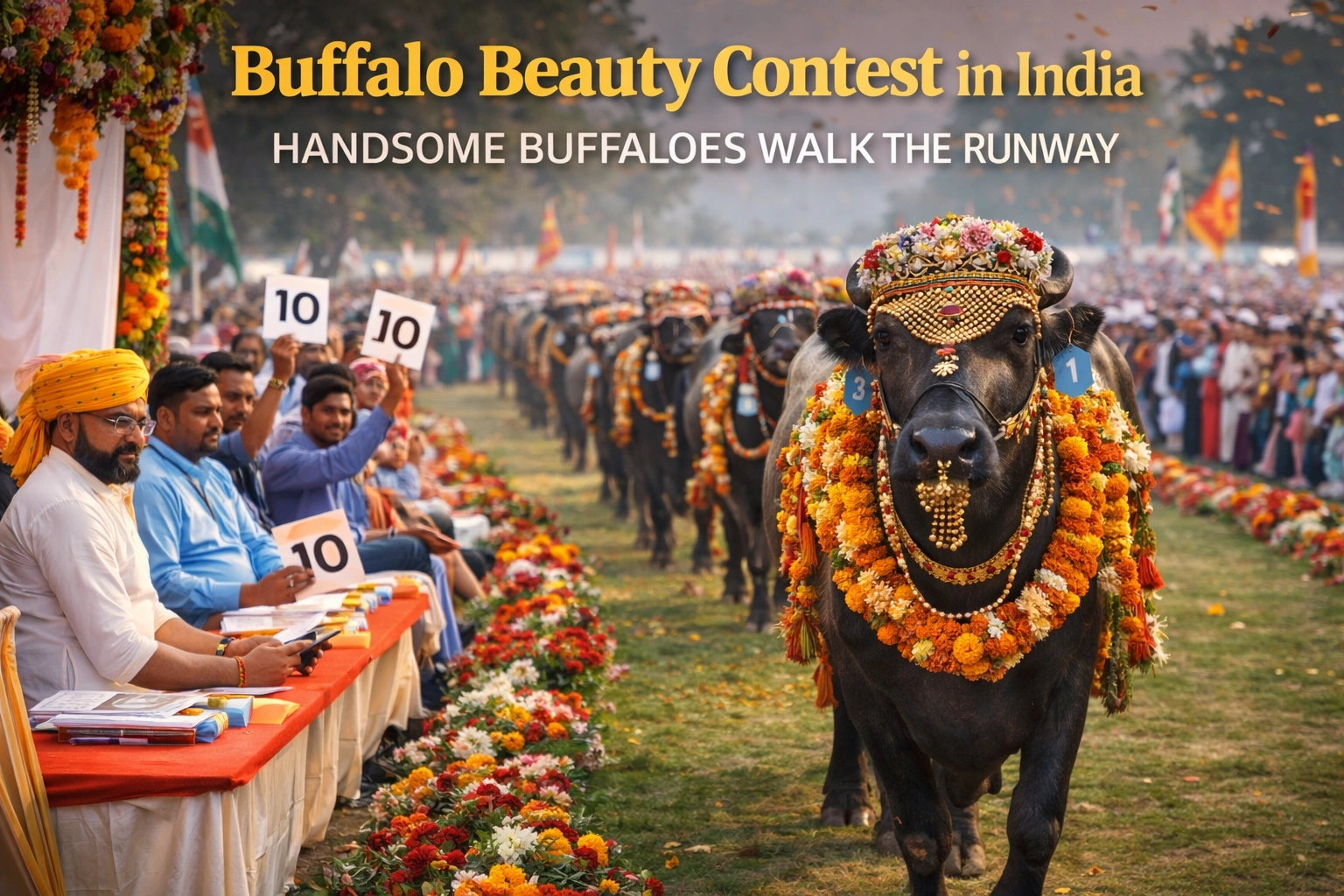
Every year, shortly after the celebration of Diwali, the streets of Hyderabad transform into a spectacular cultural parade unlike any other in the world. Towering, muscular buffaloes—decorated with colorful garlands, jewelry, bells, and fabrics—walk proudly through the streets while thousands of spectators cheer and photograph them.
This extraordinary event is known as the Sadar Festival, also called Dunnapothula Panduga. Organized primarily by the Yadav community, the festival celebrates the strength, beauty, and cultural importance of buffaloes in rural life.
What might sound unusual to outsiders is actually a powerful tradition rooted in centuries of pastoral heritage.
A Festival Where Buffaloes Are the Stars
In most festivals, humans are the center of attention. At the Sadar Festival, however, the spotlight belongs entirely to buffaloes.
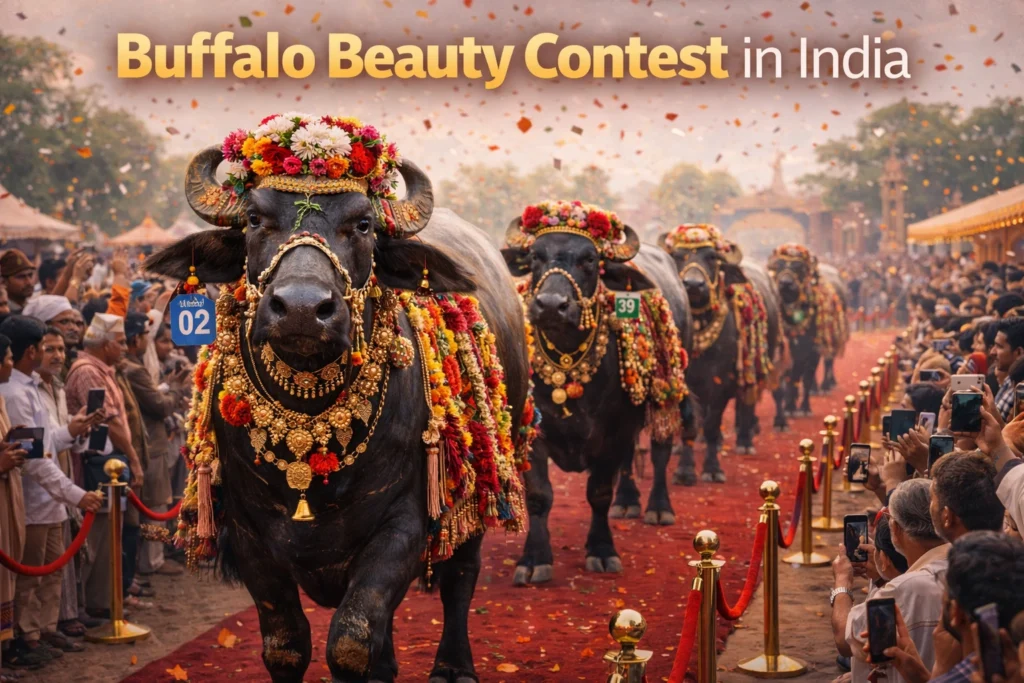
Massive animals weighing over 800–1000 kilograms are groomed and decorated like royalty. Their horns are polished and sometimes painted, their bodies oiled until they shine, and their necks adorned with garlands of marigold flowers.
Owners spend weeks preparing their animals for this moment.
The goal is simple: present the strongest, healthiest, and most magnificent buffalo in the parade.
Why the Yadav Community Celebrates Buffaloes
The Yadav community has historically been associated with cattle rearing and dairy production across India.
Buffaloes have long been central to their livelihood because they provide:
- Milk for dairy products
- Agricultural support
- Economic stability
- Cultural identity
For generations, these animals have been more than livestock—they are considered symbols of prosperity and strength.
The Sadar Festival is therefore both a celebration and a tribute to the animals that sustain rural life.
The Grand Parade: Hyderabad’s Most Unique Procession
The most famous Sadar celebrations take place in Hyderabad, where the festival has evolved into a massive public spectacle.
The highlight is a night-time parade of decorated buffaloes moving through major city streets.
Each buffalo is accompanied by its proud owner and supporters from the community. Spectators line the roads, capturing photos and videos as the animals walk through the brightly lit streets.
Many buffaloes are adorned with:
- Flower garlands
- Embroidered blankets
- Gold-colored ornaments
- Decorative horns
- Traditional bells
The animals move slowly through the crowds, almost like celebrities walking a red carpet.
What Judges Look For in the Contest
The buffalo beauty contest is not random. Judges carefully evaluate each animal based on several criteria.
1. Physical Strength
Large, muscular buffaloes are admired for their powerful build and stamina.
2. Body Structure
Judges examine the animal’s symmetry, posture, and overall health.
3. Breed Quality
Certain buffalo breeds known for high milk production or physical power are highly valued.
4. Grooming and Decoration
How well the buffalo is groomed and decorated can influence its final score.
Winning buffaloes often gain significant recognition, and their owners earn prestige within the community.
Preparation Begins Weeks in Advance
Owners treat their buffaloes like athletes preparing for a championship.
Preparation may include:
- Special high-protein diets
- Regular grooming and bathing
- Polishing horns and hooves
- Decorative training for parade walking
Some buffaloes even receive massage and oil treatments to make their coats glossy.
Owners invest considerable time and money in preparing their animals because the festival is a matter of community pride.
A Festival That Draws Massive Crowds
Over the years, Sadar Festival has become one of the most unusual public events in Telangana.
Thousands of people attend the parade each year, including:
- Tourists
- Photographers
- Cultural researchers
- Local residents
The sight of massive buffaloes walking through city streets—decorated like ceremonial animals—creates an unforgettable experience.
Social media has further amplified the festival, with images and videos frequently going viral.
Symbolism Behind the Buffalo Parade
At its core, Sadar Festival is not merely entertainment. It represents several deeper cultural values.
Respect for Livestock
The festival acknowledges the importance of animals that sustain agricultural communities.
Celebration of Rural Heritage
Despite rapid urbanization, the festival keeps pastoral traditions alive.
Community Unity
Members of the Yadav community gather together to celebrate their shared identity.
Recognition of Agricultural Culture
The event highlights the continued importance of farming and dairy production in Indian society.
A Tradition Growing in Popularity
In recent years, Sadar Festival has received increasing media attention across India.
Large decorated buffaloes parading through city streets make striking visual content, which spreads quickly online.
As a result, the festival has become one of the most visually fascinating cultural events in India, attracting interest from international audiences.
For many visitors, it is their first exposure to a tradition that celebrates livestock in such a grand and respectful way.
The Economic Value of Prize Buffaloes
Winning buffaloes can become extremely valuable.
A champion buffalo may be worth several lakhs of rupees, especially if it belongs to a high-quality dairy breed.
Owners of prize animals gain recognition and may receive:
- Breeding demand
- Higher market value
- Community prestige
In some cases, a famous buffalo can become a local celebrity.
Preserving Cultural Heritage in a Modern World
Urban lifestyles and industrialization have changed how many people interact with agriculture. Yet festivals like Sadar ensure that traditional practices remain visible and appreciated.
Younger generations in the Yadav community actively participate in organizing the festival, decorating buffaloes, and managing the parade.
By combining ancient customs with modern celebrations, Sadar Festival keeps pastoral culture alive in a rapidly changing world.
Why the World Finds This Festival Fascinating
To outsiders, a buffalo beauty contest may sound surprising.
But once people understand the cultural context, it becomes clear that the event is about much more than appearance.
It celebrates:
- Animal strength
- Rural tradition
- Cultural identity
- Community pride
Few festivals in the world showcase livestock with such grandeur and respect.
Conclusion
The Sadar Festival, also known as Dunnapothula Panduga, is one of India’s most unique cultural traditions.
Held annually after Diwali, the festival transforms the streets of Hyderabad into a spectacular parade of decorated buffaloes.
What may appear unusual at first glance is actually a powerful celebration of livestock, heritage, and community pride.
As India modernizes, this remarkable festival ensures that the bond between people and animals—one of the oldest relationships in human history—continues to be honored and celebrated.









Leave a Reply