
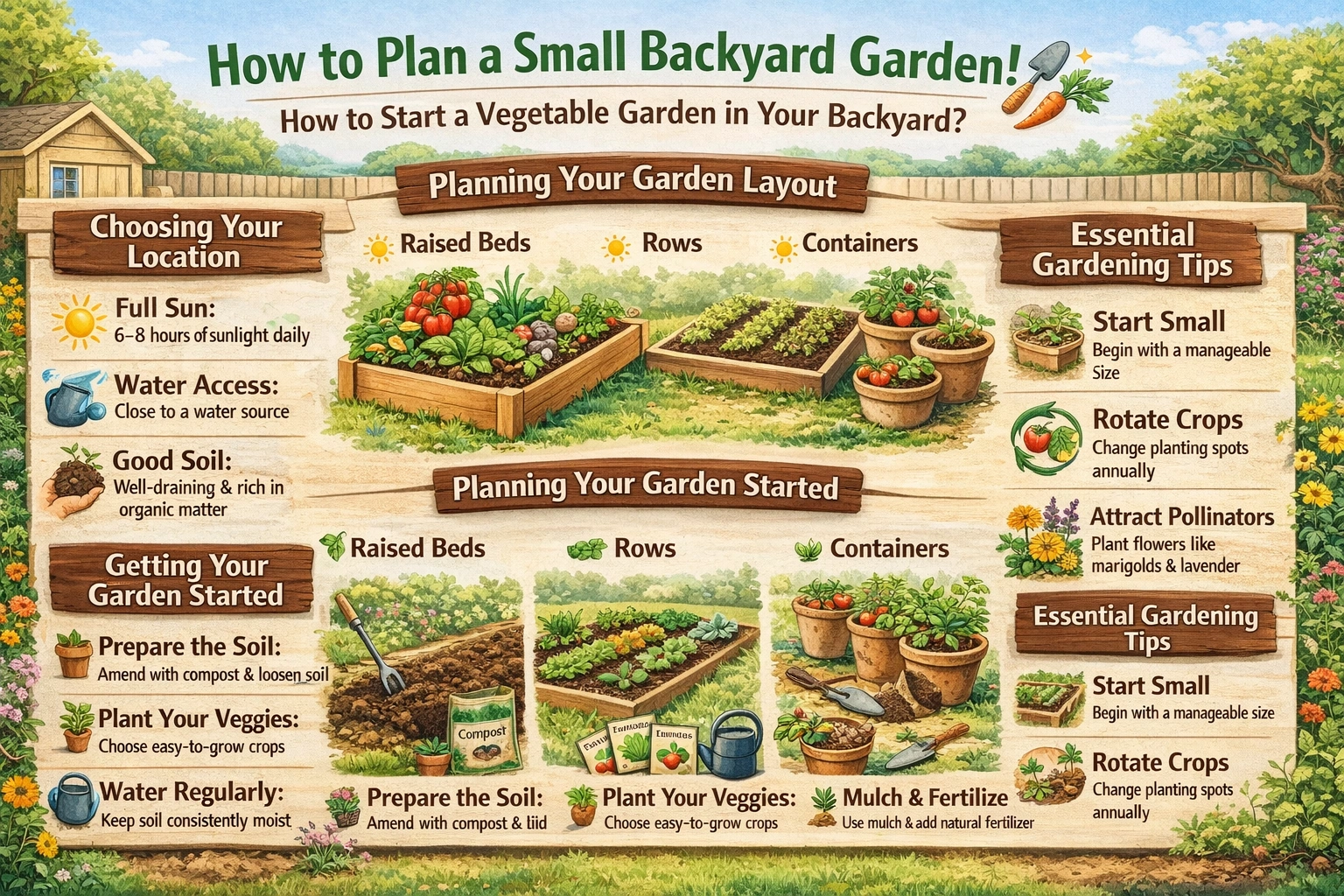
Planning a small garden is like solving a happy puzzle. You have a space, a dream, and a desire for fresh food. Here’s how to put the pieces together.
How to plan a small backyard garden? / How to start a vegetable garden in your backyard?
Starting a garden in your backyard is a journey of discovery. Follow these steps to create a space that brings you joy and harvests.
1. Start with a Dream, Not a Chore
First, take a moment to envision your garden. What does success look like? Is it a daily salad, a few perfect tomatoes, or a place to unwind after work? Gardening should be a source of peace and purpose, not another item on your to-do list. Start small so it feels like a rewarding hobby, not hard work.
2. Find Your Garden’s Happy Place
Before you buy a single seed, spend a few days watching your yard.
- Follow the Sun: Walk outside at different times. Most vegetables need 6-8 hours of direct sunlight daily to be truly happy and productive . Find the sunniest spot—that’s your prime real estate.
- Think About Access: Your garden should be close to a water source and easy to get to. You’ll be visiting it often, so make it convenient .
- Start Small, Dream Big: A space as small as 8×4 feet is incredibly generous for a beginner. It’s large enough to grow a variety of veggies but small enough that you won’t feel overwhelmed . You can always expand next year!
3. Pick Your Garden’s “Container”
- In-Ground: The classic method. If you choose this, enrich your existing soil with plenty of compost .
- Raised Beds: A fantastic choice for beginners. They offer better drainage, warm up faster in spring, and are easier on your back. A 4×8-foot bed, as seen in a stunning front-yard garden transformation, is a perfect, manageable size . Keep the width under 4 feet so you can easily reach the center from both sides.
- Containers & Grow Bags: Don’t have a yard? No problem! You can grow a remarkable amount of food on a patio or balcony using pots and fabric grow bags. A simple 5-gallon bag is perfect for a tomato plant .
Beginner backyard garden setup ideas / Small vegetable garden ideas pictures on a Budget
You don’t need to spend a fortune to create a beautiful and productive garden. Here are some wallet-friendly ideas to get you started.
- Think Inside the (Grow) Box: Fabric grow bags are incredibly cheap and space-saving. They’re perfect for patios and prevent plants from becoming root-bound .
- Repurpose and Reimagine: Look around your house for potential planters. An old bucket (with drainage holes drilled in the bottom), a wooden crate, or even a large storage tub can become a home for your vegetables.
- Build Simple, Inexpensive Beds: If you’re handy, you can build raised beds using untreated pine or fir, which is much cheaper than cedar. While it may only last a few years, it’s a great low-cost way to start .
- Get Free Mulch: Instead of buying expensive mulch, use straw (ensure it’s free of persistent herbicides) or shredded leaves from your own yard to suppress weeds and keep soil moist .
- Use Simple Supports: Create cheap trellises for climbing plants like beans and cucumbers using twine, bamboo poles, or old branches. This “vertical gardening” technique maximizes your growing space for free .
📐 Designing Your Dream Layout
How do I design my vegetable garden layout? / How to layout a small vegetable garden?
This is where you get to be creative! A well-thought-out layout is the key to a productive and enjoyable garden.
Step 1: Draw It Out
Grab a piece of graph paper or use a free online planner. Sketch the outline of your garden bed. This simple drawing is your roadmap and will prevent you from buying too many plants at the garden center .
Step 2: Think Tall to Small
The number one rule of garden design: Don’t let tall plants shade out the little guys. Place tall plants like tomatoes, pole beans on a trellis, and corn on the north side of your garden. This way, their shadows fall away from the shorter plants like lettuce, carrots, and peppers . If your garden is against a fence, put the tall plants at the back.
Step 3: Plan Your Paths
You’ll need to access your plants without stepping on and compacting the soil. Leave room for paths—whether it’s stepping stones, a simple layer of straw, or just a well-defined gap between rows .
Step 4: Choose Your Style
- Rows or Bands: This is the classic method. Plant in straight lines, which are easy to mark and maintain .
- Wide Rows for Efficiency: For leafy greens like lettuce or spinach, try planting in a wide band (8-12 inches wide) instead of a single row. The plants will grow together, creating a living mulch that suppresses weeds and conserves water .
- Square Foot Gardening: Divide your bed into a grid of 1×1 foot squares. Plant a specific number of each vegetable per square (e.g., 1 tomato, 4 lettuce, 16 radishes). It’s incredibly efficient and great for small spaces.
Small vegetable garden layout for beginners / 4×8 vegetable garden layout plans and spacing
A 4×8 foot raised bed is a classic for a reason. It’s the perfect size to be productive yet manageable. Here’s a simple and effective layout to get you started.
Imagine your bed is 8 feet long and 4 feet wide. You can easily reach the center from the 4-foot sides.
- The Back Row (North Side): Plant your tallest crops here. Place 2-3 tomato plants (staked or caged) evenly spaced along the back. In between them, you can tuck in a basil plant or two, which are great companions.
- The Middle Section: In the center of the bed, plant a row of bush beans or a row of peppers. These are medium-height plants that won’t shade out the front.
- The Front Row (South Side): This is for your low-growing, quick-harvest crops. Plant a band of leaf lettuce, followed by a row of carrots and a few radishes. The radishes will be ready to harvest in just a few weeks, creating more space for the carrots to grow .
Small vegetable garden layout plans and spacing / 20×40 vegetable garden Layout
For a larger 20×40 foot plot, you have room for a more ambitious garden. The key here is organization. A common and effective layout is to divide the space into four main quadrants, with a central path for easy access. You can practice crop rotation by moving the plant families around these quadrants each year.
Here is a sample layout for a 20×40 foot garden. This plan gives you a wonderful variety of fresh produce all season long.
Central Path: Leave a 2-3 foot wide path of grass, straw, or wood chips running down the middle (the 40-foot length) to easily access all quadrants.
What vegetables to plant together chart? / What is the 3-hour gardening rule?
Companion Planting: The Art of Plant Friendship
Companion planting is the idea that certain plants are better friends (or enemies) than others. They can help each other by deterring pests, improving growth, or providing shade .
Here is a simple chart of popular companions and enemies to guide you :
| Plant | Good Companions (Plant These Together) | Plants to Avoid (Keep Them Apart) |
|---|---|---|
| Tomatoes | Basil, Carrots, Onions, Parsley | Corn, Potatoes, Fennel |
| Beans | Carrots, Cucumbers, Peas, Radishes | Garlic, Onions, Shallots |
| Carrots | Beans, Lettuce, Onions, Peas, Tomatoes | Dill |
| Lettuce | Carrots, Onions, Radishes, Strawberries | Broccoli (can compete for nutrients) |
| Onions & Garlic | Beets, Carrots, Lettuce, Tomatoes | Beans, Peas |
| Peppers | Basil, Carrots, Onions, Tomatoes | Fennel, Kohlrabi |
| Cucumbers | Beans, Corn, Peas, Radishes | Aromatic Herbs (like Sage), Potatoes |
| Corn | Beans, Cucumbers, Melons, Peas | Tomatoes |
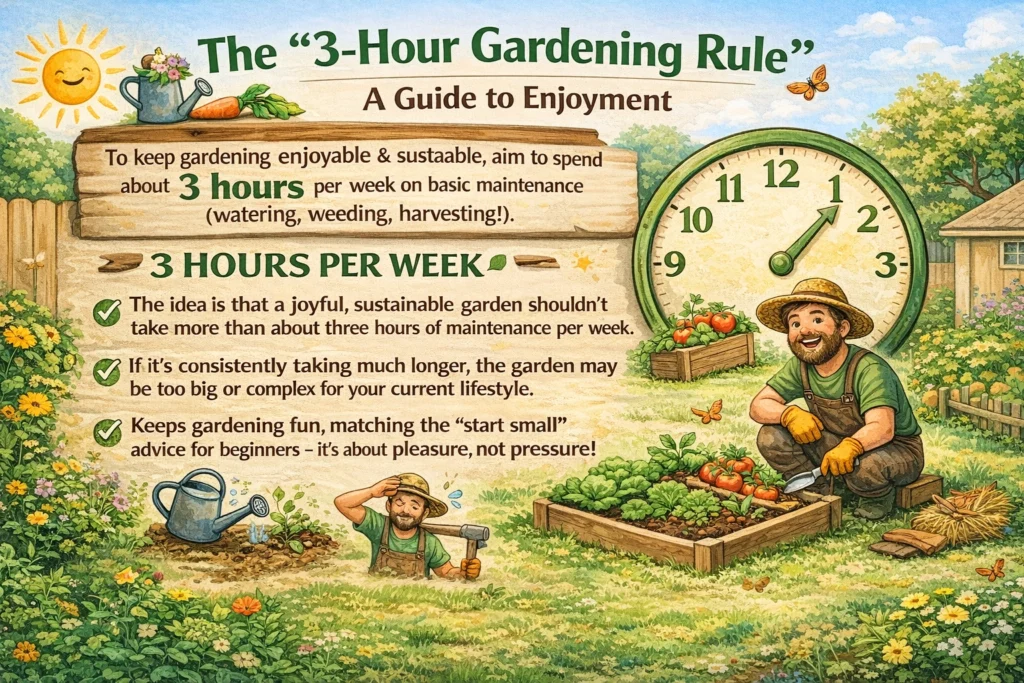
The “3-Hour Gardening Rule”: A Guide to Enjoyment
There isn’t a rigid scientific “3-hour rule,” but it’s a wonderful principle for sustainable gardening [citation:previous discussion]. It suggests that for a garden to be a source of joy, the majority of its weekly maintenance (watering, weeding, harvesting) should take no more than about three hours. If your garden consistently demands more, it might be too big or complex for your current lifestyle. This perfectly aligns with the beginner advice to start small, ensuring gardening remains a pleasure, not a pressure.
What is the easiest vegetable garden for beginners? / What is the 70 30 rule in gardening?
The Easiest Vegetables for a Confidence-Boosting First Garden
The best vegetables for beginners are the ones that are forgiving, fast-growing, and practically guarantee success. These “gateway veggies” will give you the confidence to try more next year .
- Leafy Greens: Lettuce, spinach, kale, and Swiss chard are superstars. They grow quickly, you can harvest leaves as you need them, and they’re perfect for container gardening.
- Root Vegetables: Radishes are the undisputed champions of speed, ready to harvest in as little as 25 days. Carrots and beets are also fun and rewarding.
- Legumes: Bush beans (which don’t need a trellis) and peas are reliable and productive.
- Fruiting Vegetables: Cherry tomatoes are much easier than large ones. Peppers, especially smaller varieties like jalapeños, are also very beginner-friendly.
The “70/30 Rule” in Gardening
As we’ve discussed, this rule has two meanings [citation:previous discussion]:
- For Garden Design: A principle for ornamental gardens suggesting that 70% of your plants should be structural perennials, and 30% seasonal fillers. This is more for flower borders than vegetable patches.
- For Soil Mix (Less Common): An occasional guideline for a simple soil blend. However, for vegetables, a more precise mix of topsoil and compost is recommended.
Free Planning Tools / Vegetable garden layout Planner free / Garden layout drawing
You don’t need expensive software to design a great garden. Here are some fantastic free and low-cost tools to bring your vision to life.
- VegPlotter: This is a leading garden planning tool with a free version that allows unlimited layout planning. You can design your beds, add paths, and plan up to 20 plantings per year. It even offers companion planting suggestions and crop rotation warnings, which is a huge help for beginners .
- Plotabit – Garden Planner: Another great app with a free version. It features an intuitive drag-and-drop interface for designing your perfect patch and provides smart companion planting advice .
- Old-School & Effective: A piece of graph paper, a pencil, and an eraser are often the best tools. Draw your bed to scale (e.g., 1 square = 1 foot) and sketch in your plants. This hands-on method is incredibly satisfying.
A small garden is not a limitation; it’s an intimate space where you can connect with nature, nurture life, and enjoy the incredible flavor of food you grew yourself.