
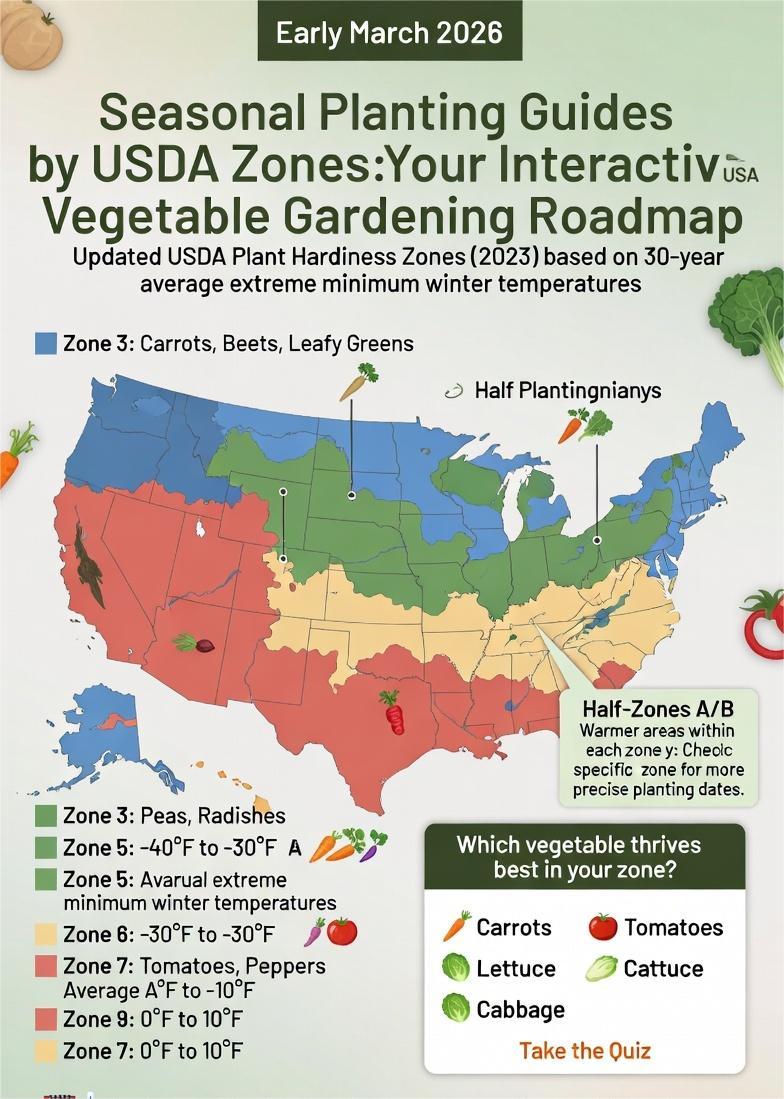
Seasonal Planting Guides by USDA Zones: Your Interactive USA Vegetable Gardening Roadmap! 🌱📅
The USDA Plant Hardiness Zones (updated in 2023) are your best friend for timing plantings right. Zones are based on average annual extreme minimum winter temperatures, helping predict what survives winters and when to plant without frost risk. The latest map shows many areas shifted warmer (half-zones A/B for finer detail).
This guide focuses on vegetable gardening across major zones in early March 2026 — prime planning/starting time! Use the interactive quiz, then pick your zone’s guide. Always check your exact last spring frost date (via almanac.com/frostdates or local extension) — averages vary by microclimate!
Step 1: Quick Zone & Timing Quiz! 🧠
- Your USDA Zone? (Enter zip at planthardiness.ars.usda.gov or almanac.com — e.g., Zone 5 northern, Zone 8 southern.)
- Last frost estimate? (Cooler zones: mid-May; milder: March-April.)
- Goal: Cool-season crops now or warm-season prep?
Quick matches:
- Zones 3–5 (northern) → Cool crops direct sow; start tomatoes indoors.
- Zones 6–7 (mid) → Greens/peas outdoors; brassicas transplant.
- Zones 8–10 (southern/west) → Many veggies direct sow; heat-lovers soon.
Note your zone + 2–3 crops — we’ll match!
Step 2: Why Zones Matter for Seasonal Planting
- Last spring frost determines safe outdoor planting for tender crops (tomatoes need 50–60°F soil, no frost).
- First fall frost sets harvest deadlines — plan for maturity time.
- Raised beds warm faster → start 1–2 weeks earlier.
- Succession sowing (every 2 weeks) = non-stop harvests.
Step 3: Seasonal Planting by Zone (Focus on March 2026 Actions)
Zones 3–4 (Short season, last frost ~May 15–June 1)
- Indoors now: Start tomatoes, peppers, eggplant, broccoli, cabbage (6–10 weeks before frost).
- Outdoors (if soil workable): Peas, spinach, radishes, lettuce under row covers.
- March focus: Seed starting indoors; prep beds. Wait for warmer soil.
Zones 5–6 (Last frost ~April 15–May 15)
- Indoors: Tomatoes, peppers, broccoli, cauliflower (start now for May/June transplant).
- Outdoors/direct sow: Peas, radishes, spinach, lettuce, kale, carrots, beets (as soil thaws 40°F+).
- March wins: Cool-season greens; harden off early seedlings later.
Zones 7–8 (Last frost ~March 22–April 15)
- Outdoors/direct sow: Peas, spinach, lettuce, carrots, beets, radishes, kale, onions/sets.
- Indoors/transplant soon: Tomatoes, peppers, eggplant (transplant mid-April+).
- March bonus: Many greens; start beans/corn if soil warm (50°F+).
Zones 9–10 (Last frost ~Feb–March or none)
- Outdoors now: Tomatoes, peppers, beans, corn, squash, cucumbers (warm soil).
- Ongoing: Succession greens, herbs; plant okra, eggplant.
- March focus: Heat-lovers thrive; mulch for summer heat.
General March Tips Across Zones:
- Cool-season stars (frost-tolerant): Peas, spinach, lettuce, radishes, kale, carrots, beets — direct sow where safe.
- Warm-season prep: Start tomatoes/peppers indoors everywhere.
- Companions: Marigolds/nasturtiums for pests; mulch to retain moisture.
- Tools: Row covers for frost protection; soil thermometer.
Step 4: Pick Your Zone Theme Garden (Choose Your Adventure!)
- Northern Cool-Season Starter (Zones 3–6): Peas + spinach + radishes + kale.
- Mid-Zone Transition (Zones 6–7): Lettuce mix + carrots + broccoli transplants.
- Southern Heat-Ready (Zones 8–10): Tomatoes + beans + squash + herbs.
Your turn: Note your zone + theme + 4 crops. Takes 30 seconds!
Final Pro Tips for Success
- Use Old Farmer’s Almanac or local extension for zip-specific frost dates.
- Start small — focus on 4–6 crops first.
- Amend soil with compost; mulch heavily.
- Track weather — averages aren’t guarantees!
- Celebrate first sprouts — photo time!
Your seasonal planting plan turns zones into success. Happy gardening — fresh veggies from your backyard soon!
Quick share: What’s your zone? Or first crop you’re planting?
🌿🍅✨