

Hey young explorer! Have you ever been on a really long car ride or a long flight and thought, “Are we there yet?” Well, imagine flying for 70 days straight —not to the beach, but all the way to the bottom of the world and back!Impact-Site-Verification: e7f31f28-4917-4b49-9355-edb62de6f2be
🐦 CHAMPION FLIER ARCTIC TERN
🏆 1. the ultimate traveller

☀️ 2. two summers, no winter
🕵️ 3. detective work: leg bling
🎒 4. the tiny backpack
🛰️ 5. satellites in space!
🎮 6. you’re the scientist!
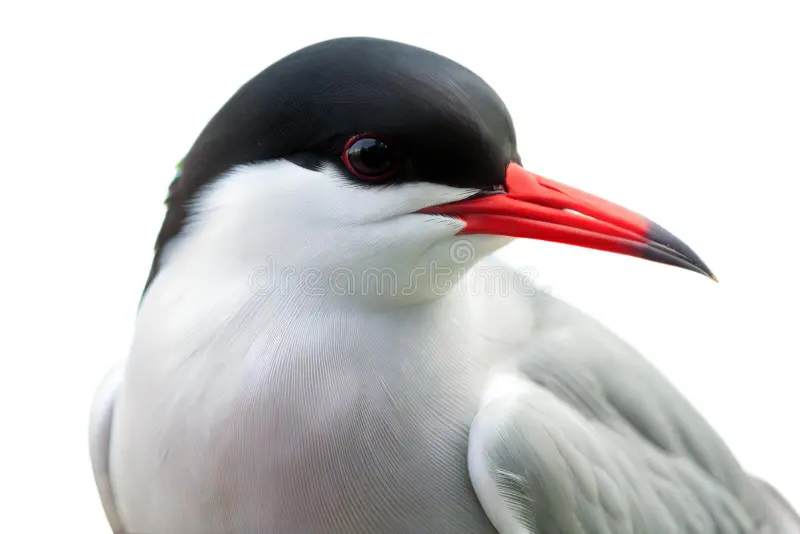
Let’s meet the Arctic Tern, the bird that wins the gold medal for the longest journey on planet Earth.
🏆 The Champion: Arctic Tern
Name: Arctic Tern (Sterna paradisaea)
Size: About as big as a pigeon (really small!)
Weight: Lighter than your water bottle (around 100 grams)
Superpower: Seeing more sunshine than any other animal!
Where Does It Go?
Imagine chasing summer all year long. That’s what this bird does!
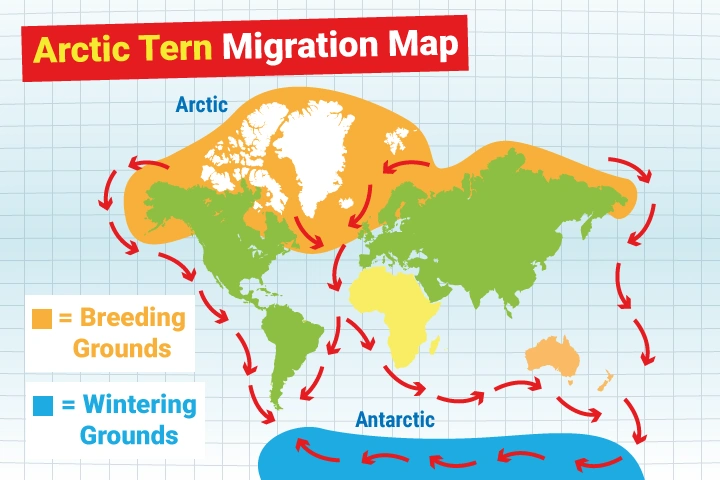
- Summer in the North: It breeds and raises its babies in the Arctic (near the North Pole), where the sun barely sets.
- Summer in the South: When winter comes to the Arctic, the tern gets bored of the cold and flies all the way to the Antarctic (near the South Pole) to enjoy summer there!
- And Back Again: Then, when it’s time to have babies again, it flies all the way back north.
Total Round Trip: About 44,000 miles (70,000 km) every single year!
🧮 Fun Math: That’s like flying all the way around the entire Earth at the equator… and then doing it AGAIN!
How Far in a Lifetime?
These terns can live for a long time—sometimes 30 years! If you add up all the miles they fly in their life…
1.8 million miles (2.9 million km) 🤯
🌙 Mind-Blowing Fact: That’s like flying to the Moon and back… FOUR TIMES!
🔬 How Did Scientists Find Out? (The Detective Work)
So, how do we know this little bird flies so far? We can’t just ask it, right? Scientists became detectives and used some super cool tricks!
Method 1: The Leg Bling (Bird Banding)
A long time ago, scientists would catch birds and put a tiny, lightweight metal or plastic ring around their leg. It’s like a bracelet with a special number on it.
- How it worked: If someone else caught that bird later (or found it), they could report the number and say, “Hey, I found your bird in this place!”
- The problem: You have to catch the same bird twice. If the bird flew over the ocean and never came back, you’d never know where it went. It was like having a puzzle with half the pieces missing.
Method 2: The Tiny Backpack (Geolocators)
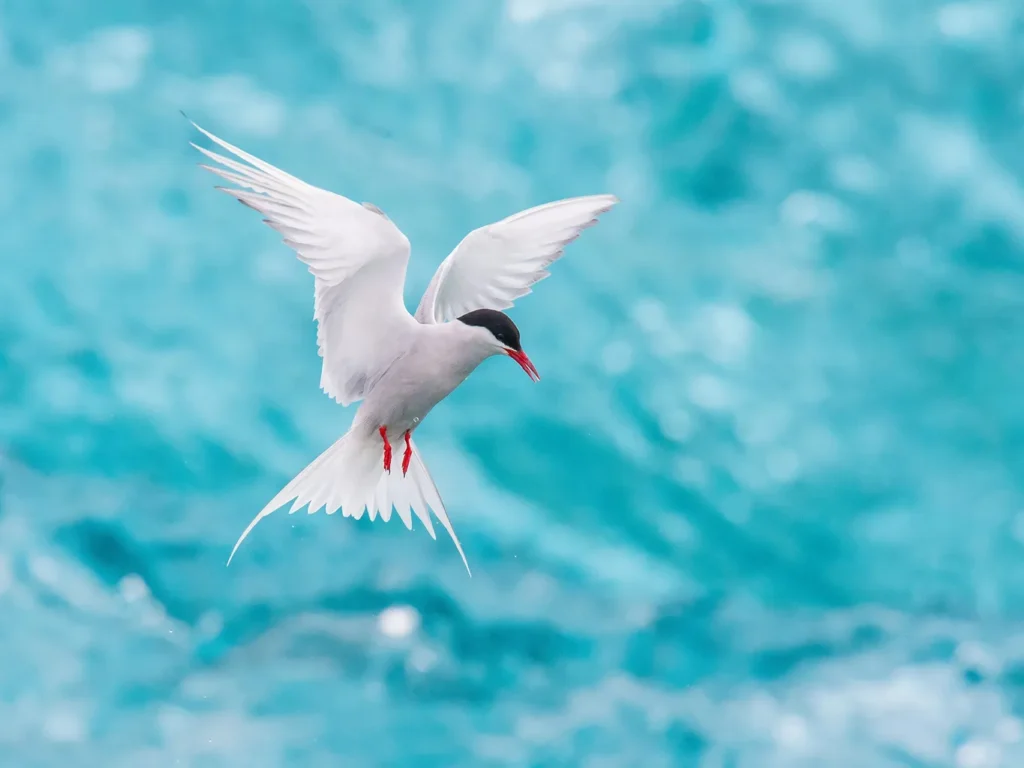
This is where things got really clever! Scientists invented tiny devices called geolocators. They’re smaller than your pinky fingernail and lighter than a paperclip!
How it works (the simple version):
- Catch: Scientists gently catch a tern and put a tiny “backpack” on its leg.
- Record: The backpack measures light levels every few minutes. It knows when it’s dawn, daytime, dusk, and nighttime.
- Math Time: By looking at:
- When dawn happens: This tells scientists how far east or west the bird is.
- How long the day is: This tells scientists how far north or south the bird is.
- Recover: A whole year later, scientists have to catch the SAME bird again and take the backpack off.
- Download: They plug the backpack into a computer, and BOOM—a map appears showing exactly where the bird traveled!
🎒 Kid Analogy: Imagine if you wore a tiny backpack that wrote down when the sun came up and went down every day for a year. At the end of the year, your teacher could look at that data and draw exactly where you walked, flew, or biked!
Method 3: The Satellite Tracker (GPS)
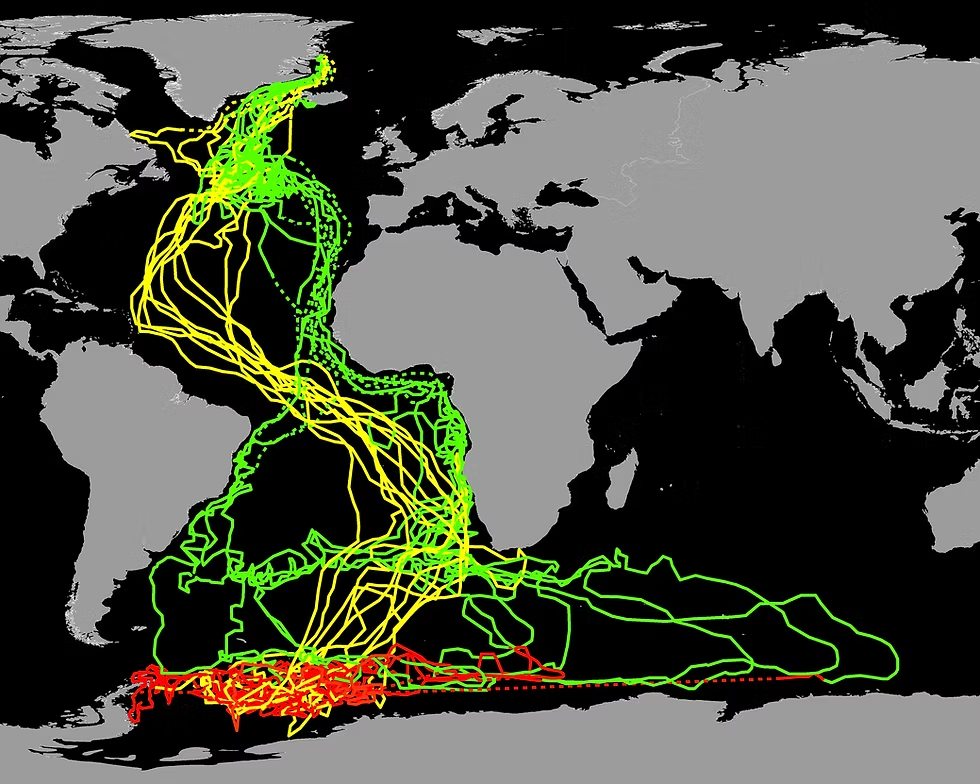
Nowadays, scientists have even fancier tools! They use tiny satellite tags (like the GPS in a parent’s phone, but for birds).
- How it works: The tag talks to satellites in space. The satellites tell the scientist’s computer exactly where the bird is, in real-time!
- The challenge: These tags need a battery, so they’re a little heavier. Scientists have to make sure they’re only used on bigger, stronger birds that won’t be bothered by the weight.
🎮 Interactive Challenge: Be the Scientist!
Want to see if you can track a tern yourself? Try this!
Activity: “Pack Your Bags, Tern!”
If you were an Arctic Tern getting ready to fly from the North Pole to the South Pole, what would you need?
Your packing list:
- Warm feathers for the cold Arctic
- Waterproof feathers for the ocean
- Strong wings for flying
- A built-in compass (in your brain!)
- Fish for snacks along the way
Your mission: Draw a line on a world map (or a globe) connecting the Arctic to the Antarctic. That’s your migration route!
Bonus question: Why do you think the tern doesn’t just stay in one place? (Hint: Think about food and baby chicks!)
Did You Know? 🤔
- Two Summers: Because the tern chases summer from one pole to the other, it sees more sunlight in one year than any other creature!
- Grumpy Bird: Arctic Terns are very protective of their nests. If you get too close, they will dive-bomb your head! Even polar bears know to stay away.
- Old Timer: One Arctic Tern was found wearing a band 34 years after it was first tagged. That means it had flown over 1.5 million miles in its lifetime!
- The Champion: Arctic Tern Name: Arctic Tern (Sterna paradisaea) Size: About as big as a pigeon (really small!) Weight: Lighter than your water bottle (around 100 grams) Superpower: Seeing more sunshine than any other animal!
- This incredible seabird holds the world record for the longest migration of any animal, traveling an astonishing 44,000–59,000 miles (70,000–95,000 km) round-trip each year—from the Arctic breeding grounds to the Antarctic wintering areas and back. By chasing perpetual summer across both poles, it experiences near-continuous daylight during the polar summers in both hemispheres, basking in more sunlight hours than any other creature on Earth.
So next time you complain about a long car ride, just remember the little Arctic Tern—flying around the world without a seat, without movies, and without snacks, just to see a little more sunshine! ☀️





Leave a Reply