

The world’s oceans are home to an astonishing array of vibrant marine life, but few spectacles rival the explosion of color found on tropical coral reefs. These underwater rainbows aren’t just for show—bright hues serve as camouflage, warnings to predators, mating signals, or species recognition in the bustling reef environment.
From psychedelic patterns to bold primaries, here are 10 of the most colorful fish swimming in the world’s oceans today. These species stand out for their intense, natural pigmentation and intricate designs.
1. Mandarin Dragonet (Synchiropus splendidus)
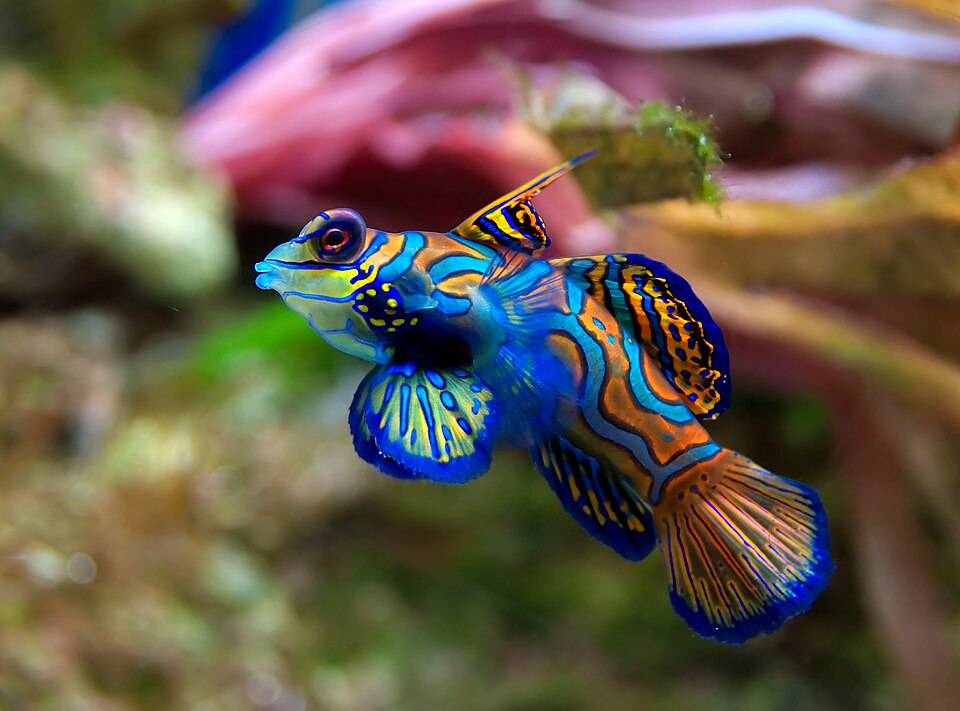
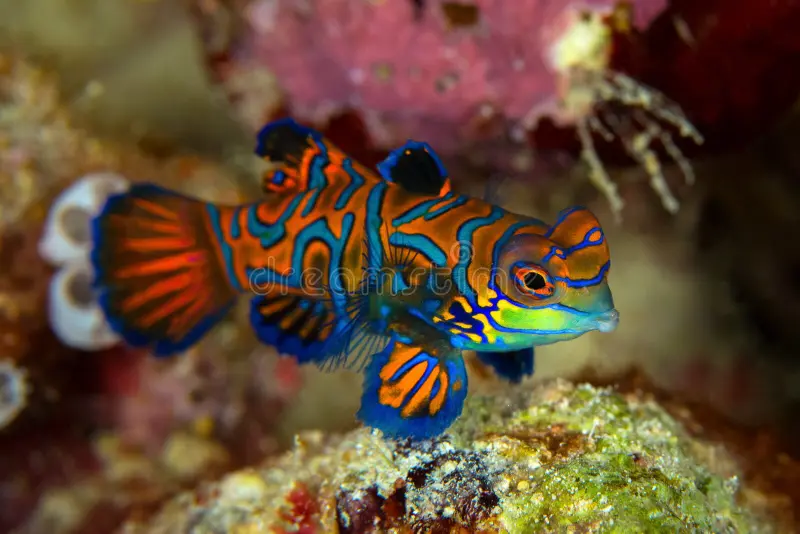
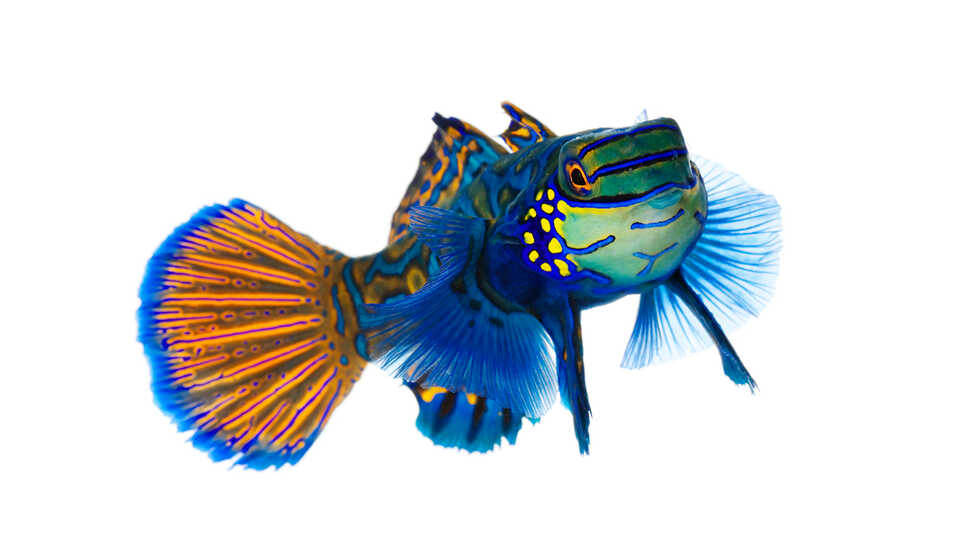
Often hailed as one of the most colorful fish on the planet, the mandarinfish boasts a psychedelic mosaic of electric blue, vivid green, orange, and purple wavy lines and spots. Males display even more elaborate patterns and elongated fins during courtship. Found in the Indo-Pacific, they produce true blue pigment (rare in nature) and are slow-moving bottom-dwellers that rely on toxicity rather than speed for defense.
2. Flame Angelfish (Centropyge loricula)
A fiery jewel of the Pacific reefs (especially around Hawaii and French Polynesia), this dwarf angelfish glows with brilliant orange-red body accented by vertical black bars and electric blue highlights on the dorsal fin and tail. Its intense, uniform flame-like color makes it a standout in any reef scene.
3. Queen Angelfish (Holacanthus ciliaris)
Ruling the tropical Western Atlantic and Caribbean reefs, the queen angelfish dazzles with a deep blue body covered in yellow speckles, a glowing yellow tail, and a crown-like blue ring around the head. Juveniles are even more striking with bold yellow and blue rings. Adults can reach over a foot long, making their palette impossible to miss.
4. Regal Blue Tang (Paracanthurus hepatus)
Immortalized as “Dory” in Finding Nemo, this surgeonfish sports an unmistakable vivid cobalt blue body with a black “palette” pattern and bright yellow tail and fins. Native to Indo-Pacific reefs, its striking contrast and bold lines make it one of the most instantly recognizable—and photogenic—ocean fish.
5. Mandarin Dragonet (wait—another contender?) Wait, let’s pivot to the Royal Gramma (Gramma loreto)
A Caribbean favorite, the royal gramma features a dramatic two-tone split: the front half is brilliant purple-violet, fading seamlessly into vibrant golden-yellow at the back. This bold bicolor design, combined with its small size and curious personality, makes it a reef standout.
6. Stoplight Parrotfish (Sparisoma viride)
True to its name, this Caribbean species cycles through phases with jaw-dropping colors: juveniles sport white spots on red-brown, while terminal males explode into a stoplight combo of bright green, orange, red, blue, and yellow. They use their beak-like teeth to scrape algae off coral, literally reshaping reefs while flashing their rainbow wardrobe.
7. Emperor Angelfish (Pomacanthus imperator)
A regal resident of Indo-Pacific reefs, juveniles display concentric blue-and-white rings, but adults transform into a masterpiece of electric blue stripes, yellow tail, and a dark mask—creating one of the most intricate and vibrant patterns in the sea.
8. Clownfish (Amphiprion ocellaris / percula)
The iconic “Nemo” fish, with bright orange bodies crossed by bold white bars outlined in black. Found in anemone homes across the Indo-Pacific, their cheerful, high-contrast colors pop against the muted tones of host anemones.
9. Queen Triggerfish (Balistes vetula)
Often called one of the most flamboyant reef fish, this Atlantic/Caribbean species boasts electric blue and purple hues with yellow accents, flowing fins, and a changeable palette that intensifies when excited or stressed. Their bold look matches their feisty personality.
10. Peppermint Angelfish (Centropyge boylei)
A rare deep-reef beauty from the Cook Islands and nearby Pacific waters, this dwarf angelfish is painted in candy-cane stripes of vivid red and pure white. Its striking, almost artificial contrast makes it one of the most sought-after (and expensive) colorful species.
These vibrant swimmers remind us how evolution has turned coral reefs into living artworks. Colors help with everything from attracting mates to deterring predators in a world of constant competition.
Which of these oceanic rainbows is your favorite? Or have you spotted even brighter ones while diving? The ocean’s palette never stops surprising!
The Mandarin dragonet (Synchiropus splendidus), often simply called the mandarinfish or mandarin goby, is widely regarded as one of the most colorful fish in the world’s oceans—and arguably the most psychedelic-looking vertebrate on the planet. Its vivid, intricate patterns resemble the ornate robes of ancient Chinese imperial mandarins (hence the name), making it a standout in coral reef ecosystems.Appearance and Unique Coloration
This tiny fish reaches a maximum length of about 3 inches (8 cm), with males typically larger and more elaborately finned than females. The body is covered in a dazzling mosaic of electric blue, vibrant orange, green, purple, and yellow wavy lines, spots, and swirls. The background is often a striking cyan blue, accented by bold orange-red patterns and neon highlights.
What makes it truly exceptional: the mandarinfish is one of only two known vertebrate species (along with its close relative, the psychedelic mandarin) that produces true blue pigmentation through specialized cells called cyanophores—not structural iridescence like in many other blue animals. This results in an almost glowing, hand-painted look that pops even in low light.Habitat and Range
Native to the western Pacific Ocean, from the Ryukyu Islands (southern Japan) south through Southeast Asia to Australia. They prefer sheltered lagoons, inshore coral reefs, and areas with branching corals, rubble, or live rock—often at depths up to 18 meters (about 60 feet). Water temperatures range from 24–26°C (75–79°F). Despite being fairly common in suitable habitat, their small size, slow movement, and habit of hiding in crevices or under coral make them surprisingly hard to spot in the wild.
Behavior and Lifestyle
Mandarinfish are solitary or live in small, loose groups spread over limited reef patches (sometimes just 10 square meters). They are bottom-dwellers, spending most of their time hopping or perching on the substrate, rarely swimming far. They’re crepuscular—most active at dawn and dusk—foraging and spawning.
They move slowly and deliberately, relying on camouflage and defense rather than speed. Their skin secretes a mildly toxic, foul-tasting mucus (with tiny spikes in some descriptions), which deters predators—making them unpalatable and allowing their bold colors to serve as an aposematic (warning) signal rather than pure camouflage.
Diet
Carnivorous specialists, they feed continuously on tiny benthic invertebrates: primarily copepods, amphipods, isopods, small worms, protozoans, and other micro-crustaceans living in sediment, live rock, and coral crevices. This picky, live-food-only diet is why they’re notoriously difficult in aquariums—wild-caught ones often starve unless the tank is mature with abundant natural copepod populations.
Reproduction and Courtship
Mandarinfish are oviparous (egg-layers) with fascinating dusk spawning rituals. Each evening around sunset, females gather in small groups while males compete to woo them with elaborate courtship “dances”—circling, fin displays, and synchronized movements.
When a pair bonds, they align belly-to-belly, rise slowly in a spiral above the reef (sometimes several feet up), and release a cloud of eggs and sperm into the water column. The fertilized eggs drift with currents until hatching; there’s no parental care.
Males are sexually dimorphic with larger, more ornate fins and bolder patterns during displays.Aquarium Care Notes
While stunning, mandarinfish are challenging for home aquariums. They need a well-established, mature reef tank (ideally 6+ months old) with plentiful live copepods and microfauna—no aggressive tankmates that compete for food. They’re reef-safe but best kept singly or as a true mated pair (they can be territorial toward similar-looking fish). Captive-bred specimens (increasingly available) are hardier than wild-caught ones.
In short, the mandarinfish is nature’s living artwork: a tiny, slow-moving masterpiece of color evolution that’s as mesmerizing in person as it is difficult to keep thriving. Have you ever seen one in the wild or in an aquarium? They’re even more vibrant up close!



Leave a Reply