

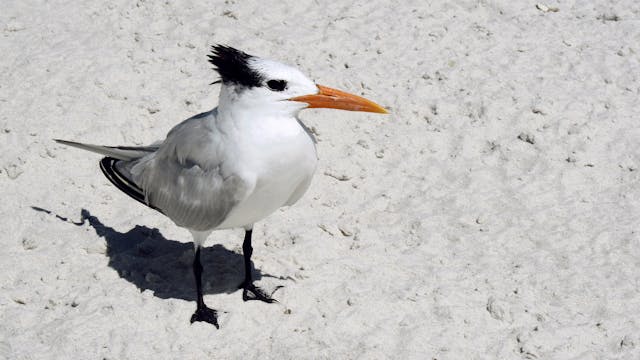
As we move through 2026, the plight of the world’s most vulnerable birds is coming into sharp focus. From the coastlines of East Asia to the remote islands of New Zealand and the fire-prone scrublands of Australia, critically endangered species are fighting for survival. This year has already brought a mix of urgent warnings, surprising sightings, and dedicated conservation efforts. Here are the critically endangered birds you need to know about in 2026.
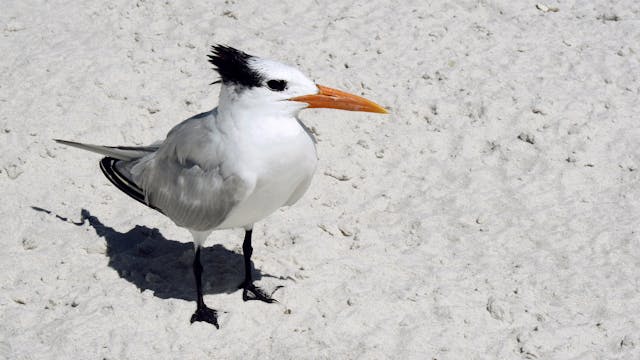
The Rarest Seabird: The Chinese Crested Tern
Often called the “Bird of the Legend,” the Chinese Crested Tern (Thalasseus bernsteini) has a story that lives up to its mythical name. Once believed to be extinct, this seabird was rediscovered in the early 2000s and remains one of Asia’s rarest species. According to the latest census data, its global population is estimated to be only around 100 individuals .
There is a glimmer of hope coming from the Philippines. The 2026 Asian Waterbird Census, conducted in January, confirmed the presence of at least two individuals in the Panabo–Carmen wetlands in the Davao Region. This marks the eighth consecutive year the species has been recorded there, indicating that this habitat is a crucial and reliable refuge for the bird .
The Spoon-Billed Sandpiper: A Tiny Traveler Hanging On
Weighing less than a handful of coins, the Spoon-billed Sandpiper (Calidris pygmaea) undertakes an epic migration along the East Asian–Australasian Flyway. Its uniquely shaped bill makes it a favorite among birdwatchers, but its rarity is a cause for global concern. The IUCN lists it as Critically Endangered, with the global population teetering at an estimated 300 to 500 individuals .
In exciting news from Taiwan, a very special individual was spotted in January at the Jiangjun Salt Flats in Tainan. The bird, a familiar face wearing a light green flag with the number “88,” has been returning to this exact location since 2017. This “high site fidelity” proves that specific wetlands are not just stopovers but are essential for the survival of this species .
The Kākāpō: A Breeding Boom for the Night Parrot
New Zealand’s Kākāpō (Strigops habroptilus) is no ordinary parrot. It’s flightless, nocturnal, and famously clumsy on the ground. With only 242 individuals left, living on a few predator-free islands, every breeding season is critical . The good news for 2026 is that it could be their best breeding season since 1977. The rimu trees, whose fruit triggers breeding, are producing a bumper crop. With 84 females potentially laying eggs, conservationists are watching closely, hoping for a “banner year” for this endearing species .
The Kyorling: A Race Against Fire
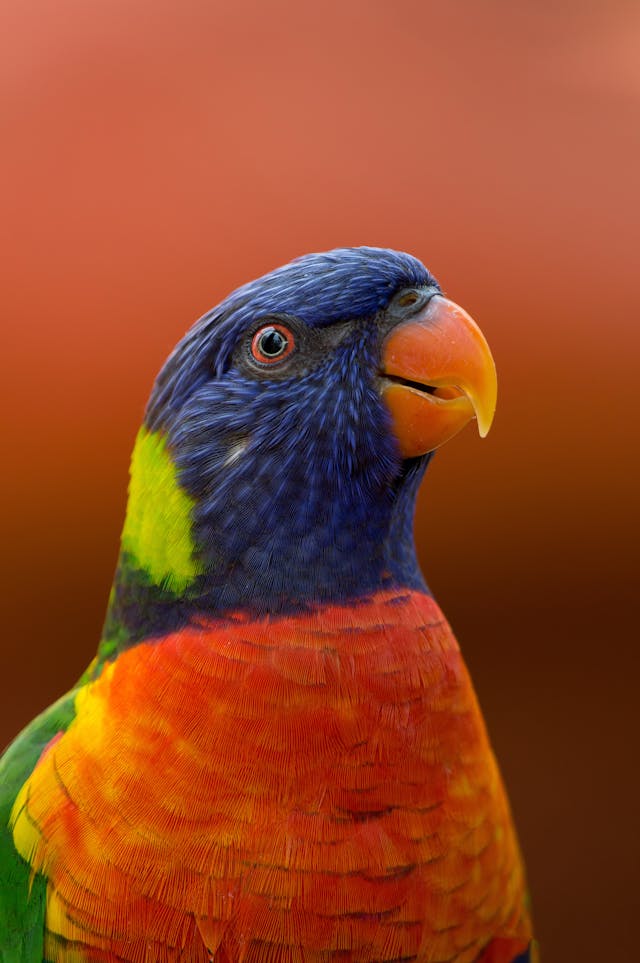
On the south coast of Western Australia, the Western Ground Parrot (Pezoporus wallicus flaviventris) —known by its Nyungar name, Kyorling—faces an immediate and devastating threat. With only an estimated 150 birds left in the wild, their entire population is concentrated in a small area of Cape Arid National Park . In January 2026, a lightning-sparked bushfire swept through the area, destroying an estimated 30% of their core habitat .
While experts hope the birds were able to fly from the flames, the timing was particularly bad, coinciding with the fledgling season. “The parents are much more likely to be staying with those young birds,” explained DBCA regional ecologist Sarah Comer, raising fears for the weakest members of the population . However, hope remains in a world-first captive breeding success at Perth Zoo, where a healthy chick gives a lifeline to the species .
The Asian Houbara: A Return to the Wild
In Saudi Arabia, a different kind of conservation story is unfolding. The Asian Houbara Bustard (Chlamydotis macqueenii) , classified as Critically Endangered across the Arabian Peninsula, has been absent from the wild in Saudi Arabia for over 35 years . In a major rewilding effort, the Prince Mohammed bin Salman Royal Reserve has released 20 captive-bred birds back into their historical range. Fitted with satellite trackers, these birds represent a bold experiment to “rewild Arabia” and re-establish a self-sustaining wild population, addressing a decline caused by habitat loss and unsustainable hunting .
A Note on the “Near Threatened”
While this list focuses on the Critically Endangered, conservationists in India are sounding the alarm about species that are sliding towards crisis. In Goa, the proposed development of an aviation hub on the Quitol plateau has highlighted the fragility of grassland birds. The IUCN recently uplisted four species to “Near Threatened,” including the Indian Courser (Cursorius coromandelicus) , which was recorded at the plateau for the first time in February 2026 . This serves as a stark reminder that for birds, the path to critical endangerment often begins with the loss of the places they call home.





Leave a Reply