


Imagine losing an arm and simply growing it back. Or having your heart damaged, only to watch it regenerate like new. For humans, this sounds like science fiction. For a remarkable group of animals across the planet, it’s just another day in the office.
Regeneration—the ability to replace lost or damaged body parts—is one of nature’s most astonishing superpowers. From tiny flatworms to majestic salamanders, these creatures possess healing capabilities that make our own recovery efforts look primitive. Scientists study them obsessively, hoping to unlock secrets that could revolutionize human medicine.
Let’s explore ten of the most remarkable regenerators in the animal kingdom and discover how they perform their biological miracles.
1. Axolotl: The Regeneration Champion
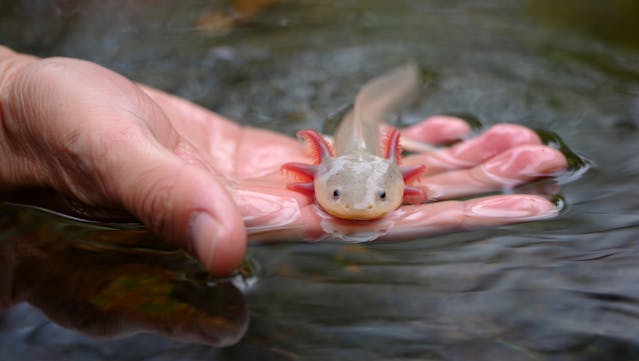
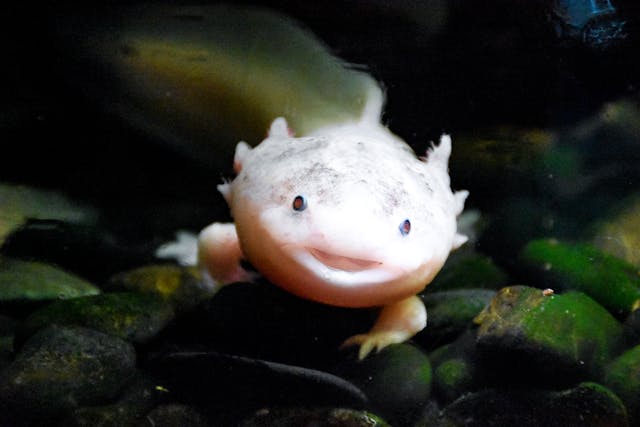
If there were a gold medal for regeneration, the axolotl (Ambystoma mexicanum) would wear it permanently. This permanently aquatic salamander, native to Mexico’s Lake Xochimilco, has become the superstar of regeneration research—and for good reason.
What It Can Regrow
The axolotl’s regenerative abilities read like a wish list for medical science:
- Limbs – Entire legs, including bones, muscles, nerves, and skin, regenerate perfectly
- Tail – Complete with spinal cord and vertebrae
- Jaws and face – Significant portions of the head
- Heart tissue – Including damaged cardiac muscle
- Spinal cord – Full functional recovery after severing
- Brain sections – Including parts of the forebrain and midbrain
- Eyes – Individual components like the lens and retina
- Lungs – Partial regeneration capabilities
- Ovaries – In some cases
The Regeneration Process
When an axolotl loses a limb, something extraordinary happens. Instead of forming a scar like humans do, the wound site develops a structure called a blastema—a mass of undifferentiated cells that act like a biological blueprint. These cells revert to a stem-cell-like state, then meticulously rebuild the missing structure, down to the precise placement of bones, blood vessels, and nerves .
What makes axolotls truly unique is that they can regenerate the same limb dozens of times without any loss of function or accuracy. A limb regrown in captivity is indistinguishable from the original.
The Scientific Frontier
Axolotls possess a genome ten times larger than the human genome, and scientists are racing to decode it. If we can understand how these creatures prevent scarring and orchestrate such perfect regeneration, we might one day apply similar principles to human wound healing, spinal cord injuries, and even organ regeneration .
2. Starfish: The Arm That Becomes a Body
The starfish—more accurately called a sea star—is the classic example of regeneration in popular culture. But the reality is even more astonishing than the myth.
A New Body From a Single Arm
Most people know that starfish can regrow lost arms. But some species take this ability to an extreme: a single severed arm can grow into an entirely new starfish, provided it contains a portion of the central disc (the central body region).
This means that what looks like a fatal injury can actually be a reproduction event. Fishermen who cut up starfish thinking they’re eliminating pests often discover they’ve inadvertently multiplied their population.
Vital Organs Included
Starfish can regenerate:
- Arms – Fully functional with tube feet
- Nervous system – Complete sensory networks
- Digestive system – Stomach and intestinal structures
- Reproductive organs – Fully functional gonads
- Parts of the central disc – Including up to half the body
How They Do It
Like axolotls, starfish rely on blastema formation. Their cells dedifferentiate—meaning specialized cells revert to a more primitive state—then follow genetic instructions to rebuild missing structures. This process can take months to over a year, depending on species and environmental conditions.
3. Planarian Flatworm: The Immortal Worm
The planarian flatworm might look like nothing more than a tiny speck in a pond, but it holds one of the most extraordinary regenerative abilities in all of nature.
The 279-Piece Worm
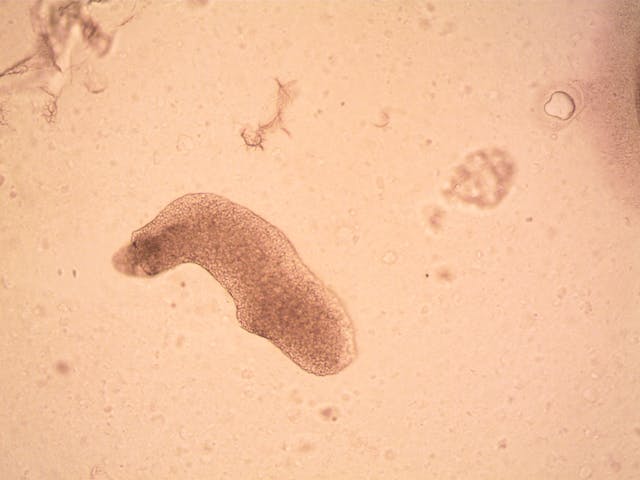
The common brown planarian (Dugesia japonica) can be cut into 279 separate pieces, and every single piece will regenerate into a complete, fully functional worm. Head, tail, brain, eyes—everything regrows from virtually any fragment.
The Secret: Neoblasts
Planarians possess a unique cell type called neoblasts—pluripotent stem cells that make up 20-30% of their total cell population. These cells are the ultimate repair crew. When the worm is injured, neoblasts migrate to the wound site, proliferate, and differentiate into whatever cell types are needed.
If you cut off a planarian’s head, the body regenerates a new head—complete with a fully functional brain. Even more remarkably, if you cut off the head and also remove the region where the brain normally forms, the worm can still regenerate a head, essentially creating a new brain from scratch.
Memory Transfer?
Perhaps the most mind-bending aspect of planarian regeneration involves memory. In controversial experiments, trained planarians—conditioned to respond to light—had their heads removed. When new heads grew back, the worms retained their learned behavior. This suggests that memory might be stored not just in the brain but distributed throughout the body’s tissues .
4. Zebrafish: The Heart Healer
The zebrafish (Danio rerio) has become a darling of genetic research for one spectacular reason: it can regenerate its own heart.
Cardiac Regeneration
If a zebrafish’s heart is damaged—up to 20% of the ventricle removed—the fish doesn’t develop heart failure. Instead, within weeks, the heart grows back fully functional. The process involves surviving heart muscle cells dedifferentiating, dividing, and forming new muscle tissue—precisely what human hearts are incapable of doing after a heart attack .
Beyond the Heart
Zebrafish are versatile regenerators:
- Heart – Full functional regeneration after significant damage
- Spinal cord – Complete recovery after injury
- Retina – Full restoration of vision after damage
- Fins – Elaborate bony structures with intricate patterns
- Pancreas – Insulin-producing beta cells regenerate after destruction
Human Implications
Zebrafish share about 70% of their genes with humans, making them invaluable for medical research. Scientists are actively studying zebrafish to understand why their hearts can regenerate while human hearts cannot. The goal is to develop therapies that could “switch on” similar regenerative pathways in human heart attack patients .
5. Deer: The Antler Phenomenon
While most regeneration examples come from amphibians and fish, mammals have their own champion: the deer. Each year, male deer undergo one of nature’s most dramatic regenerative events.
The Fastest Growing Tissue
Deer antlers are the fastest-growing tissue in the animal kingdom, capable of growing up to one inch per day. Each spring, deer shed their antlers entirely. Within months, a complete new set—often larger and more elaborate than the previous year’s—replaces them.
A Mammalian Regeneration Model
What makes antlers remarkable is that they represent the only example of complete, full-scale organ regeneration in mammals. The antler regeneration process involves:
- Blastema formation – Similar to amphibians, deer develop a blastema at the pedicle (the base where antlers grow)
- Rapid cell proliferation – Stem cells in the periosteum (the membrane covering bones) drive explosive growth
- Complete vascularization – Blood vessels grow alongside bone tissue
- Sensory innervation – Nerves regenerate to support the velvet-covered growing antler
Cancer Connection
Intriguingly, antler growth involves mechanisms that resemble tumor growth—but perfectly controlled. Understanding how deer regulate this process without developing cancer could provide insights into cancer prevention and treatment .
6. Sea Cucumber: The Organ Ejector
The sea cucumber takes a different approach to survival. When threatened, it does something most animals would find unthinkable: it violently ejects its own internal organs at the predator.
The Evisceration Strategy
This process, called evisceration, involves the sea cucumber contracting its body muscles so forcefully that it expels its entire digestive tract, respiratory structures, and reproductive organs through its anus. The expelled material distracts or entangles the predator while the sea cucumber escapes.
Complete Internal Rebuilding
Within weeks, the sea cucumber regenerates:
- Full digestive system – Complete gut with all specialized regions
- Respiratory trees – The unique structures used for gas exchange
- Gonads – Fully functional reproductive organs
- Blood vessels – Supporting vascular networks
- Nervous system components – Associated neural structures
Some species can even regenerate their muscular body wall if damaged. This entire process occurs without any external blastema—the regeneration happens internally, orchestrated by cells that migrate to rebuild the missing organs.
7. Spiders: The Leg Experts
Spiders are common backyard residents with an uncommon ability: they can voluntarily detach their own legs to escape predators, then grow replacements.
Autotomy With Precision
When a spider is grabbed by the leg, it can intentionally sever the limb at a specialized breakage point called the autotomy plane. This isn’t a messy tear—it’s a controlled separation that minimizes bleeding and prevents infection.
The Regeneration Timeline
After losing a leg:
- Molting triggers – Spiders only regenerate during molting
- Bud formation – A small leg bud appears under the exoskeleton
- Gradual growth – Each successive molt produces a larger leg
- Full recovery – After 3-4 molts, the leg reaches full size
The regenerated leg is initially smaller and sometimes paler than the original, but after enough molts, it becomes indistinguishable from its original counterpart.
Functional Replacement
The new leg includes:
- Complete joints and articulation
- Sensory hairs for detecting vibrations and air movements
- Claws for gripping
- Functional musculature
8. African Spiny Mouse: The Mammalian Exception
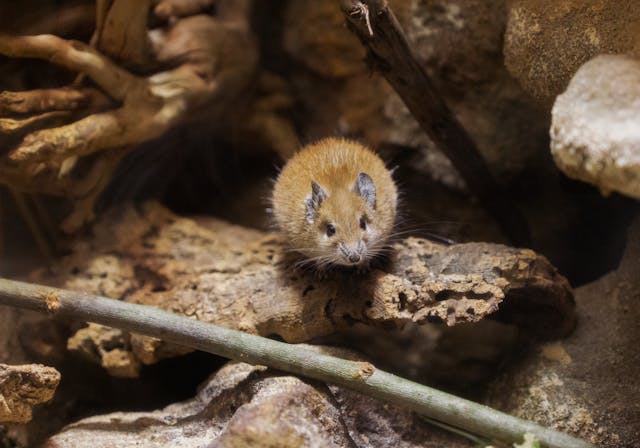
For decades, scientists believed mammals had almost no regenerative abilities beyond liver tissue and deer antlers. Then came the African spiny mouse (Acomys), shattering everything researchers thought they knew.
Skin Like a Lizard
The African spiny mouse possesses the most extreme tissue regeneration ever observed in a mammal. When attacked, its skin tears away with remarkable ease—a defense mechanism to escape predators. But the truly astonishing part comes next.
What It Can Regenerate
Unlike other mammals that form scar tissue, the spiny mouse:
- Regenerates full-thickness skin – Including hair follicles, sweat glands, and sebaceous glands
- Rebuilds cartilage – Without scarring in the ears
- Repairs heart tissue – Showing reduced scarring after cardiac injury
- Heals spinal cord injuries – With remarkable functional recovery
- Regrows skeletal muscle – Without fibrosis (excessive scarring)
A Mammalian Game-Changer
The discovery of the spiny mouse has revolutionized mammalian regeneration research. Previously, scientists thought that mammals had lost the genetic pathways for regeneration. The spiny mouse proves those pathways still exist—they’re just switched off in most species .
9. Crayfish: The Eye and Limb Regenerator
Crayfish—those freshwater crustaceans that look like miniature lobsters—have impressive regenerative abilities that include something truly unusual: eye regeneration.
More Than Just Claws
Crayfish can regenerate:
- Claws – Complete with complex joints and musculature
- Walking legs – Fully functional replacements
- Antennae – Critical sensory structures
- Eyestalks – Including complete visual systems
- Parts of the stomach – In some species
The Neural Connection
When a crayfish loses an eyestalk (the structure containing its compound eye), it can regenerate not just the physical structure but the entire neural connection to the brain. This is exceptionally rare in arthropods and provides valuable insights into neural regeneration.
Molting Dependency
Like spiders, crayfish can only regenerate during molting. The new limb grows as a small bud beneath the exoskeleton, then expands dramatically when the old shell is shed. It takes several molts for the regenerated limb to reach full size.
10. Octopus: The Arm That Thinks for Itself
The octopus, already famous for its intelligence, adds another superpower: extraordinary limb regeneration.
Autonomous Arms
An octopus’s arm contains two-thirds of its neurons—the nervous system is so distributed that each arm can independently taste, touch, and make basic decisions without input from the central brain. This decentralized architecture influences how regeneration works.
What They Regenerate
Octopuses can regrow:
- Complete arms – Including suckers, muscles, and nerves
- Beak and radula – Their feeding structures
- Complex neural networks – Re-establishing full functionality
- Tissue with full sensory capability – Taste and touch return completely
The Regeneration Timeline
After arm loss (which can be voluntary for escape):
- Immediate clotting – Specialized muscles constrict to minimize bleeding
- Healing phase – The wound closes within hours
- Bud formation – A small arm bud appears within days
- Growth phase – The new arm elongates over weeks to months
- Functional recovery – Suckers develop and neural connections re-establish
The regenerated arm is fully functional, capable of tasting, gripping, and independent movement just like the original.
The Science of Regeneration: How Does It Work?
Across all these remarkable animals, several common principles emerge:
1. Scar Prevention
Most animals that regenerate prevent scarring at the injury site. Scar tissue acts as a physical barrier to regeneration—it seals the wound quickly but prevents the organized regrowth of complex structures.
2. Blastema Formation
Many regenerators create a blastema—a mass of dedifferentiated cells that act as a biological template for rebuilding lost structures.
3. Stem Cell Reservoirs
Animals like planarians maintain populations of pluripotent stem cells (neoblasts) ready to deploy for regeneration.
4. Genetic Programs
Regenerators possess genetic pathways that, when activated, orchestrate the complex sequence of cell proliferation, differentiation, and patterning needed to rebuild structures.
5. Nerve Dependence
In many species, nerves play a critical role in regeneration, providing signals that instruct cells where and what to rebuild.
Human Implications: Can We Learn to Regenerate?
The study of regenerative animals isn’t just academic curiosity. Scientists are actively working to translate these abilities to human medicine.
Current Research Directions
| Research Focus | Animal Model | Human Goal |
|---|---|---|
| Heart regeneration | Zebrafish | Repairing heart attack damage |
| Limb regeneration | Axolotl | Regrowing lost digits and limbs |
| Spinal cord repair | Zebrafish, Axolotl | Treating paralysis |
| Scarless healing | Spiny mouse | Preventing surgical scars |
| Organ regeneration | Deer antlers | Growing replacement organs |
| Neural regeneration | Crayfish, Octopus | Repairing nerve damage |
The Challenges
Translating regeneration to humans faces significant hurdles:
- Evolutionary divergence – Humans have lost many regeneration pathways
- Scarring response – Our bodies prioritize rapid wound closure over perfect rebuilding
- Immune complexity – Our sophisticated immune systems may inhibit regeneration
- Size constraints – Regrowing large human limbs involves vastly more complexity than tiny axolotl limbs
Reasons for Hope
Despite these challenges, progress continues:
- Scientists have identified genes that switch regeneration on and off in animals
- Research on the spiny mouse proves mammals retain some regenerative capacity
- Gene editing technologies like CRISPR offer new ways to activate dormant pathways
- Stem cell therapies are already showing promise for tissue repair
The Ultimate Regenerator: Which Animal Wins?
If we had to crown a single champion, the planarian flatworm likely takes the title for sheer regenerative capacity. No other animal can have 1/279th of its body regenerate into a complete, functional organism.
But the axolotl deserves recognition for regenerating the most complex structures in vertebrates—entire limbs, spinal cords, and even parts of its brain—with perfect fidelity.
And the African spiny mouse holds the crown for mammals, proving that even our own branch of the animal kingdom retains hidden regenerative powers waiting to be unlocked.
Final Thoughts
The ability to regrow body parts seems like magic, but it’s biology—millions of years of evolution refining the art of self-repair. From microscopic flatworms to forest deer, these animals demonstrate that regeneration is not a lost art but a dormant one, at least in humans.
Every time an axolotl regrows a leg or a zebrafish repairs its heart, scientists get one step closer to understanding how we might activate similar abilities. The day may come when human amputees regrow limbs, heart attack patients regenerate damaged tissue, and spinal cord injuries heal completely.
Until then, we can marvel at nature’s master healers—creatures that have solved problems we’re only beginning to understand.
Which of these remarkable regenerators amazed you the most? Share this article with someone who needs to appreciate just how incredible the animal kingdom truly is.










Leave a Reply