

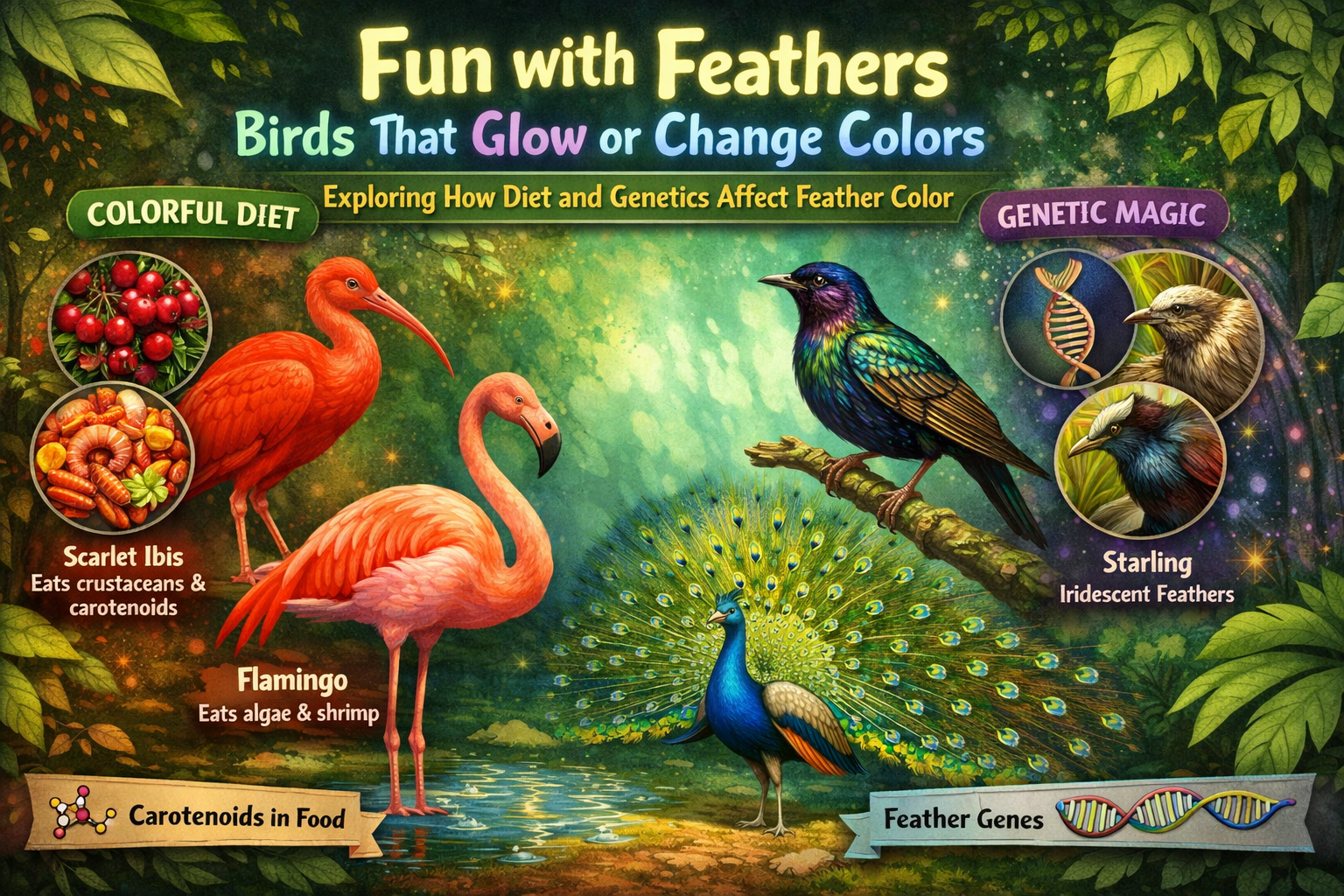
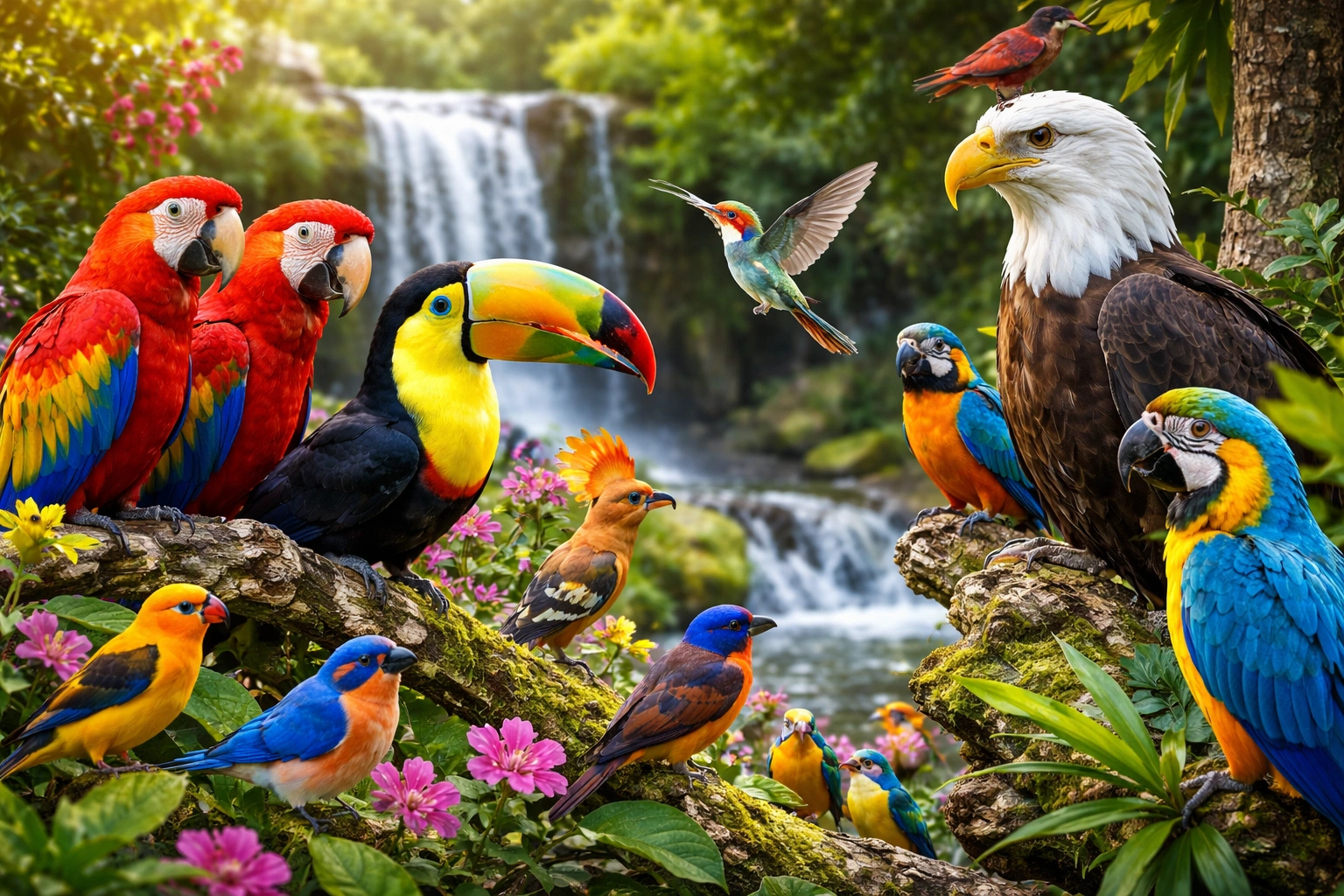
The avian world is a living canvas, painted with an astonishing array of colors. From the flashy crimson of a cardinal to the shimmering emerald of a hummingbird, birds use their feathers to communicate, camouflage, and court. But have you ever wondered how these colors actually get there? The answer lies in a captivating interplay of diet and genetics, a story that goes far beyond a simple coat of paint. In fact, some birds don’t just reflect color—they can actively glow or use structural trickery to completely change their appearance.
 Cluck, Cluck! The Secret Life of Chickens
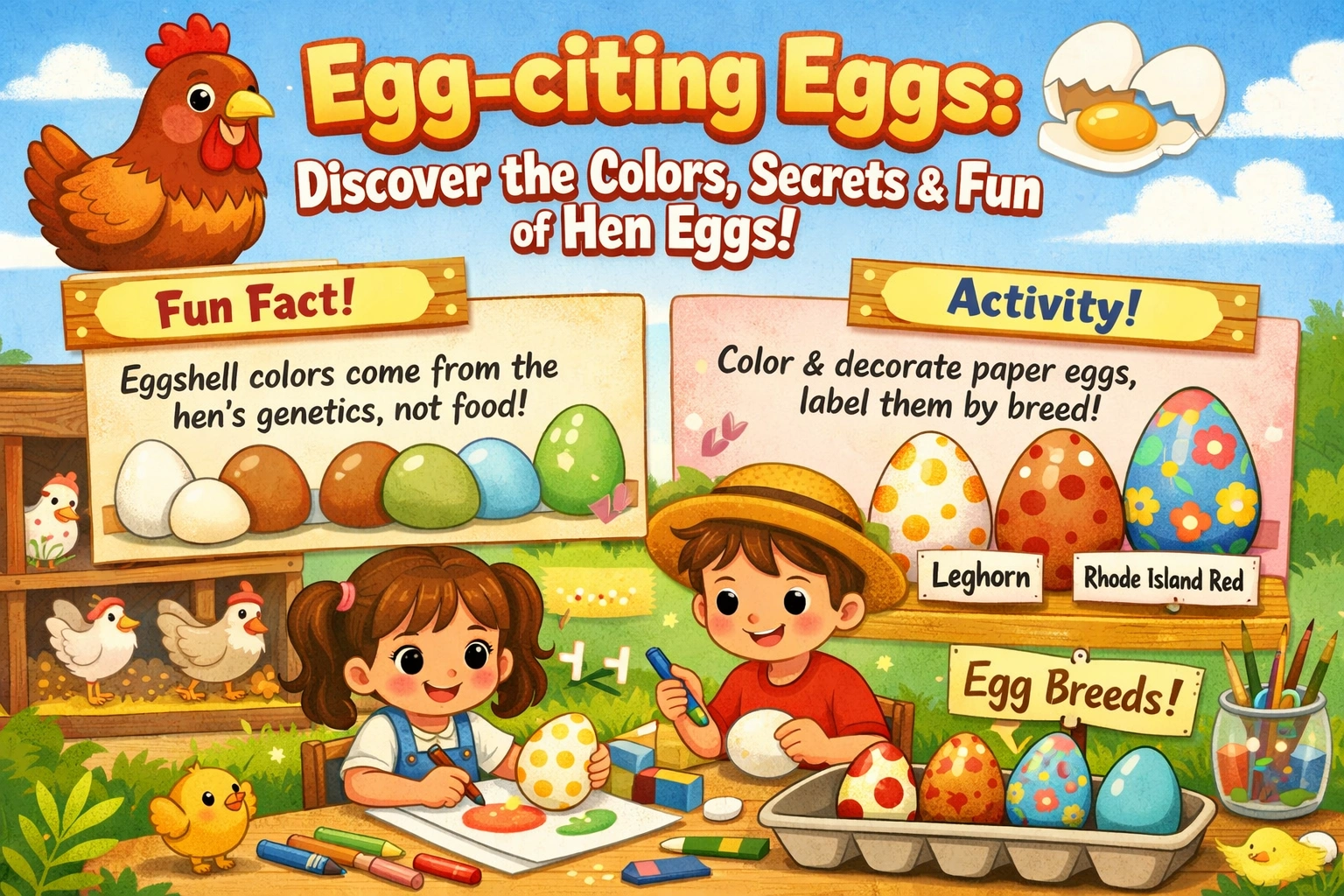
 Egg-citing Eggs: From Coop to Breakfast
 Feathered Fashion: Why Birds Preen
 Peep, Chirp, Chat! Birds That Communicate
 Moo-tastic Cows: Friends on Four Legs
 Piggy Brains: Smarter Than You Think
 Goats on the Move: The Ultimate Climbers
 Sheep and the Magic of Wool
 Backyard Animal Heroes: Ducks, Rabbits & More
 Fun with Feathers: Secrets of Our Feathered Friends
You Are What You Eat: The Power of Diet
For many birds, vibrant color is literally a reflection of their last meal. This is particularly true for species that rely on carotenoids—natural pigments found in plants, fruits, and insects. Think of it as the same compound that makes carrots orange and tomatoes red.
Birds like finches, flamingos, and songbirds cannot produce these pigments on their own. They must actively consume foods rich in carotenoids to impart color to their wings, beaks, and skin . A flamingo’s iconic pink hue, for instance, comes from crustaceans in its diet, which are packed with these pigments. Without them, their feathers would be a pale gray or white.
The relationship between diet and color can be incredibly precise. A 2025 study on birds with violet-sensitive (VS) color vision, such as kingfishers and rollers, revealed a “symmetric response” to diet. As these birds consumed higher levels of carotenoids, their plumage didn’t just become more colorful in a predictable way; it actually exhibited a “blue shift” in reflectance, demonstrating a direct biochemical link between what they eat and the specific colors they display . This makes a bird’s plumage a powerful signal of its foraging ability and overall health. A brighter male is essentially advertising, “Look how well I can find food!”—a key factor in sexual selection .
The Parrot’s Secret: A Genetic Paintbox
While some birds must eat their colors, parrots play by a different set of rules. They manufacture their own unique pigments known as psittacofulvins, which are responsible for their signature brilliant reds and yellows .
For a long time, the mechanism behind these vivid hues was a mystery. However, recent studies have unlocked the secret. Scientists discovered that an enzyme associated with the ALDH3A2 gene is responsible for converting a red psittacofulvin into a vibrant yellow . This means that a single genetic tweak can determine whether a parrot sports scarlet or golden feathers.
Surprisingly, this exact same enzyme was found to be responsible for yellow coloration in finches, even though finches rely on dietary carotenoids . This suggests that while the source of the pigment differs, evolution has conserved an efficient molecular mechanism for fine-tuning color across different bird lineages. The key gene CYP2J19 has also been identified as the critical “ketolase” enzyme that converts yellow carotenoids from the diet into red ketocarotenoids in the feathers of birds like tinkerbirds and finches, further solidifying the link between genetics and the final color display .
Nature’s Light Show: Structural Color and Iridescence
Not all colors come from pigments. The dazzling blues, greens, and the shifting, shimmering effect known as iridescence are the result of structural coloration. This is a form of “physics magic” where light interacts with the microscopic structure of the feather itself.
Tiny structures within a feather’s barbules—specifically, pigment-filled sacs called melanosomes—are arranged in specific patterns . These nanostructures act like prisms, reflecting and amplifying certain wavelengths of light. The specific shape of these melanosomes is critical. A 2021 study found that an evolutionary tweak that allowed for “thin melanin layers” within these structures more than doubled the range of iridescent colors birds can produce . This explains why a peacock’s feather can shift from green to gold to blue as it moves. Ongoing research aims to understand the developmental and molecular pathways that allow melanosomes to form these complex shapes—whether as solid rods, hollow rods, or flat platelets—to create such vibrant effects .
Interestingly, true structural coloration struggles to produce reds, which is why many red birds rely on pigments, while blues are almost always structural .
When Birds Glow: The Mystery of Fluorescence
Perhaps one of the most magical phenomena in the avian world is fluorescence—the ability to absorb light at one wavelength and re-emit it at another, longer wavelength, causing the feathers to appear to “glow.” This hidden dimension of bird color is only just beginning to be understood.
The budgerigar, a common pet parrot, is a classic example. Under ultraviolet (UV) light, the yellow crown and cheek feathers of the budgerigar glow brilliantly. This is because these feathers contain fluorescent pigments that absorb UV light and re-emit it as visible yellow light, creating a signal that is invisible to the human eye but likely very apparent to other budgies .
But parrots aren’t the only ones with this secret power. Researchers have recently discovered that the long-eared owl also sports glowing feathers. Under UV light, their otherwise brown and white plumage shines bright pink. Intriguingly, studies have found that these fluorescent pigments are more concentrated in the feathers of females and fade as the birds age, suggesting it could be a signal of age or reproductive fitness .
Nature’s Palette: When the Recipe Goes Wrong
The delicate balance of genetics and diet means that things can sometimes go wrong, leading to plumage abnormalities. These cases offer a fascinating glimpse into the mechanisms of color production.
- Dietary Imbalance: Just as a good diet creates color, a poor one can remove it. In birds like carrion crows, a protein deficiency can interrupt melanin production during feather growth, leading to broad white bars on the feathers—a condition distinct from true genetic abnormalities .
- Genetic Conditions: Inherited conditions like leucism prevent pigments from being deposited properly in the feathers, resulting in birds with patchy white or pale coloration. True albinism, a complete lack of melanin caused by a missing enzyme, is rarer and results in all-white plumage and pink eyes .
- Progressive Greying: Much like humans, some birds like blackbirds can develop more white feathers as they age, a process known as progressive greying where melanin is lost over successive molts .
From the food a bird eats to the genes it inherits, every feather tells a story. Whether it’s the pigment-powered red of a macaw, the iridescent shimmer of a hummingbird’s throat, or the hidden UV glow of an owl’s wing, the colors of birds are a testament to the intricate and beautiful ways biology, chemistry, and physics can combine to create art in the natural world.


Leave a Reply